
The Layover Sanctuary: Transforming Airport Lounges into Restorative Havens Through Biophilic Design
Key Takeaways Before You Read the Full Article:
30 Second Executive Summary
Airport lounges are evolving from passive waiting areas into restorative environments that actively support traveler wellbeing. Preserved gardens and moss walls provide biophilic benefits that reduce stress, improve comfort, and help passengers recover from the demands of modern air travel.
✈️ Traveler Wellness: Addressing Travel-Specific Stress
Air travel introduces physiological and psychological stressors that can diminish passenger comfort. Biophilic environments help reduce stress and promote recovery throughout the travel journey.
🛋️ Restorative Design: Creating Recovery-Focused Lounge Spaces
Preserved gardens support work, relaxation, dining, and social interaction within premium lounge environments. Thoughtful zoning helps travelers restore mental and emotional resources.
🌍 Universal Appeal: Nature Across Cultures
Natural elements create welcoming experiences that transcend cultural differences. Preserved gardens provide a universally recognized source of comfort and calm.
🧭 Strategic Placement: Supporting Every Stage of the Journey
Different travelers require different levels of restoration depending on their schedules and circumstances. Biophilic design ensures meaningful wellness benefits regardless of visit duration.
⚙️ Operational Excellence: Wellness Without Maintenance
Preserved gardens provide long-term aesthetic and wellness benefits without ongoing care requirements. Their reliability makes them ideal for demanding airport environments.
Ready to see how airport lounges can become restorative sanctuaries rather than waiting areas? The full article explores how biophilic design transforms passenger experiences through preserved gardens, moss walls, and wellness-focused environmental design.
Biophilic Design Solutions for Modern Travel Environments
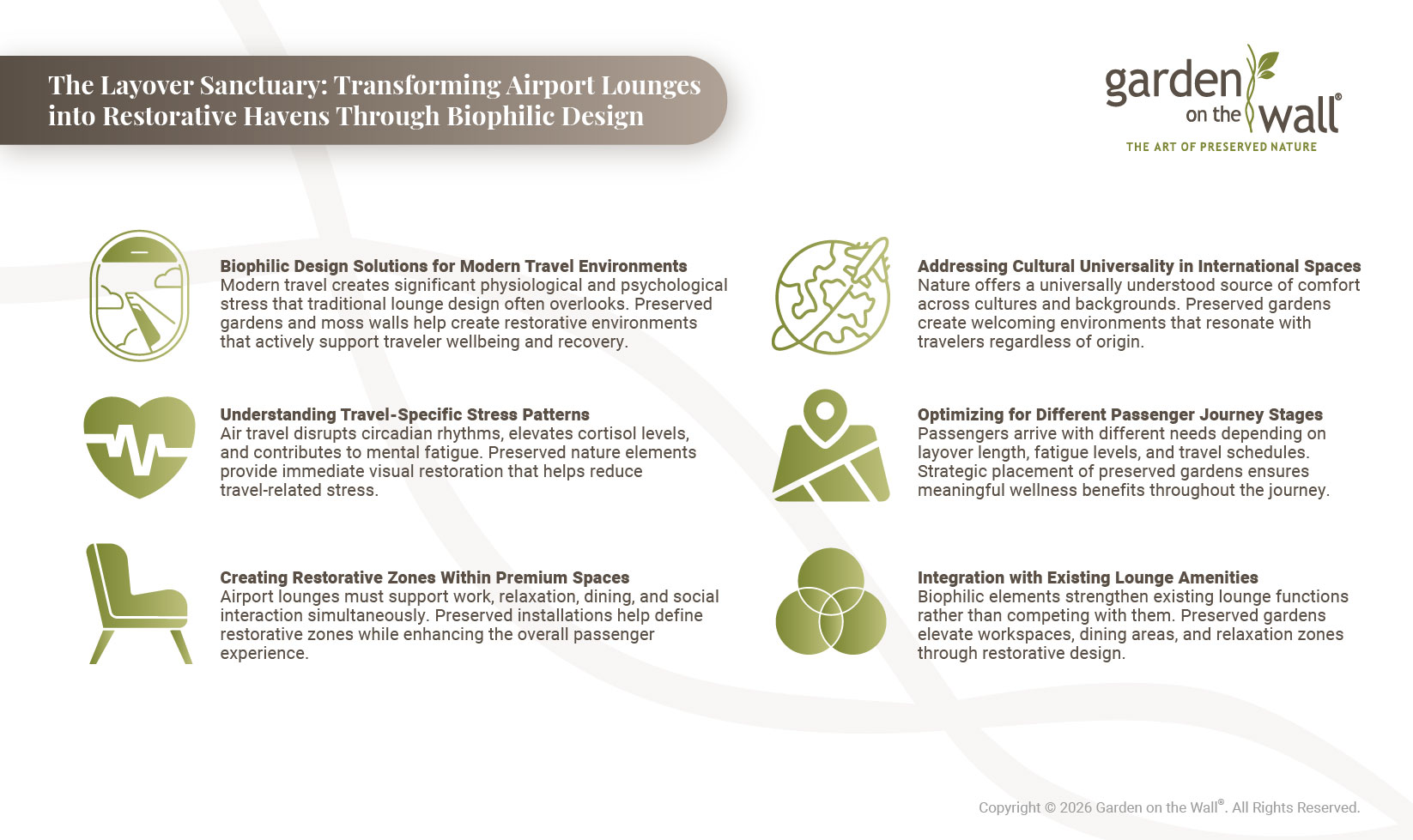
Modern travel creates unique physiological and psychological challenges that traditional airport lounge design fails to address comprehensively. Air travel generates elevated cortisol levels, circadian disruption, and depleted mental resources through security screenings, flight delays, cabin pressure changes, and constant sensory bombardment. While conventional airport lounges focus on luxury amenities and comfort features, they often overlook the deeper biological stress responses that persist throughout the travel experience.
Biophilic design principles offer transformative solutions for creating airport lounges that function as genuine recovery sanctuaries rather than passive waiting areas. Environmental psychology research demonstrates that nature exposure can reduce cortisol levels by up to 21% within twenty minutes, providing rapid stress reduction crucial for tired travelers dealing with jet lag and schedule disruption. Preserved moss walls and garden installations deliver these benefits without maintenance challenges that make living plants impractical in 24/7 airport operations.
Understanding Travel-Specific Stress Patterns
Air travel creates unique physiological challenges that standard hospitality design doesn't address. Cabin pressure changes, circadian disruption, and extended periods of restricted movement combine to create stress responses that persist long after passengers leave their aircraft. The artificial lighting, recycled air, and constant noise in airport environments further compound these effects.
Research in environmental psychology shows that nature exposure can reduce cortisol levels by up to 21% within just 20 minutes. For tired travelers dealing with jet lag and schedule disruption, this rapid stress reduction can dramatically improve their lounge experience and subsequent travel comfort. Preserved moss walls and garden installations provide these benefits without the maintenance challenges that would make living plants impractical in 24/7 airport operations, while their visual complexity helps reset attention systems that become fatigued during extended travel.
Creating Restorative Zones Within Premium Spaces
Effective airport lounge design must balance multiple competing needs: business functionality for working travelers, social spaces for group passengers, quiet zones for rest, and circulation areas for brief visits. Preserved nature installations can enhance each of these zones while creating visual and acoustic connections that unify the overall space.
Business work areas benefit from preserved moss walls that provide visual privacy without complete isolation. The calming presence of organic textures helps reduce the stress that can interfere with productivity while maintaining the professional atmosphere that business travelers expect. Social gathering areas enhanced with preserved garden installations become more inviting and comfortable for extended conversations, while quiet rest areas achieve deeper restorative potential when enhanced with comprehensive preserved nature installations that support jet lag recovery and pre-flight stress management.
Addressing Cultural Universality in International Spaces
Airport lounges serve passengers from diverse cultural backgrounds who may have different relationships with luxury, privacy, and relaxation. Natural elements transcend cultural differences by appealing to universal human connections with living systems. Preserved gardens, moss walls, and preserved foliage installations speak a biological language that resonates across cultural boundaries.
Custom preserved installations can incorporate native plant species from the local region, providing cultural connection for departing passengers while introducing arriving travelers to local natural characteristics. This approach creates educational opportunities alongside stress relief, enhancing the overall travel experience through environmental storytelling. The maintenance-free nature of preserved installations ensures consistent experiences for international passengers regardless of seasonal changes or operational variations that might affect living plant displays.
Optimizing for Different Passenger Journey Stages
Not all lounge visitors have identical needs or time constraints. Some passengers face long layovers that allow for extended restoration, while others need rapid stress relief during brief connection periods. Successful airport lounge biophilic design must accommodate both scenarios while maximizing benefits for varying duration visits.
Near entrance areas, preserved nature installations should provide immediate stress reduction for all passengers regardless of visit length. Moss walls visible from entry points begin the restoration process during the first moments of lounge access, creating positive first impressions that improve overall satisfaction scores. Deeper into lounge spaces, more comprehensive preserved garden installations can provide greater restoration for passengers with longer visit times, featuring larger installations with greater complexity and immersive qualities that support extended relaxation sessions.
Integration with Existing Lounge Amenities
Preserved nature installations work most effectively when integrated thoughtfully with existing lounge amenities rather than added as decorative afterthoughts. The biophilic elements should enhance rather than compete with business centers, dining areas, and relaxation facilities.
Business centers enhanced with preserved moss walls create more comfortable environments for extended work sessions, as the stress reduction provided by natural elements can improve productivity and reduce the fatigue that makes airport work sessions less effective than office environments. Dining areas benefit from preserved garden installations that create more restaurant-like atmospheres rather than institutional cafeteria feelings, encouraging longer, more relaxed dining experiences that improve passenger satisfaction while potentially increasing food and beverage revenue.
Operational Advantages in 24/7 Environments
Airport lounges operate continuously with varying passenger loads, cleaning schedules, and operational pressures that make traditional landscaping impractical. Preserved nature installations provide biophilic benefits without creating operational burdens that could compromise service quality or safety standards.
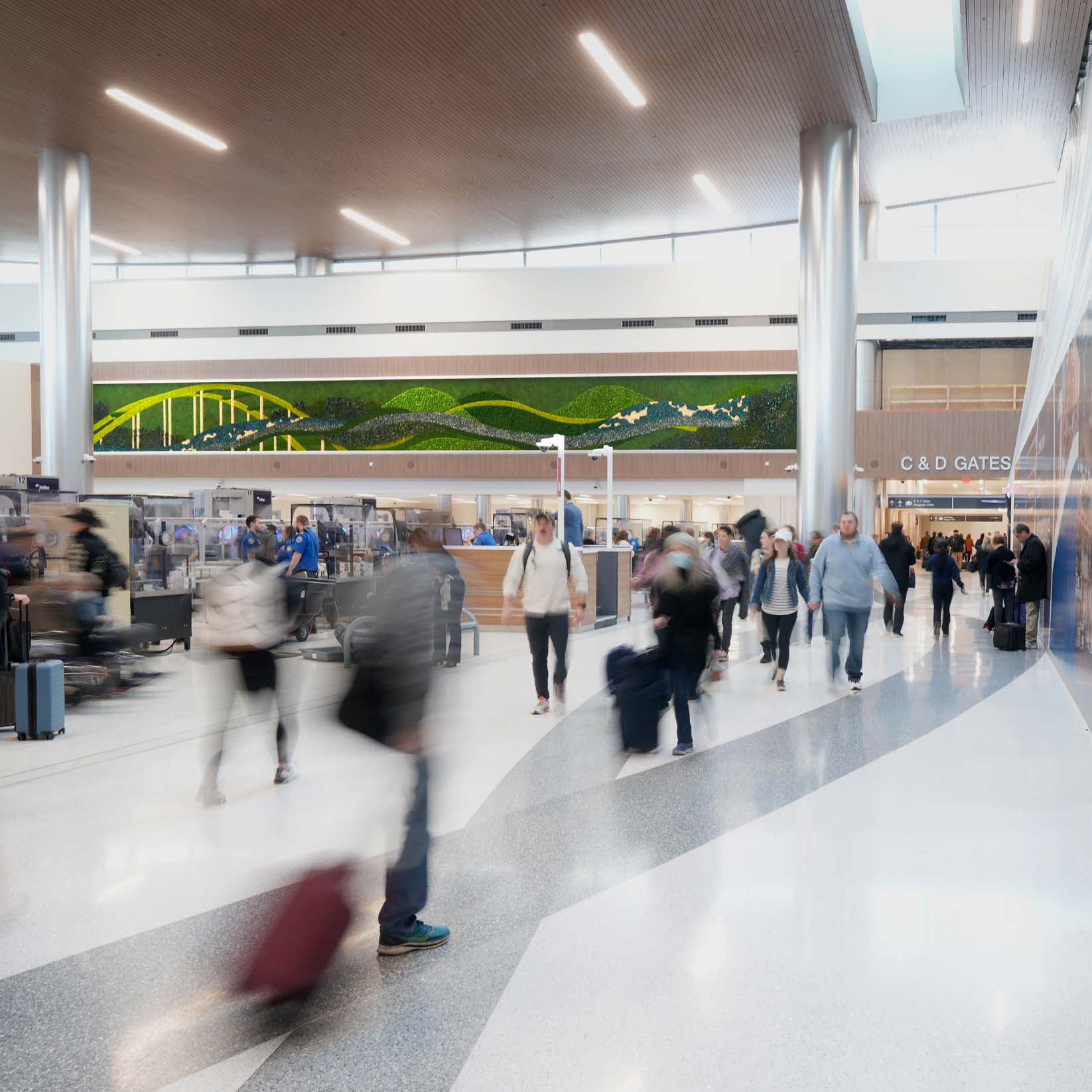
The fire safety compliance of properly installed preserved materials becomes crucial in airport environments where safety regulations are particularly stringent. Garden on the Wall® has demonstrated the effectiveness of this approach through their installation at Nashville International Airport, where preserved gardens transform high-stress security and departure areas into more humane environments that benefit millions of annual passengers. Quality preserved installations meet commercial fire safety requirements without requiring ongoing maintenance that could create operational disruptions, while cleaning protocols remain simple with installations that don't generate organic waste or require watering systems.
The Future of Airport Hospitality
As competition between airlines and airport operators intensifies, passenger experience differentiation becomes increasingly valuable. Lounges that provide genuine stress relief and restoration create competitive advantages that extend beyond traditional luxury amenities. Biophilic design represents the evolution of airport hospitality from passive comfort to active wellness support.
Commercial interior designers working in aviation markets have opportunities to create truly innovative lounge environments that redefine passenger expectations. Through strategic use of preserved gardens, moss walls, planter inserts, and draping preserved foliage, these spaces can become sanctuaries that transform the travel experience from endured necessity to restorative journey. The future belongs to airport lounges that understand travel as a holistic human experience requiring environmental support for both physical and psychological wellbeing, creating operational advantages that benefit airlines, airports, and passengers alike.
For more information on this subject, read this article: Aviation Wellness Transformation: Creating Restorative Travel Experiences in High-Stress Airport Environments and other related information, please visit our website: www.gardenonthewall.com.


