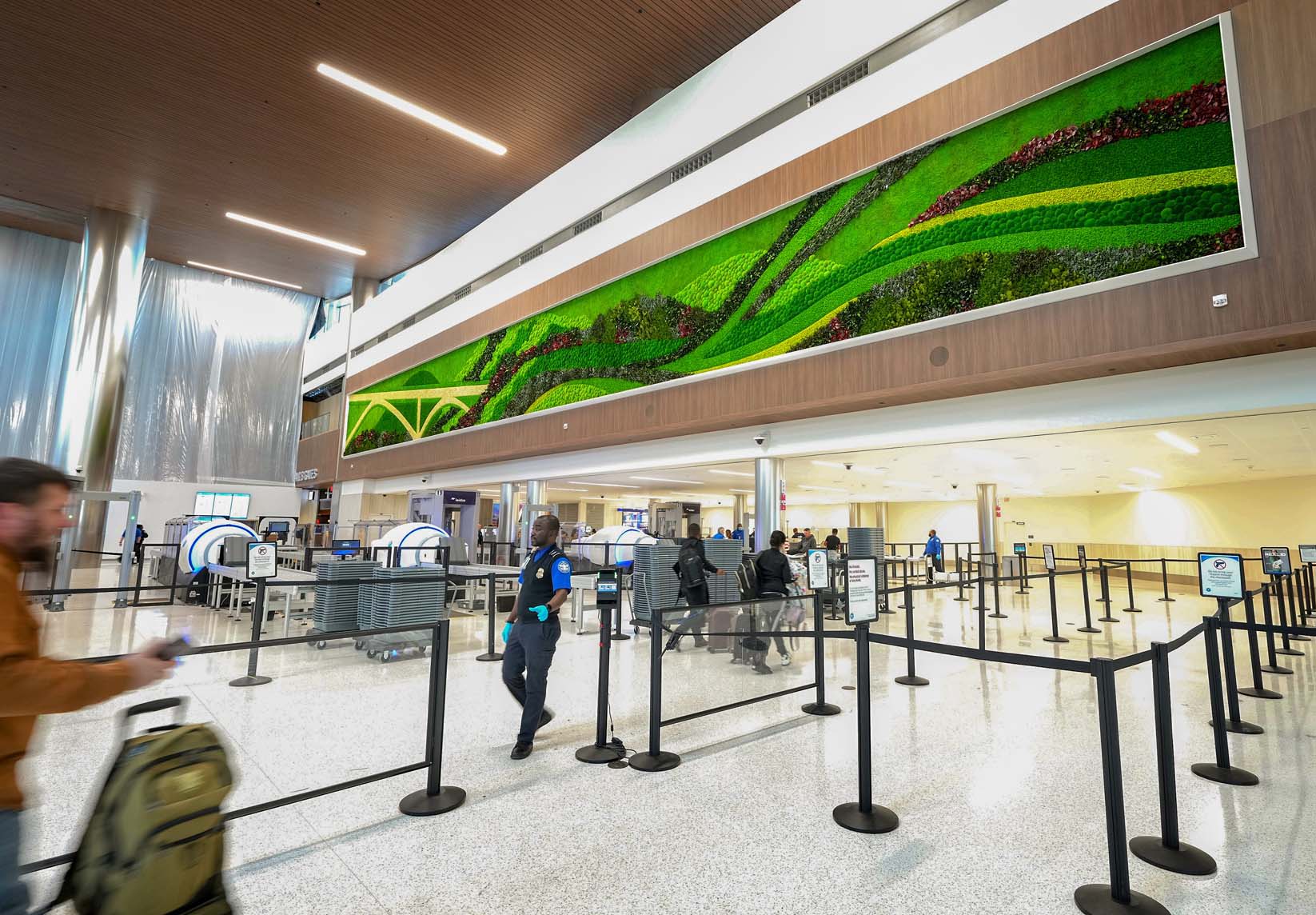
Aviation Wellness Transformation: Creating Restorative Airport Experiences

Key Takeaways Before You Read the Full Article:
30 Second Executive Summary
Aviation wellness design reimagines airports as restorative environments rather than high-stress endurance zones. Through preserved gardens and moss walls, terminals become spaces that reduce passenger stress, support emotional regulation, and improve overall travel experience in demanding 24/7 settings.
💼 Business Impact: Passenger Wellness as an Operational Advantage
Wellness-focused airport environments improve passenger satisfaction, dwell time, and brand perception while supporting retail and concession performance. By reducing stress-related friction, preserved nature elements contribute to smoother operations and more positive passenger–staff interactions.
🔬 Research Foundation: Nature as a Stress-Regulation Tool
The approach aligns with research showing that exposure to natural patterns lowers cortisol, blood pressure, and attention fatigue. Preserved gardens provide consistent visual and acoustic relief that supports psychological and physiological calm in complex travel environments.
🎯 Strategic Implementation: Designing Calm Within Motion
Strategic placement in gate areas, circulation paths, and waiting zones creates moments of restoration during peak stress periods. Preserved installations integrate seamlessly into airport infrastructure without disrupting security, operations, or passenger flow.
📊 Long-Term Value: Compounding Experience and Brand Returns
Restorative airport environments deliver cumulative benefits through improved passenger loyalty, stronger brand differentiation, and long-lasting operational efficiency. Over time, these wellness-driven investments help airports evolve from stressful necessities into destinations travelers actively prefer.
Ready to see how airports can transform travel stress into restorative experience? The full article explores how preserved gardens and moss walls create calmer, more human-centered aviation environments without compromising operational demands.
Aviation Wellness Transformation: Creating Restorative Travel Experiences in High-Stress Airport Environments
In the chaos of modern air travel, preserved nature elements are creating oases of calm that reduce passenger stress by 30% while transforming airports from endurance tests into restorative experiences. As aviation hubs become increasingly complex and passenger volumes surge, strategic integration of moss walls and preserved foliage gardens emerge as powerful solutions for enhancing traveler wellness while supporting operational efficiency in demanding 24/7 environments.
The Psychology of Travel Stress: Understanding the Challenge
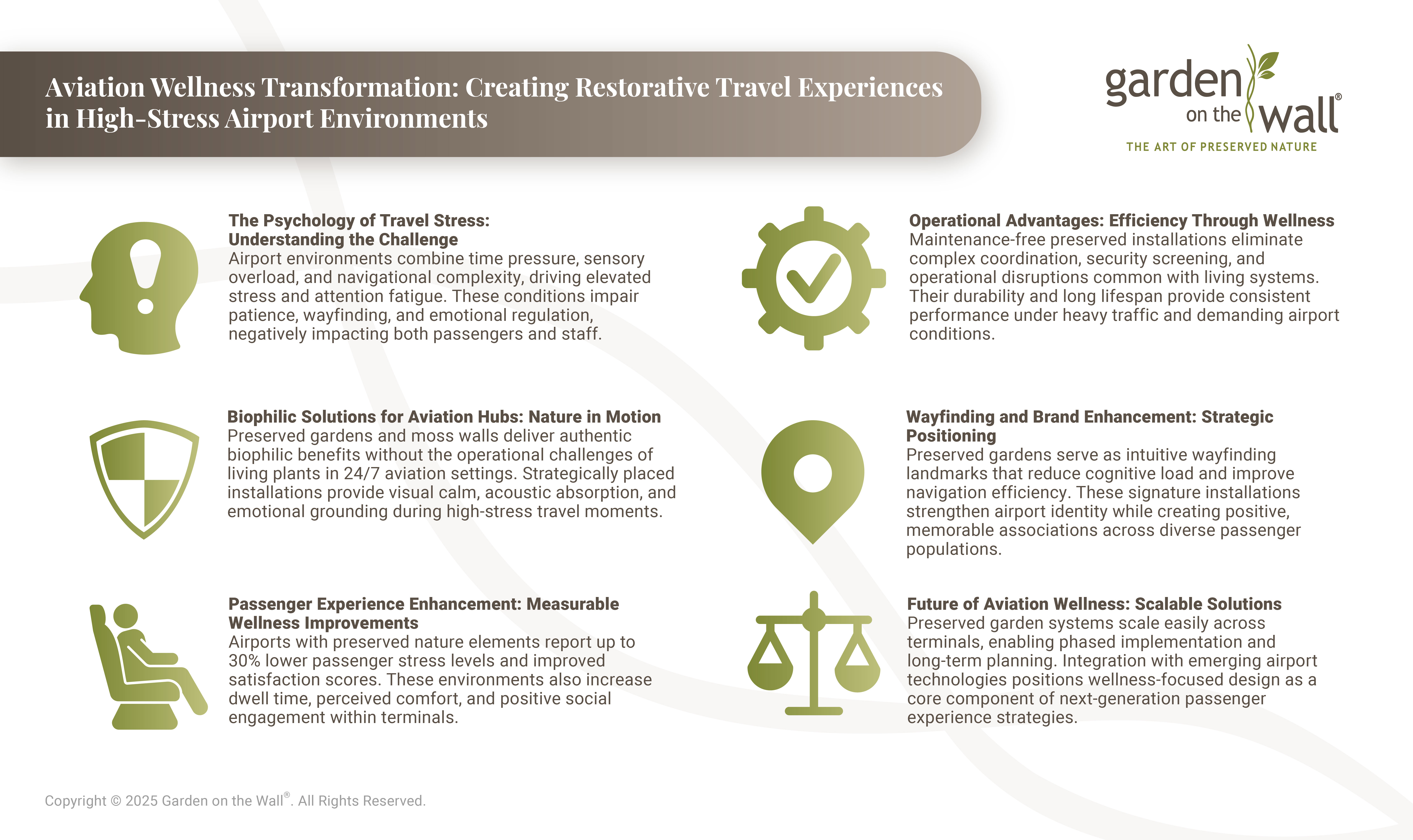
Airport environments represent perhaps the ultimate high-stress spaces in modern life, where multiple factors converge to create perfect storms of psychological and physiological tension. Cortisol levels spike dramatically in airport settings due to time pressure, security concerns, navigation complexity, and sensory overload from constant announcements, crowd noise, and visual chaos. Research documents that average stress hormone levels in airport environments exceed those found in emergency rooms or intensive care units.
The cognitive overload typical of airport environments creates what psychologists term "attention fatigue" the mental exhaustion resulting from prolonged exposure to demanding stimuli. Passengers experiencing this fatigue show decreased patience, impaired wayfinding abilities, and increased likelihood of conflicts with staff or other travelers. Traditional airport design has prioritized functionality and throughput over human experience, creating environments that often exacerbate rather than alleviate travel stress, driving growing interest in biophilic design solutions.
Biophilic Solutions for Aviation Hubs: Nature in Motion
Preserved gardens and moss walls offer unique advantages for aviation environments where traditional landscaping faces insurmountable challenges. The 24/7 operations, extreme foot traffic, security requirements, and climate control demands make living plants impractical, while artificial alternatives fail to provide the psychological benefits that travelers desperately need. Garden on the Wall®'s preserved greenery elements maintain authentic textures and natural complexity that trigger positive neurological responses while meeting stringent aviation safety requirements.
Strategic placement of preserved nature elements in waiting areas creates immediate stress reduction zones that help passengers regulate their emotional responses during vulnerable periods. Gate areas enhanced with moss walls and preserved foliage gardens provide visual anchors that reduce institutional overwhelm while creating more comfortable environments for extended waits. The acoustic benefits become particularly valuable in notoriously noisy airport settings, as preserved installations provide sound absorption that helps reduce ambient noise levels while creating quieter zones for rest and recovery.
Passenger Experience Enhancement: Measurable Wellness Improvements
Airports implementing preserved garden installations document significant improvements in passenger satisfaction metrics alongside measurable reductions in stress-related incidents. Travelers in terminal areas enhanced with preserved nature elements report 30% lower stress levels compared to conventional waiting areas, alongside improvements in perceived wait times and overall travel experience quality. The stress reduction benefits extend beyond subjective comfort to include measurable physiological improvements, with blood pressure readings averaging 10-15% lower in preserved garden zones.
Dwell time analysis reveals that passengers spend longer periods in areas enhanced with preserved installations, often choosing these spaces over conventional seating even when other options are available. This preference behavior creates opportunities for enhanced retail and food service revenue while improving passenger satisfaction through more comfortable waiting experiences. Social media engagement increases dramatically around preserved garden installations, with passengers frequently sharing images of these spaces across platforms, creating positive brand associations that extend far beyond immediate installation investment.
Operational Advantages: Efficiency Through Wellness
The maintenance-free nature of preserved foliage provides crucial operational advantages in airport environments where any maintenance activity requires complex coordination and security protocols. Traditional plant maintenance in airports involves scheduling around flight operations, security screening for maintenance personnel, and coordination with multiple airport departments—all while maintaining 24/7 accessibility for passengers. Garden on the Wall®'s preserved installations eliminate these operational complexities while providing consistent visual quality regardless of environmental conditions.
Preserved nature elements maintain their aesthetic and functional properties under demanding conditions including constant foot traffic, luggage contact, temperature fluctuations, and continuous lighting. Garden on the Wall®'s comprehensive testing ensures installations meet stringent fire safety requirements and transportation-specific certifications without compromising stress-reduction benefits. The 10-12 year lifespan with potential 20+ year extension through rejuvenation programs provides airports with exceptional long-term value while eliminating replacement disruptions during critical operational periods.
Wayfinding and Brand Enhancement: Strategic Positioning
Preserved gardens and moss walls create natural wayfinding landmarks that help passengers navigate complex terminal environments while reducing the institutional feel that contributes to travel anxiety. These installations become memorable reference points that improve navigation efficiency while creating positive associations with specific airports or airlines. The cultural universality of nature connection provides particular value in international aviation hubs where passenger populations represent diverse cultural backgrounds and languages.
Brand differentiation opportunities through preserved installations become increasingly important as airports compete for airline partnerships and passenger loyalty. Garden on the Wall®'s custom design capabilities ensure that signature preserved garden designs become iconic elements that distinguish airports while supporting broader branding initiatives around passenger care and environmental responsibility. Terminal atmosphere transformation through strategic placement helps airports create distinctive identities that extend beyond functional transportation hubs to become destinations that travelers actively prefer.
Future of Aviation Wellness: Scalable Solutions
The scalability of preserved garden solutions makes them particularly attractive for airport operators planning long-term facility improvements. Installations can be implemented incrementally across terminal areas, allowing operators to test and optimize approaches while managing capital investments responsibly. Integration opportunities with emerging airport technologies, including biometric screening and digital wayfinding systems, position preserved nature elements as foundational elements in next-generation passenger experience strategies.
The proven stress reduction benefits of preserved installations align with growing regulatory interest in passenger wellness standards, positioning airports with these enhancements advantageously for potential future requirements around passenger care and comfort standards. Garden on the Wall®'s expertise across over 1,880 projects provides airports with proven strategies for implementing effective biophilic solutions that deliver measurable results while supporting operational efficiency.
Conclusion: Transforming Travel Through Nature
As aviation continues recovering and growing following global disruptions, preserved gardens and moss walls represent strategic investments in passenger experience improvements that deliver measurable benefits while supporting operational efficiency. Garden on the Wall®'s award-winning installations transform airports from stressful necessities into restorative experiences that passengers actively appreciate, creating competitive advantages that extend throughout the entire travel ecosystem while demonstrating the powerful intersection of wellness design and operational excellence in modern aviation environments.
For more information on this subject, read this article: Why Preserved Gardens are the Future of Biophilic Design in Architecture and other related information, please visit our website: www.gardenonthewall.com