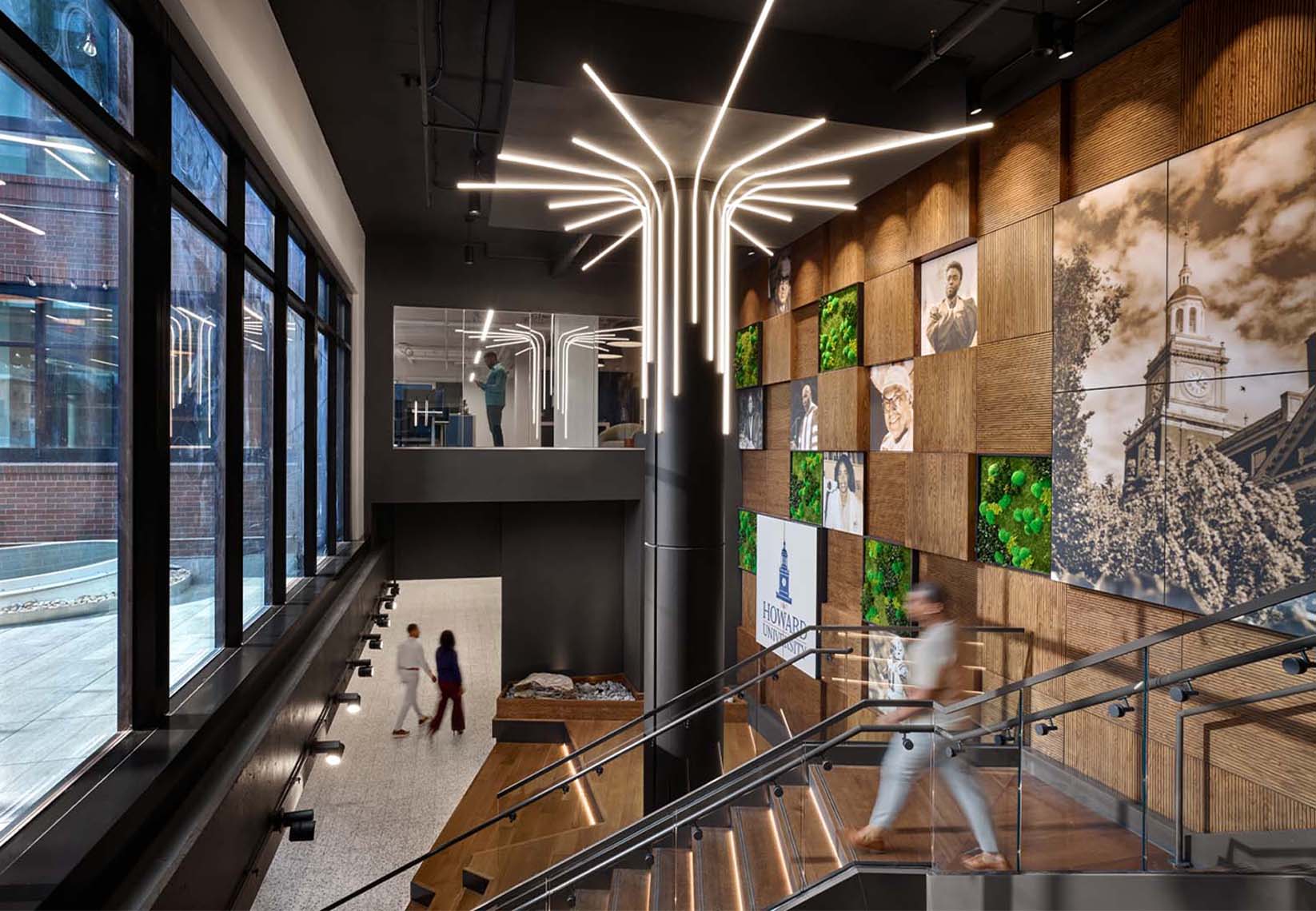
Circadian Health in Shift Work Environments and the Biophilia Connection

Key Takeaways Before You Read the Full Article:
30 Second Executive Summary
Shift workers face unique challenges related to disrupted circadian rhythms, sleep quality, and long-term wellbeing. Preserved gardens and moss walls provide biophilic solutions that help create restorative environments supporting health, focus, and resilience in 24/7 workplaces.
🕒 Circadian Support: Helping Workers Adapt to Irregular Schedules
Biophilic environments provide visual connections to nature that support psychological wellbeing during unconventional work hours. Preserved gardens help create spaces that feel more balanced and restorative.
☕ Restorative Break Spaces: Maximizing Recovery Opportunities
Strategically designed break areas help workers decompress and recharge. Preserved moss walls create calming spaces that support mental restoration during demanding shifts.
👁️ Visual Comfort: Reducing Night Shift Fatigue
Natural textures and organic patterns provide relief from prolonged exposure to artificial lighting and screens. These visual breaks support focus and reduce eye strain.
🌙 Recovery Support: Enhancing Sleep Transition Spaces
Preserved gardens help create calming environments that support relaxation and rest. These spaces contribute to improved recovery between shifts.
🤝 Workplace Wellbeing: Strengthening Community and Resilience
Biophilic gathering spaces encourage social interaction and support workplace culture. These environments help combat isolation often associated with shift work.
Ready to explore how biophilic design can support circadian health in 24/7 workplaces? The full article examines how preserved gardens and moss walls help create healthier, more restorative environments for shift workers.
Shift work disrupts natural circadian rhythms, creating significant health challenges for millions of workers in healthcare, manufacturing, security, and 24/7 service industries. The integration of preserved gardens, moss walls, and strategic preserved foliage installations in shift work environments offers a powerful biophilic design solution that supports circadian health while providing visual anchors to nature during unconventional work hours. These installations create restorative environments that help workers maintain psychological wellbeing despite irregular schedules and artificial lighting conditions.
The thoughtful placement of preserved nature elements in shift work facilities acknowledges the unique physiological and psychological challenges faced by workers who operate outside traditional daylight hours. By incorporating preserved greenery and carefully designed natural installations, designers can create supportive environments that promote better sleep quality, reduced stress, and improved overall health outcomes for shift workers.
Supporting Natural Rhythms Through Biophilic Design
Shift workers often struggle with disrupted sleep patterns and difficulty maintaining healthy circadian rhythms due to exposure to artificial lighting during nighttime hours. Preserved moss walls and garden installations provide visual connections to nature that can help regulate psychological responses and support the body's natural rhythm maintenance systems.
The organic patterns and textures found in preserved foliage installations offer visual complexity that engages the brain's natural processing systems in ways that artificial environments cannot replicate. This engagement helps maintain cognitive alertness during night shifts while providing calming influences that support the transition to rest periods, essential for shift workers who must sleep during daylight hours.
Creating Restorative Break Spaces for Irregular Schedules
Shift work environments require carefully designed break areas that provide maximum restoration in limited time periods, making the strategic placement of preserved gardens and moss installations particularly valuable. These natural elements create psychological refuge spaces where workers can decompress and reset during brief breaks throughout extended shifts.
Preserved nature installations in break areas serve multiple functions: they provide visual relief from artificial environments, create calming atmospheres that support stress reduction, and offer sensory experiences that help workers transition between high-intensity work periods and necessary rest intervals. The low-maintenance nature of preserved gardens ensures these benefits remain consistent regardless of shift timing or facility staffing patterns.
Addressing Night Shift Visual Fatigue
Extended exposure to artificial lighting during night shifts creates significant visual fatigue and eye strain that can impact worker performance and safety. Preserved moss walls and garden installations provide essential visual relief through their natural color palettes and organic textures that contrast beneficially with harsh artificial lighting systems.
The strategic placement of preserved foliage and draping preserved greenery creates visual focal points that encourage workers to look away from screens and artificial light sources, providing necessary visual breaks that help maintain eye health and cognitive clarity throughout extended shifts. This biophilic intervention becomes particularly important in healthcare and security environments where visual acuity directly impacts worker safety and performance quality.
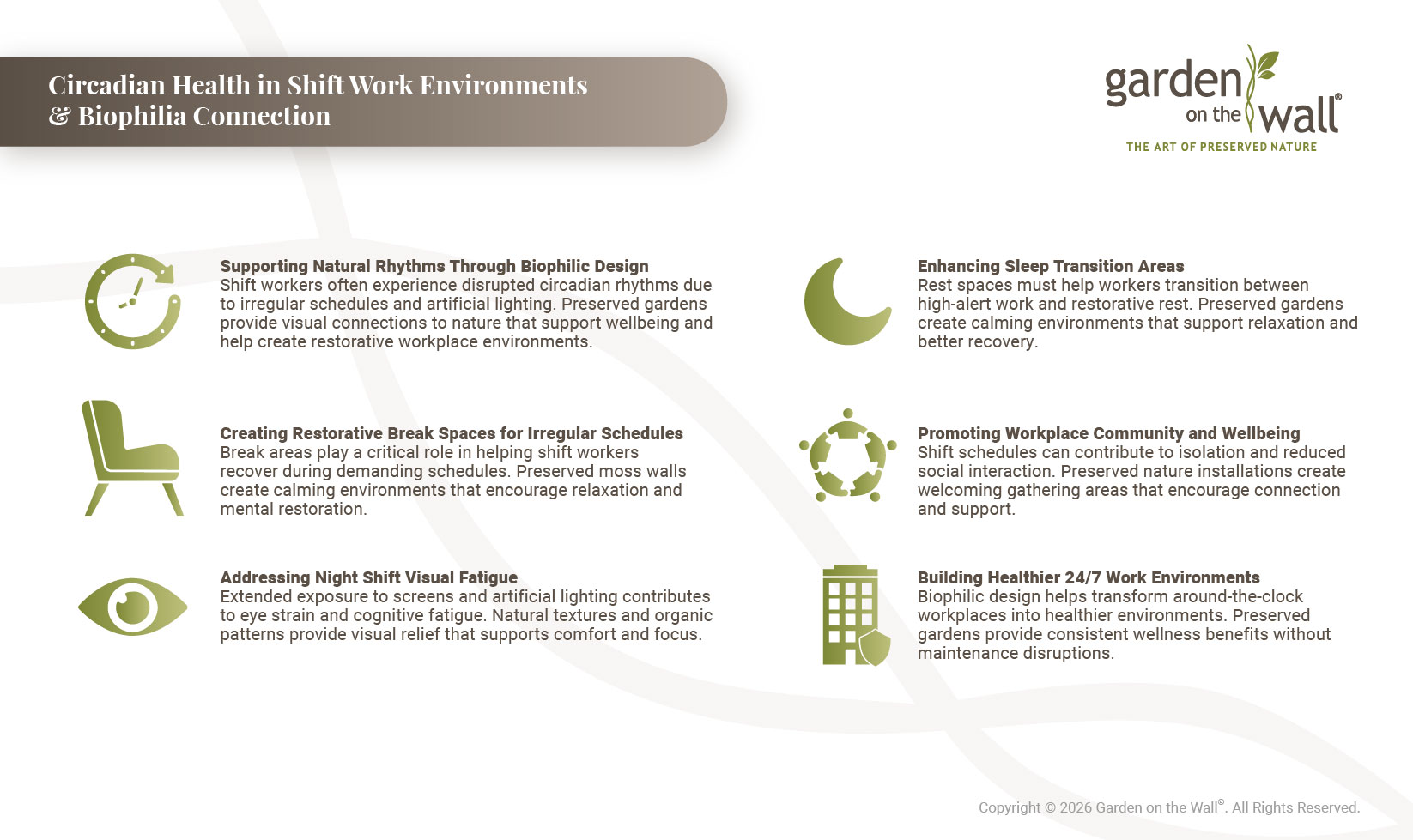
Enhancing Sleep Transition Areas
Many shift work facilities include on-site rest areas or quiet zones where workers can nap between shifts or during extended duty periods. The integration of preserved gardens and natural elements in these spaces creates environments that support the psychological transition necessary for quality rest despite unconventional timing.
Preserved moss installations and carefully positioned planter inserts create calming environments that help signal the brain to prepare for rest, even when external conditions don't support natural sleep cues. The visual consistency and natural beauty of preserved gardens provide psychological anchoring that supports better sleep quality and more effective rest periods essential for shift worker health and performance.
Promoting Workplace Community and Wellbeing
Shift work often creates social isolation due to unconventional schedules that conflict with typical social patterns. Preserved garden installations create attractive gathering spaces that encourage positive social interactions among shift workers and provide focal points for workplace community building.
The aesthetic appeal of preserved moss walls and garden installations creates spaces where workers naturally gravitate for informal meetings, break conversations, and peer support interactions. These biophilic gathering areas become particularly valuable for building workplace cohesion among teams that may have limited overlap due to rotating schedules and varying shift patterns.
Building Healthier 24/7 Work Environments
The design of shift work environments represents a critical opportunity to address one of the most significant occupational health challenges facing modern workers. By mindfully integrating preserved gardens, moss walls, and preserved foliage installations, designers can create environments that actively support circadian health rather than simply accommodating disrupted schedules.
The success of biophilic interventions in shift work environments depends on consistent, reliable natural beauty that doesn't require maintenance coordination across multiple shifts or operational schedules. This makes preserved nature installations particularly valuable for 24/7 operations where traditional plant care would be impractical or disruptive. As our understanding of circadian health continues to evolve, the integration of biophilic design principles in shift work environments will become increasingly recognized as an essential component of occupational health and worker wellbeing strategies.
For more information on this subject, read this article: Beyond Stress Reduction: How Salutogenic Design with Preserved Gardens Creates Health-Generating Environments and other related information, please visit our website: www.gardenonthewall.com.