Multi-Sensory Biophilia: Engaging Touch, Scent, and Sound Through Preserved Nature
Key Takeaways Before You Read the Full Article:
30 Second Executive Summary
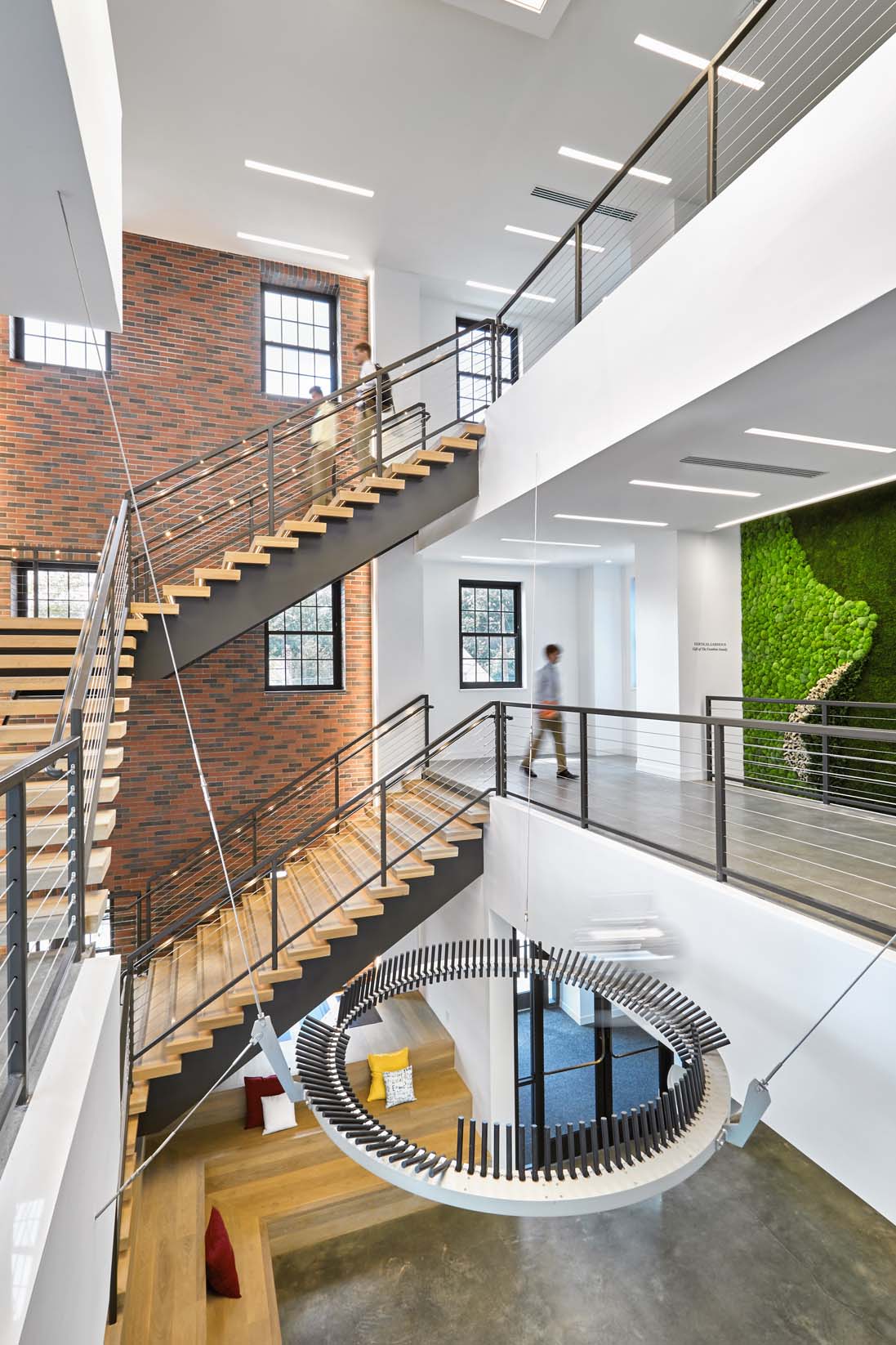
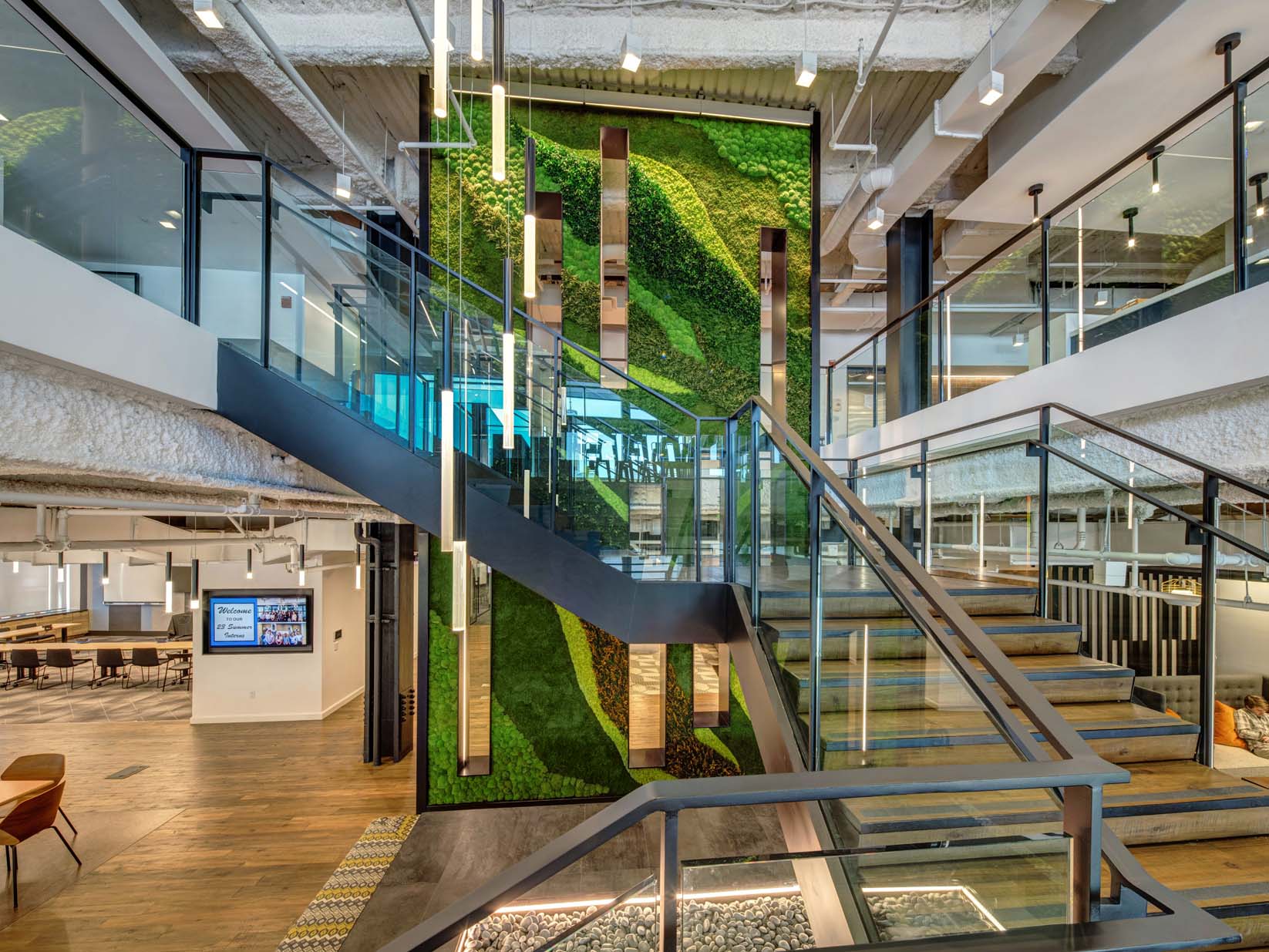
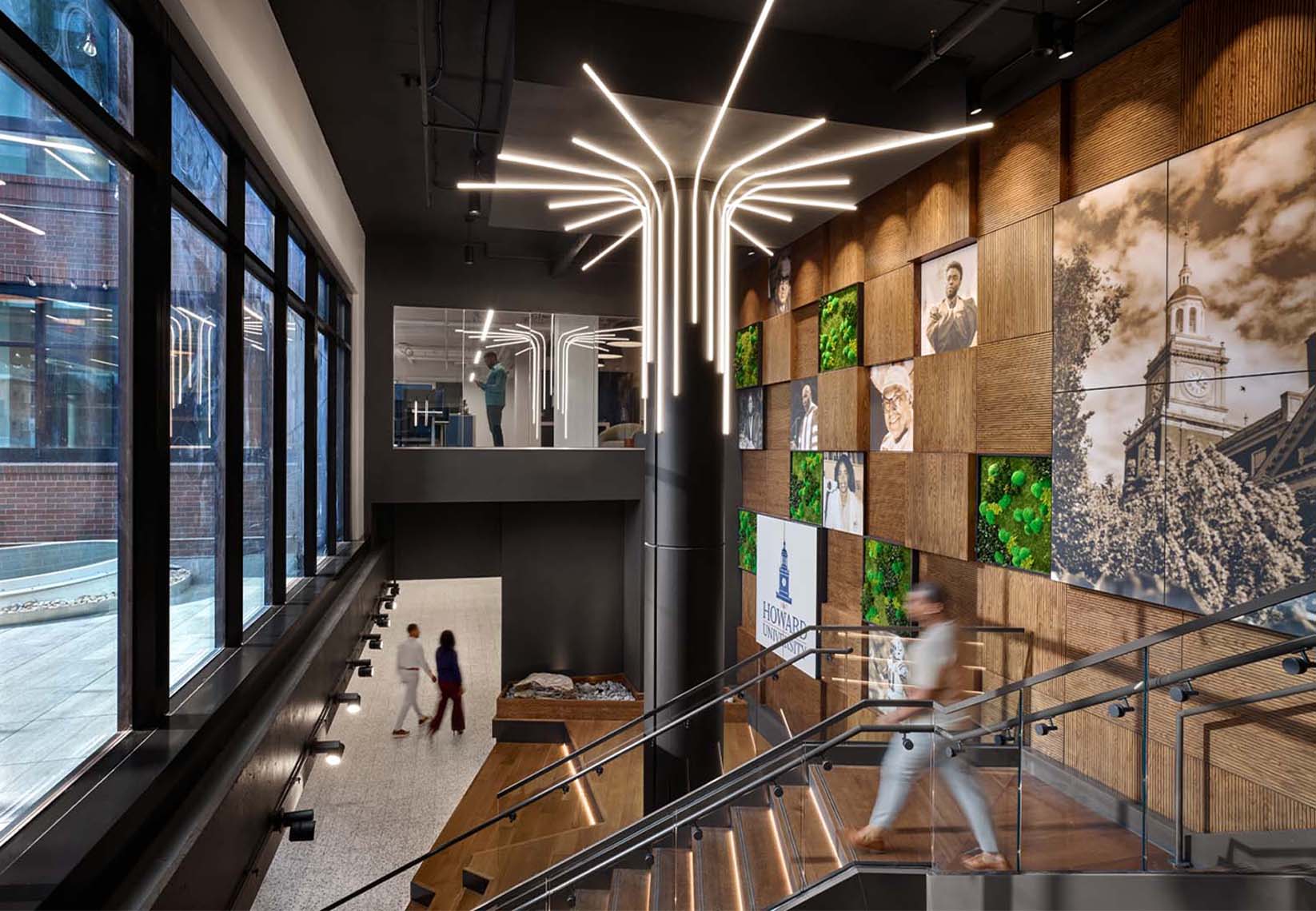
This workplace installation demonstrates how preserved gardens move beyond visual enhancement to support measurable performance outcomes. Integrated within a high-accountability corporate environment, the installation reflects how biophilic design can align with analytics, productivity goals, and long-term organizational value.
💼 Business Impact: Biophilic Design as a Measurable Asset
In data-driven corporate settings, preserved gardens support productivity, talent retention, and employee experience metrics. Rather than serving as décor, the installation functions as a strategic environmental asset that contributes to performance-focused workplace objectives.
🔬 Research Foundation: Nature Drives Cognitive Performance
The project aligns with research showing that preserved gardens and moss walls improve focus, stress regulation, and cognitive clarity. These neurological and psychological benefits directly support measurable outcomes in demanding professional environments.
🎯 Strategic Implementation: Data-Driven Optimization
Placement within high-use and transition areas reflects intentional design decisions that support benchmarking and ongoing performance evaluation. The installation demonstrates how preserved gardens can be scaled and positioned to maximize impact without operational disruption.
📊 Long-Term Value: Cumulative and Compounding Returns
Within enterprise workplaces, preserved gardens contribute to long-term value through improved employee satisfaction, reduced turnover risk, and enhanced workplace perception. Over time, these cumulative benefits reinforce why wellness-focused environments outperform conventional workplace models.
Ready to explore how data-driven workplace analytics turn biophilic design into a measurable performance strategy? The full article reveals how preserved gardens and moss walls deliver continuous optimization and documented ROI across productivity, wellness, and long-term organizational value.
Multi-Sensory Biophilia: Beyond Visual - Engaging Touch, Scent, and Sound Through Preserved Nature
True biophilic design engages all five senses discover how preserved gardens, moss walls and planter inserts crafted with preserved foliage create rich multi-sensory experiences that amplify wellness benefits far beyond purely visual nature connections. While most biophilic installations focus exclusively on visual appeal, cutting-edge research reveals that multi-sensory engagement with natural elements triggers more powerful neurological responses, creates stronger emotional connections, and delivers enhanced cognitive benefits.
The Science of Multi-Sensory Experience: Neurological Amplification
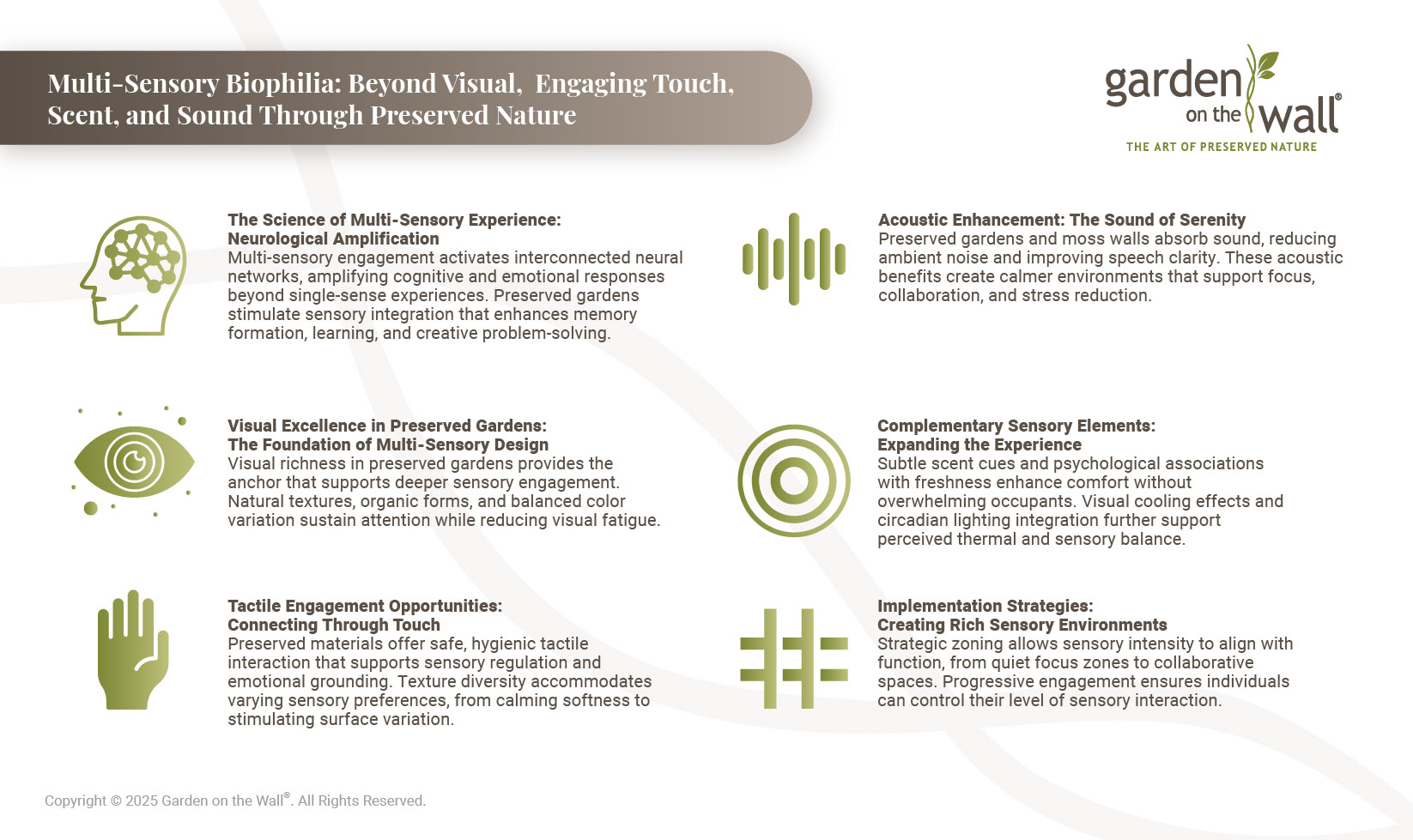
Multi-sensory engagement with natural elements activates broader neural networks than single-sense experiences, creating what neuroscientists call "sensory integration enhancement." When preserved gardens with moss walls stimulate multiple sensory pathways simultaneously, the brain processes these inputs through interconnected neural systems that amplify the individual benefits of each sensory experience.
Research in cognitive neuroscience demonstrates that multi-sensory natural experiences create stronger memory formation, enhanced emotional responses, and improved learning outcomes compared to purely visual nature exposure. The neurological mechanisms involve cross-modal plasticity, where stimulation of one sensory system enhances processing in other sensory areas, creating comprehensive cognitive enhancement. These multi-sensory interactions can even create synesthetic effects, where stimulation of one sense (like sight) enhances or blends into another (such as perceived sound, touch, or mood), leading to richer, more integrated experiences.
Synesthetic-like effects occur when multi-sensory preserved gardens and planter inserts trigger connections between different sensory processing areas, leading to enhanced creativity, improved problem-solving, and increased innovative thinking. Garden on the Wall®'s installations create cognitive flexibility that proves particularly valuable in complex work environments requiring adaptive thinking.
Visual Excellence in Preserved Gardens: The Foundation of Multi-Sensory Design
Visual complexity optimization in preserved gardens and moss walls creates the foundational sensory experience that supports additional sensory engagement opportunities. The authentic textures, natural color variations, and organic forms preserved in quality installations provide visual richness that engages multiple aspects of visual processing simultaneously.
Texture variety becomes crucial for visual engagement as preserved gardens and planter inserts maintain the subtle surface variations and natural imperfections that make living plants visually compelling. Premium preservation techniques retain these authentic characteristics while eliminating the visual degradation that occurs with artificial alternatives.
Color variation throughout preserved gardens (or moss walls) provides visual interest that supports sustained attention without becoming overwhelming. Natural color palettes create visual harmony that reduces eye strain while providing sufficient variation to maintain engagement and prevent visual monotony, with light interaction creating dynamic visual experiences throughout the day.
Tactile Engagement Opportunities: Connecting Through Touch
Safe tactile experiences with preserved materials offer unique opportunities for sensory engagement that living plants cannot provide due to hygiene and maintenance concerns. Quality preserved gardens, moss walls and planter inserts maintain authentic textures that can be safely touched and explored without risk of damage or contamination.
Texture variation within preserved gardens and planter inserts creates rich tactile landscapes that support different sensory preferences and needs. Some individuals benefit from stimulating textures that provide sensory input, while others prefer softer textures that create calming tactile experiences. Garden on the Wall®'s installations accommodate both preferences.
Temperature and humidity perception changes occur in areas with preserved gardens with moss walls, as the thermal mass and surface characteristics create subtle microclimatic effects that contribute to comfort and well-being. Ergonomic integration opportunities allow preserved gardens and planter inserts to serve functional roles that encourage tactile interaction while providing practical functionality.
Acoustic Enhancement: The Sound of Serenity
Sound absorption properties of preserved gardens and moss walls provide significant acoustic benefits that create calmer, more comfortable environments. The natural textures and varied surfaces of preserved installations absorb sound waves effectively, reducing ambient noise levels while improving speech intelligibility and concentration capabilities.
Natural sound integration opportunities complement preserved gardens and planter inserts through carefully selected nature sounds that enhance rather than compete with the visual biophilic experience. Gentle water features or recorded nature sounds can create acoustic environments that support the psychological benefits of Garden on the Wall®'s installations.
Psychoacoustic benefits emerge as preserved gardens, moss walls help create acoustic environments that support different workplace activities. Quiet zones enhanced with preserved installations provide retreat spaces for concentration, while collaborative areas can use preserved gardens and planter inserts to define acoustic boundaries without creating complete isolation.
Complementary Sensory Elements: Expanding the Experience
Subtle scent integration possibilities exist through careful addition of natural fragrance elements that complement preserved gardens with moss walls without overwhelming sensitive individuals. Essential oil diffusion, scented wood elements, or naturally fragrant preserved materials can enhance the multi-sensory experience when used judiciously.
Air quality and freshness perception improvements occur through psychological mechanisms as preserved gardens and planter inserts create associations with fresh, natural environments. These perceptual improvements contribute to comfort and well-being while supporting positive workplace experiences, even when they don't actively purify air.
Thermal comfort enhancement through preserved gardens occurs via both physical and psychological mechanisms. The visual cooling effects of green elements can reduce perceived temperature, while circadian lighting integration opportunities allow installations to serve as platforms for lighting systems that support natural rhythms.
Implementation Strategies: Creating Rich Sensory Environments
Zoning strategies for multi-sensory preserved gardens and planter inserts recognize that different workplace areas may benefit from different sensory emphasis. High-concentration areas might prioritize visual calm and acoustic absorption, while collaborative spaces could emphasize tactile engagement and stimulating visual variety from Garden on the Wall®'s diverse portfolio.
Progressive sensory engagement allows individuals to choose their level of sensory interaction with preserved gardens with moss walls, accommodating different sensory preferences and sensitivity levels. Some users may prefer primarily visual engagement, while others seek rich multi-sensory experiences that Garden on the Wall®'s expertise provides.
Cultural sensitivity considerations ensure that multi-sensory preserved gardens and planter inserts respect diverse cultural attitudes toward nature, touch, and sensory engagement. Integration with existing systems ensures that multi-sensory experiences complement rather than compete with other workplace technologies and amenities.
Measuring Multi-Sensory Impact: Comprehensive Assessment
User experience feedback systems capture both quantitative and qualitative responses to multi-sensory preserved gardens with moss walls, providing insights into which sensory combinations provide maximum benefit for different user groups and workplace applications. Garden on the Wall®'s 1,880+ projects provide valuable data for optimizing sensory engagement strategies.
Neurological response measurement through EEG and other monitoring techniques reveals how multi-sensory preserved gardens and planter inserts affect brain function differently than single-sense stimulation, providing evidence for the enhanced benefits of comprehensive sensory design.
Behavioral observation studies track how individuals interact with multi-sensory preserved gardens with moss walls, revealing usage patterns that inform optimization strategies while identifying successful design features. Long-term satisfaction tracking measures how these experiences influence workplace satisfaction, stress levels, and performance over extended periods.
Conclusion: The Future of Comprehensive Sensory Design
The evolution toward multi-sensory biophilic design represents sophisticated understanding of how human beings connect with natural environments. Garden on the Wall®'s preserved gardens, moss walls and planter inserts provide ideal platforms for creating rich sensory experiences that engage multiple aspects of human perception while maintaining practical advantages of maintenance-free installations.
By moving beyond purely visual biophilic design to embrace comprehensive sensory engagement, organizations can create workplace environments that more effectively support human wellness, productivity, and satisfaction while delivering enhanced returns on biophilic design investments through proven, sustainable solutions.
For more information on this subject, read this article: Designing for the Human Well-being and the Biophilia Approach and other related information, please visit our website: www.gardenonthewall.com