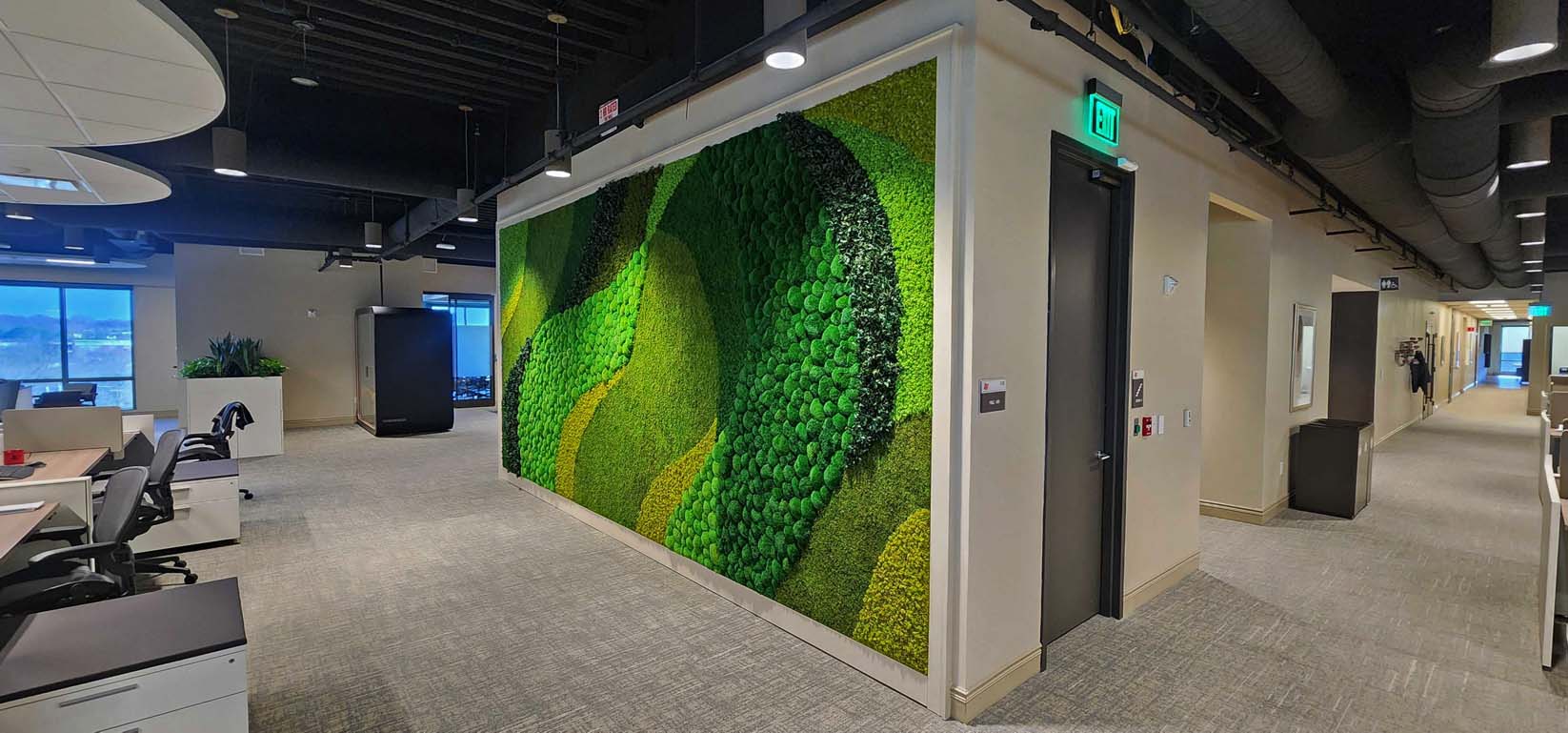
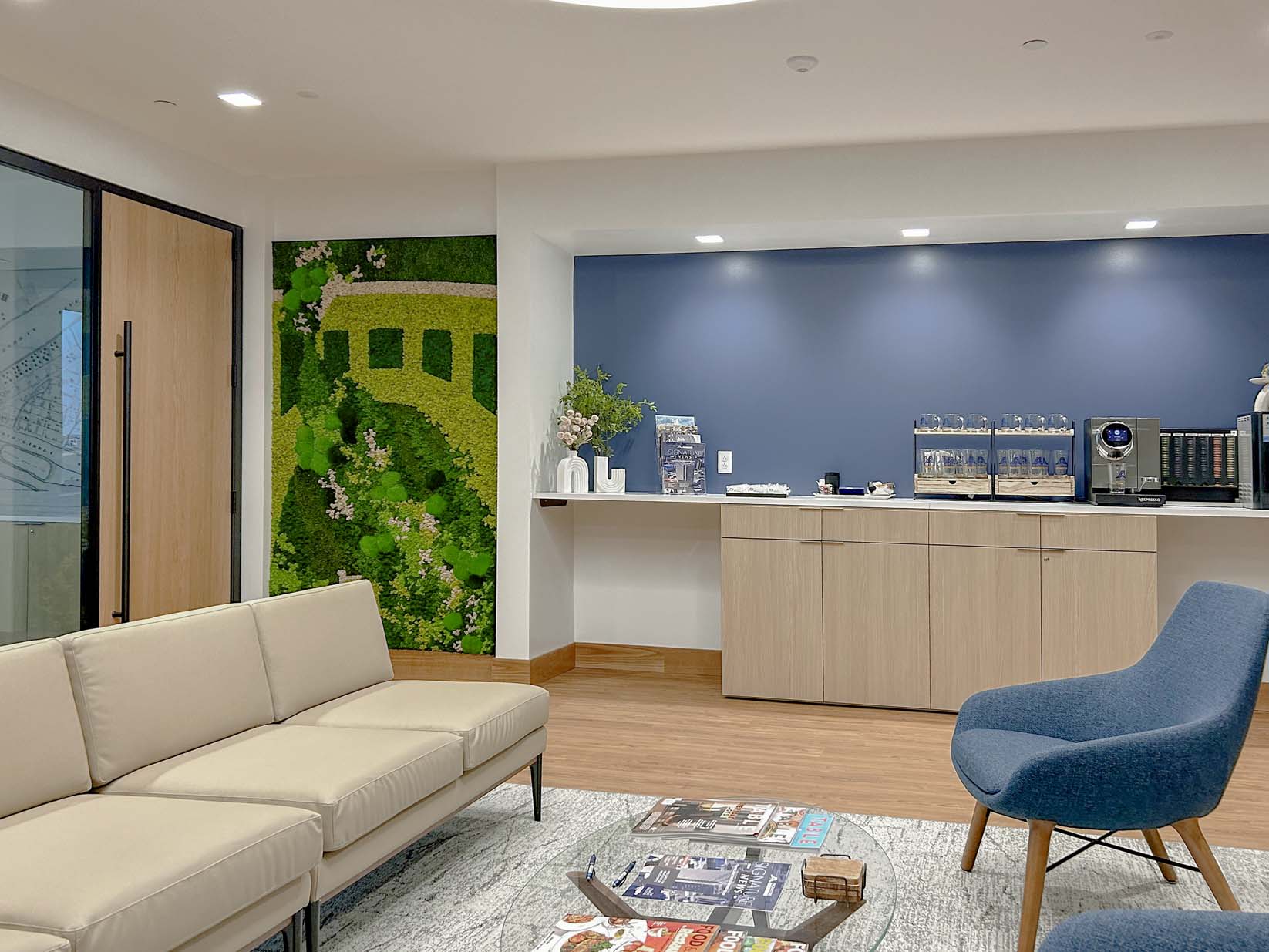
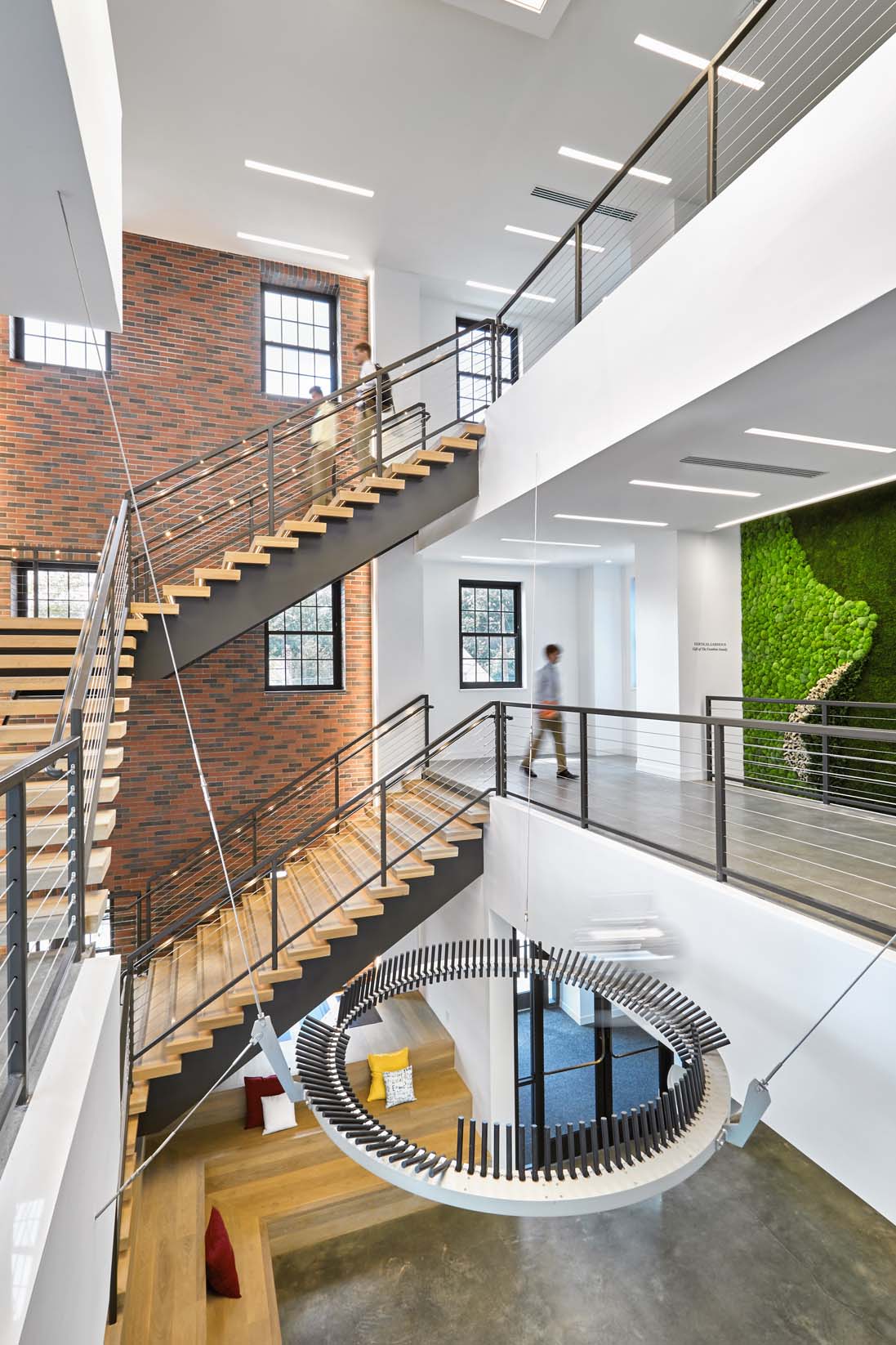
How Preserved Gardens and Moss Walls Serve in Biophilic Design
Key Takeaways Before You Read the Full Article:
30 Second Executive Summary
Preserved gardens, moss walls, and preserved foliage installations aren’t just beautiful design features they are scientifically validated tools that enhance cognition, reduce stress, and elevate performance by directly influencing brain activity and attention systems. Modern neuroscience shows that these biophilic interventions create brain states associated with creativity, clarity, and high-level problem-solving.
🔬 Research Foundation: Advanced fMRI, EEG, and neuroaesthetic studies reveal that preserved nature activates alpha brainwaves, restores depleted attention, and engages the Default Mode Network improving memory, planning, and creativity. Unlike artificial plants or high-maintenance living walls, preserved foliage delivers consistent, evidence-based neurological benefits.
🧠 Cognitive Impact: Exposure to preserved gardens reduces attention fatigue, supports soft fascination, and improves mental clarity throughout the day. Documented improvements include up to 15% higher focus and a 27% reduction in physiological stress markers, directly enhancing performance in demanding environments.
📊 Performance Metrics: Organizations see measurable gains including reduced mental fatigue, stronger creative output, and increased productivity. Employees in biophilic-enhanced spaces report higher satisfaction, improved decision-making, and better overall well-being.
🏗️ Strategic Integration: Placing preserved gardens near high-load workstations, transition zones, and restorative areas maximizes neurological benefits. Long-lasting installations (10–20+ years) maintain visual complexity and multisensory engagement while supporting strict material health and VOC standards.
Ready to see how neuroscience-backed design can rewire your workspace for success? The full article breaks down the brain science, implementation strategies, and real-world ROI behind preserved gardens and moss walls.
The Neuroscience Revolution in Commercial Design: How Preserved Gardens & Moss Walls Rewire Our Brains for Success
What if the secret to unlocking your team's cognitive potential was growing on your walls? As we spend over 90% of our time indoors, our brains are constantly bombarded with stimuli that demand focused attention and cognitive effort. This relentless mental exertion leads to attention fatigue, stress, and dramatically reduced cognitive performance. However, emerging neuroscience research reveals a powerful antidote to these modern challenges: preserved gardens, moss walls, and planter inserts crafted with preserved foliage that can literally rewire our brains for success.
The Brain-Environment Connection: More Than You Think
Advanced neuroscientific research using functional magnetic resonance imaging (fMRI) and electroencephalography (EEG) has begun documenting the profound ways our brains respond to natural environments. When we interact with preserved gardens and moss walls, several remarkable neural responses occur that directly impact our cognitive performance.
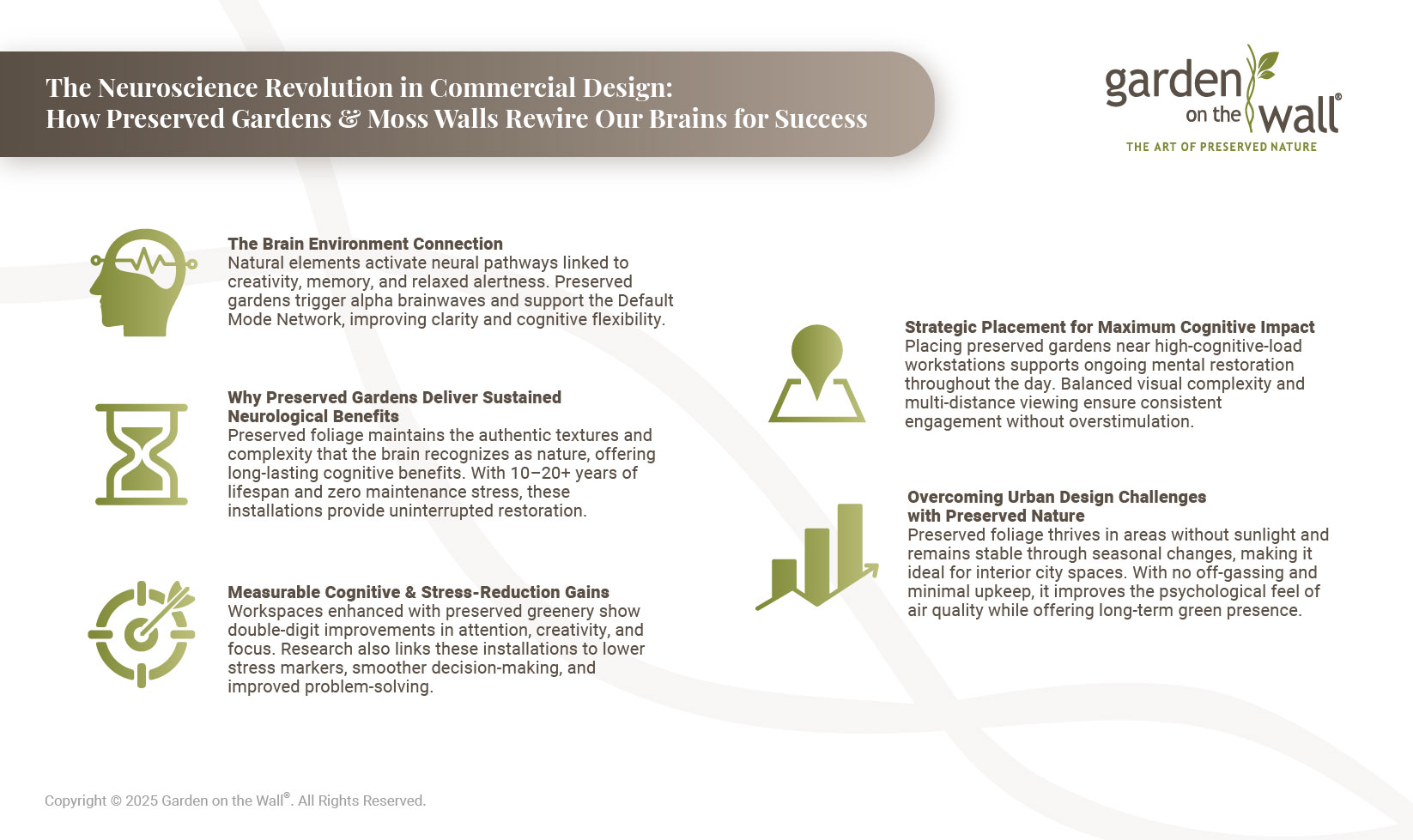
Studies reveal that exposure to natural elements increases alpha wave activity in the brain these brain waves are associated with a relaxed, alert state of consciousness that neuroscientists call "wakeful relaxation." This represents the ideal brain state for tasks requiring creativity and holistic thinking. Even more fascinating, preserved nature installations activate the Default Mode Network (DMN), a set of interconnected brain regions that become active during introspection, memory recall, and future planning.
Science becomes even more compelling when we examine Attention Restoration Theory (ART). Our directed attention the mental effort required for focused work is a finite resource that becomes depleted throughout the day, leading to attention fatigue. Natural environments, including preserved gardens, help restore this directed attention capacity by engaging our "involuntary attention" or "soft fascination." The patterns of preserved foliage varied textures of moss walls, and organic forms in planter inserts capture our attention gently without demanding cognitive effort, allowing our directed attention mechanisms to rest and replenish.
Why Preserved Gardens Maintain Neurological Benefits
Unlike artificial plants that lack the subtle variations and intricate details that engage our brains or living walls that their maintenance & budgetary challenges outweigh their benefits, preserved gardens & moss walls maintain the authentic complexity that triggers positive neural responses. The varied textures, colors, and forms create what researchers call "organized complexity" the type of visual information most appealing to our neural processing systems.
Preserved moss walls and preserved foliage gardens with biodiverse plant species offer several neurological advantages over living plants. First, they provide sustained presence to achieve meaningful neurological benefits, exposure to natural elements must be consistent. Premium preserved installations (offered by industry leader Garden on the Wall for example) maintain their beauty and cognitive impact for 10-12 years, with same provider offering rejuvenation programs extending lifecycles to 20+ years. This longevity ensures sustained neurological benefits over time.
Second, preserved gardens, moss walls or planter inserts crafted with preserved foliage eliminate maintenance-related stress. Living plants require constant care, and the anxiety of maintenance or watching plants deteriorate can actually counter their cognitive benefits. Preserved foliage installations provide pure psychological benefit without associated stress, creating environments where the brain can focus on restoration rather than worry.
Finally, preserved gardens, moss walls and preserved foliage planter inserts offer multi-sensory engagement through rich visual and perceived tactile stimulation. The varied textures and natural forms engage multiple sensory pathways in the brain, enhancing their restorative effect while maintaining the authentic connection to nature our brains crave.
Measurable Cognitive Improvements in Action
The neurological benefits of preserved greenery translate into concrete, measurable improvements in workplace performance. Research published in the Journal of Environmental Psychology demonstrates that employees working in environments enhanced with preserved nature elements show 15% higher scores on tests of attention and concentration compared to those in conventional workspaces.
Even more impressive, studies from the University of Hyogo (in Japan) found that workers in workspaces with plant installations showed a 27% reduction in heart rate variability - a key physiological marker of stress - compared to those without natural elements. This stress reduction directly correlates with improved cognitive function, as chronic stress impairs memory formation, decision-making, and creative problem-solving abilities.
In high-cognitive-demand environments, preserved gardens and moss walls create opportunities for mental restoration that prevent cognitive fatigue. Strategic placement near intensive workstations allows employees to engage in brief moments of "soft fascination," maintaining peak cognitive performance throughout the day. Research indicates this approach can reduce mental fatigue by up to 25% while enhancing creative thinking and problem-solving capabilities.
Strategic Implementation for Maximum Cognitive Impact
Implementing preserved gardens for optimal neurological benefit require evidence-based placement strategies. Position installations where they'll have the greatest impact on stress reduction and cognitive restoration near high-cognitive-load workstations, in transition spaces between different activities, or in areas associated with waiting or recuperation.
Design spaces so preserved gardens can be viewed from multiple distances, as research shows different viewing distances engage distinct neural processes. Both close examination and distant views provide unique cognitive benefits, with close viewing engaging detailed pattern recognition while distant viewing supports broader spatial processing and relaxation responses.
It is important to choose preserved garden and moss wall designs with appropriate levels of visual complexity. Too little visual information fails to engage the brain effectively, while excessive complexity becomes overwhelming. The optimal balance creates environments that consistently engage involuntary attention while supporting directed attention restoration.
Material health considerations are crucial for maintaining cognitive benefits. Preserved foliage installations must meet stringent health standards to ensure they support rather than compromise neurological function. Look for providers offering comprehensive third-party testing, including Health Product Declaration (HPD) certification and compliance with strict indoor air quality standards, like CDPH VOC Standards, or 100% Bio-Based Test Results.
Real-World Applications and Measurable ROI
Major corporations have recognized the cognitive advantages of preserved garden installations. Companies ranging from technology giants to healthcare organizations have integrated preserved moss walls and planter inserts throughout their facilities, creating sophisticated biophilic environments that demonstrably enhance employee productivity while eliminating ongoing maintenance costs.
These installations deliver measurable returns through improved cognitive performance, reduced stress-related absenteeism, and enhanced creative output. Organizations report productivity gains of 8-12% following preserved garden installation, alongside significant improvements in employee satisfaction and retention rates.
The talent acquisition advantages are equally compelling. In competitive markets, workspaces enhanced with preserved gardens become powerful recruitment tools, attracting top performers who prioritize wellness-focused work environments. The cognitive benefits translate into sustained competitive advantages through enhanced innovation, improved decision-making, and superior problem-solving capabilities.
A Neurologically Informed Future
As our understanding of brain-environment interactions continues evolving, preserved gardens represent more than aesthetic enhancement they provide scientifically supported approaches to optimizing cognitive function, reducing stress, and promoting overall brain health. With industry-leading lifespans extending to 20+ years, these installations offer the lowest total cost of ownership while providing sustained neurological benefits.
The neuroscience is clear: our brains need nature connection to function optimally. Preserved gardens, moss walls, planter inserts and draping preserved foliage offer an innovative solution for satisfying this fundamental neurological need in modern indoor environments, creating spaces that actively support cognitive performance while meeting the practical demands of contemporary commercial design.
For more information on this subject, read this article: Neuroaesthetics and Neuroarchitecture: Evidence Based Design and other related information, please visit our website: www.gardenonthewall.com