The Neuroscience of Nature: How Preserved Gardens Impact Brain Function
Key Takeaways Before You Read the Full Article:
30 Second Executive Summary
The neuroscience of nature reveals how preserved gardens impact brain function through measurable neurological responses that enhance cognitive performance, emotional regulation, and overall mental well-being in commercial environments.
🔬 Research Foundation: Advanced neuroscience techniques document how preserved moss walls influence brain activity, stress hormones, and cognitive function through objective neurological measurements and brain imaging data.
💡 Innovation Edge: Preserved gardens trigger positive neurological responses including improved attention, enhanced memory, and reduced anxiety through authentic nature connection that supports brain health without maintenance complications.
📊 Performance Metrics: Scientific measurement validates how biophilic design affects neurotransmitter production, cortisol levels, and brain wave patterns while indoor greenery demonstrates measurable cognitive improvements through neuroscience validation.
🏗️ Project Integration: Neuroscience-informed design guides optimal preserved moss wall placement for maximum cognitive benefit while creating environments that support brain health through strategic biophilic design.
Ready to understand how preserved gardens impact brain function through cutting-edge neuroscience? The complete article reveals neurological research that validates moss walls' cognitive benefits and mental health support.
In today’s fast-paced world, where we spend over 90% of our time indoors, our brains are constantly bombarded with stimuli requiring focus and effort. This sustained demand leads to attention fatigue, stress, and reduced performance. Emerging neuroscience research reveals a powerful antidote: exposure to nature even preserved can improve brain function and well-being.
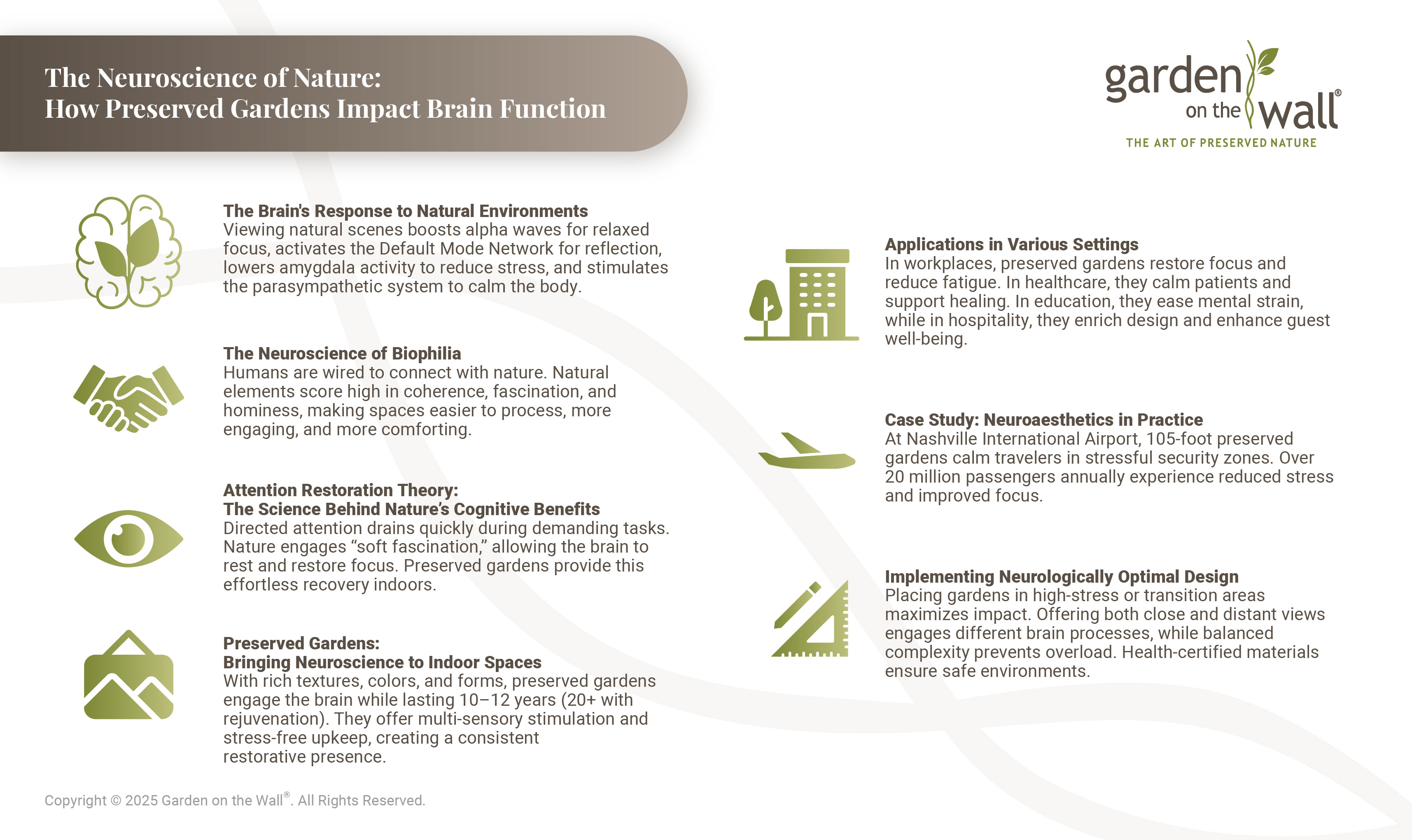
The Brain's Response to Natural Environments
Using advanced tools like fMRI and EEG, scientists have documented how natural environments affect the brain. Key responses include:
- Alpha Wave Activity: Exposure to nature boosts alpha waves, linked to relaxed alertness an ideal state for creativity and holistic thinking.
- Default Mode Network Activation: Natural settings activate the brain’s introspection network, fostering reflection and problem-solving.
- Reduced Amygdala Activity: Stress-related amygdala activity decreases when viewing natural scenes, lowering anxiety levels.
- Parasympathetic Stimulation: Nature promotes the “rest and digest” response, reducing heart rate, blood pressure, and cortisol.
The Neuroscience of Biophilia
Biophilia theory suggests humans have an innate connection to nature validated by neuroscience. Research from the Penn Center for Neuroaesthetics highlights three psychological dimensions that shape our response to spaces:
- Coherence: Ease of organization and comprehension
- Fascination: The richness and interest a space generates
- Hominess: The sense of comfort and security provided
Natural elements rate highly across all three, explaining their deep impact. Incorporating greenery gives our brains the stimuli they evolved to process most efficiently.
Attention Restoration Theory: The Science Behind Nature’s Cognitive Benefits
Environmental psychologists Rachel and Stephen Kaplan developed Attention Restoration Theory (ART), which explains how nature restores mental resources.
- Directed Attention: Required for tasks like writing or analyzing data, this resource is finite and fatiguing.
- Involuntary Attention: Also called “soft fascination,” it occurs when natural patterns like preserved moss or foliage capture our interest effortlessly.
By engaging involuntary attention, natural environments allow directed attention to rest and recover, improving focus and productivity afterward.
Preserved Gardens: Bringing Neuroscience to Indoor Spaces
Outdoor exposure is ideal but preserved gardens and moss walls provide consistent neurological benefits indoors. Garden on the Wall® installations are particularly effective because they offer:
- Complexity and Coherence: Intricate textures, colors, and forms maintain natural patterns that gently capture attention.
- Sustained Presence: With a lifespan of 10–12 years (extendable to 20+ through rejuvenation), preserved gardens provide long-term cognitive benefits.
- Multi-Sensory Engagement: While scent is absent, varied textures and forms engage visual and tactile perception, enhancing restoration.
- Freedom from Maintenance: Unlike living plants, preserved gardens require no upkeep, eliminating stress associated with care or decline.
Applications in Various Settings
Preserved gardens can support brain function across industries:
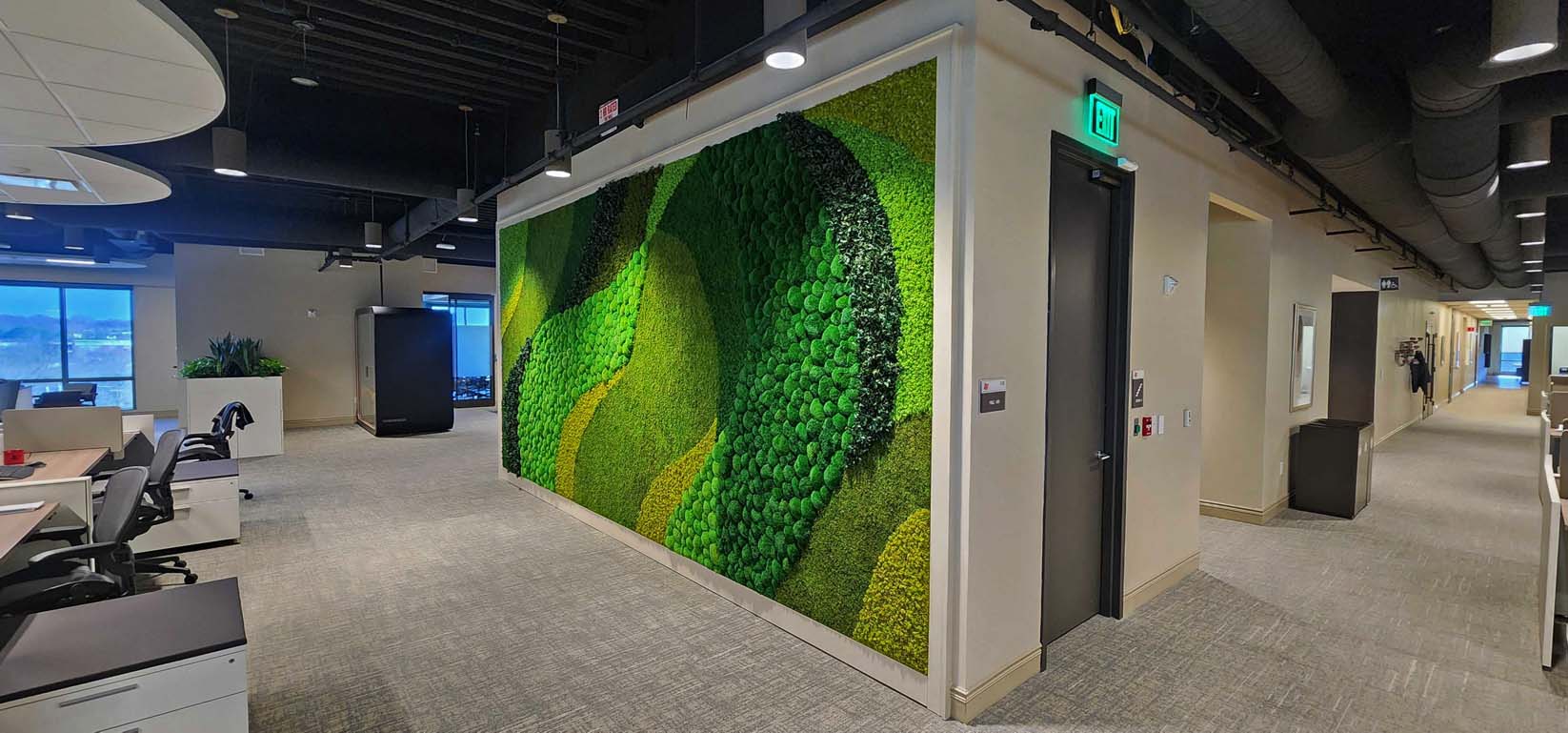
- Workplaces: Restore attention and reduce fatigue, boosting productivity. Placement near break areas or high-stress zones maximizes benefit.
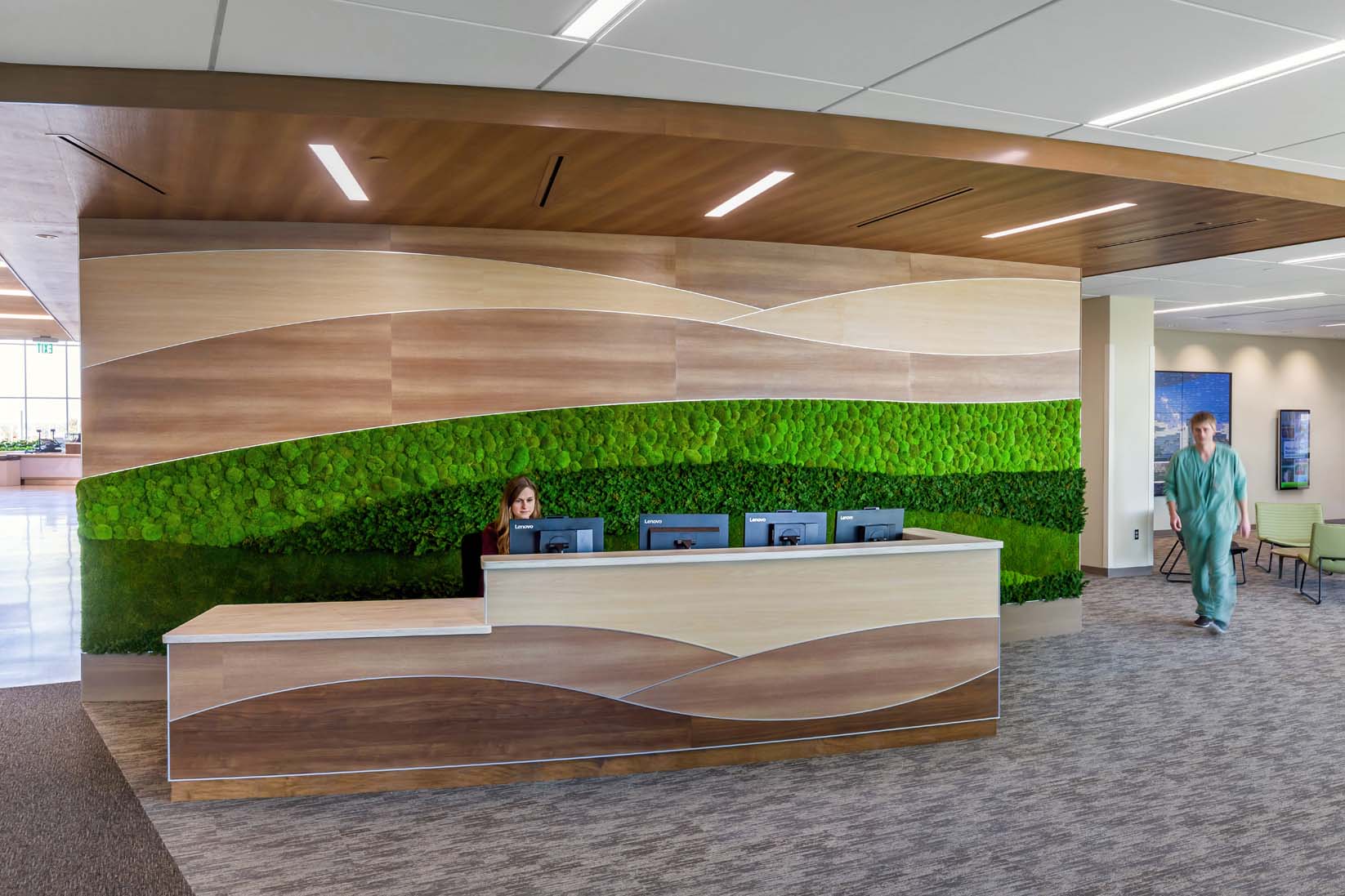
- Healthcare: Calming focal points lower stress hormones and support healing, as seen at Essentia Health St. Mary’s Medical Center.
- Education: Students regain mental clarity in study and social areas, potentially improving outcomes and lowering stress.
- Hospitality: Hotels and restaurants create distinctive, restorative environments that elevate guest experience and well-being.
Case Study: Neuroaesthetics in Practice
At Nashville International Airport, preserved gardens span 105 feet on each side of security lanes—among the most stressful areas for travelers. These installations provide calming visuals, engaging involuntary attention and reducing stress during screening. With nearly 20 million annual passengers exposed, this project demonstrates the large-scale impact of biophilic design.
Implementing Neurologically Optimal Design
To maximize benefits of preserved gardens, consider these evidence-based strategies:
- Strategic Placement: Position installations where stress reduction and restoration are most needed high-load workstations, waiting zones, or transition spaces.
- Optimal Viewing Distances: Design for both close and distant views, as each engages different neural processes.
- Visual Complexity: Balance diversity and harmony too little fails to engage the brain, while too much can overwhelm. Garden on the Wall®’s curated designs achieve this balance.
- Material Health: Use installations meeting strict health standards. Garden on the Wall® offers third-party testing, HPD v2.3, and compliance with California’s VOC requirements, ensuring neurological and physical safety.
Conclusion: A Neurologically Informed Future
As neuroscience advances, the importance of integrating natural elements indoors is undeniable. Preserved gardens deliver more than beauty they reduce stress, restore attention, and support cognitive health.
Garden on the Wall®’s quality and longevity lasting 10–12 years and extendable to 20+ make them not only a cost-effective choice but also a powerful tool for enhancing well-being in built environments.
By weaving preserved gardens into our interiors, we create spaces that align with how our brains naturally function. The science is clear: our minds need nature, and preserved gardens provide a sustainable, innovative way to meet this need indoors.
For more information on this subject, read this article: Neuroaesthetics and Neuroarchitecture: Evidence Based Design and other related information, please visit our website: www.gardenonthewall.com
_1.jpg)