Biophilic Solutions for Convention Centers
Key Takeaways Before You Read the Full Article:
30 Second Executive Summary
Convention centers must accommodate large crowds, complex navigation, intensive networking, and multi-day programming while maintaining a comfortable and memorable attendee experience. Preserved gardens and moss walls introduce biophilic elements that can help reduce environmental overwhelm, create distinctive gathering spaces, support wayfinding, and humanize large-scale event venues.
👥 Attendee Experience: Reducing Crowd-Related Overwhelm
Large events expose attendees to continuous noise, movement, information, and social demands. Strategically positioned preserved gardens provide visual respite that can help expansive convention environments feel calmer and more approachable.
🤝 Networking & Connection: Creating Places People Want to Gather
Successful conventions depend on meaningful interactions beyond scheduled programming. Preserved gardens can transform lounges, circulation zones, and meeting areas into memorable social environments that encourage conversation and connection.
🧭 Wayfinding: Turning Nature Into Recognizable Landmarks
Large venues often contain repetitive spaces that make orientation difficult for first-time visitors. Distinctive preserved installations can function as visual landmarks that help attendees remember locations and navigate more intuitively.
🔄 Venue Flexibility: Supporting Constantly Changing Programming
Convention centers must accommodate dramatically different event types and configurations throughout the year. Preserved nature provides consistent architectural character while remaining visually adaptable to temporary exhibits, branding, and event programming.
🏢 Long-Term Value: Creating a Distinctive Venue Experience
Maintenance-free preserved gardens can provide lasting visual impact without requiring irrigation or routine horticultural care around demanding event schedules. Their combination of durability and experiential value makes them well suited to high-traffic venues seeking long-term differentiation.
Ready to explore how convention centers can become more restorative, intuitive, and memorable? The full article examines how preserved gardens and moss walls can support attendee wellbeing, networking, wayfinding, flexibility, and long-term venue appeal.
Convention centers face unique design challenges in creating environments that accommodate massive crowds, facilitate networking and business activities, and maintain comfort during extended events that can span multiple days. The integration of preserved gardens, moss walls, and preserved foliage installations provides essential biophilic elements that transform these large-scale commercial spaces into more human-centered environments that support attendee wellbeing while enhancing the overall event experience.
The strategic incorporation of preserved nature in convention centers acknowledges that successful events depend not just on functional logistics but on creating environments that keep attendees engaged, comfortable, and psychologically supported throughout intensive business and social activities that characterize major conventions and trade shows.
Managing Crowd Stress and Overwhelming Environments
Large-scale events create significant psychological stress for attendees who must navigate crowded spaces, process extensive information, and engage in intensive networking activities over extended periods. Preserved moss walls and garden installations provide essential visual anchors that help reduce the overwhelming nature of massive convention spaces while creating psychological refuge areas where attendees can decompress.
The presence of natural beauty in convention environments helps counteract the stress responses often triggered by crowded, artificial environments, providing immediate calming influences that support attendee comfort and engagement. Preserved gardens strategically positioned throughout convention halls create visual breathing room that helps attendees maintain mental clarity and emotional balance during intensive event programming.
Creating Memorable Networking and Social Spaces
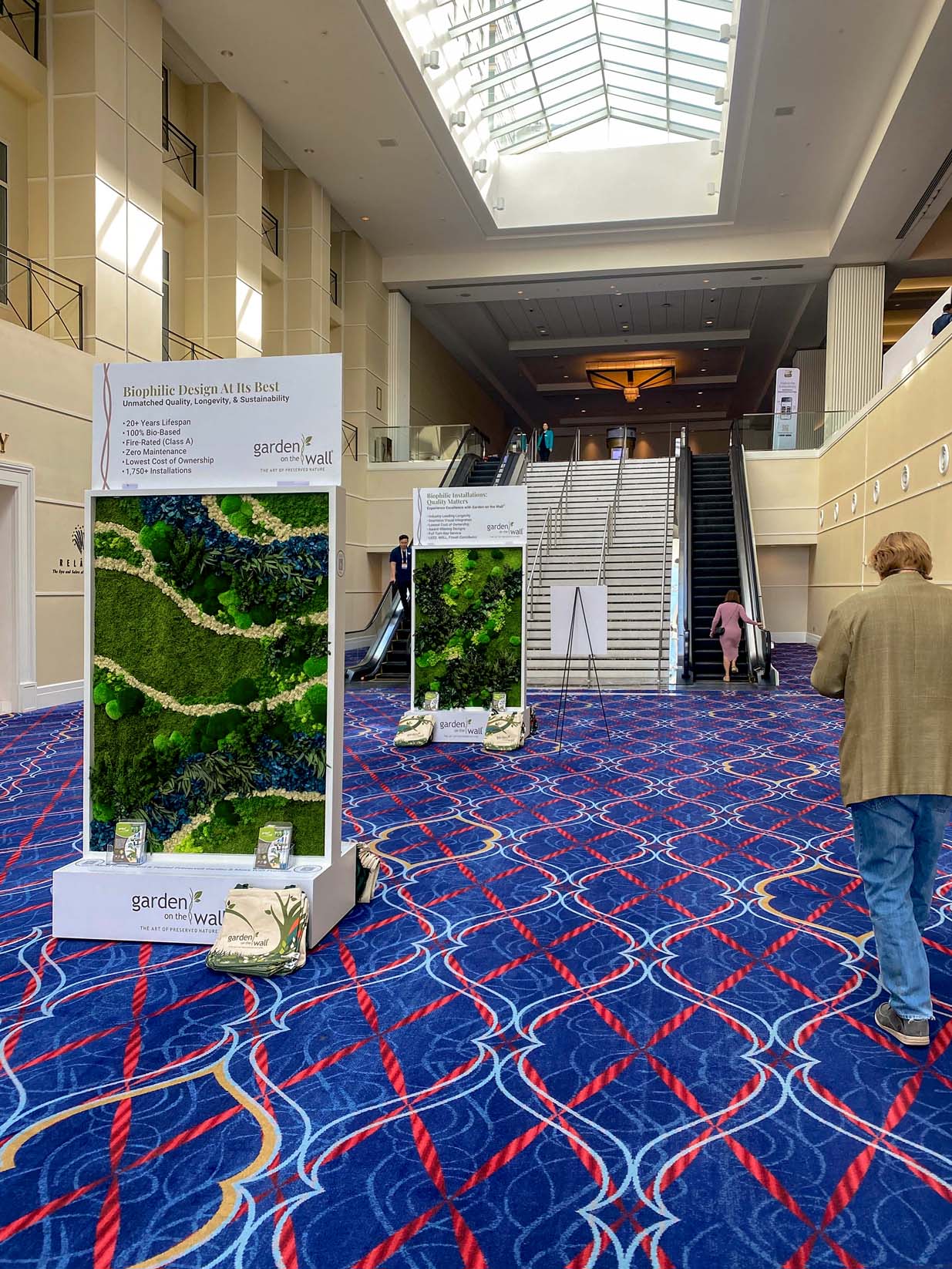
Convention centers must facilitate meaningful connections between attendees while managing the logistical challenges of accommodating thousands of participants in shared spaces. Preserved foliage installations and moss walls create attractive gathering areas that naturally encourage conversation and networking while providing memorable backdrops for social interactions and business meetings.
The aesthetic appeal of preserved gardens creates Instagram-worthy spaces that extend event marketing reach while providing immediate visual appeal that enhances attendee satisfaction and engagement. Planter inserts with preserved greenery and strategically positioned garden elements transform sterile convention spaces into welcoming environments that support the relationship building essential for successful business events and professional conferences.
Supporting Extended Event Participation
Multi-day conventions require environments that sustain attendee energy and engagement over extended periods, making the psychological benefits of biophilic design particularly valuable for maintaining participation quality throughout lengthy event programming. Preserved nature installations provide consistent visual interest and psychological support that help prevent the fatigue and overwhelm common in extended convention participation.
The stress-reducing properties of preserved moss walls and garden installations help attendees maintain the mental clarity and emotional resilience necessary for effective learning, networking, and business development activities that span multiple days. These natural elements become essential components of convention environments that support rather than drain attendee energy and enthusiasm throughout extended event participation.
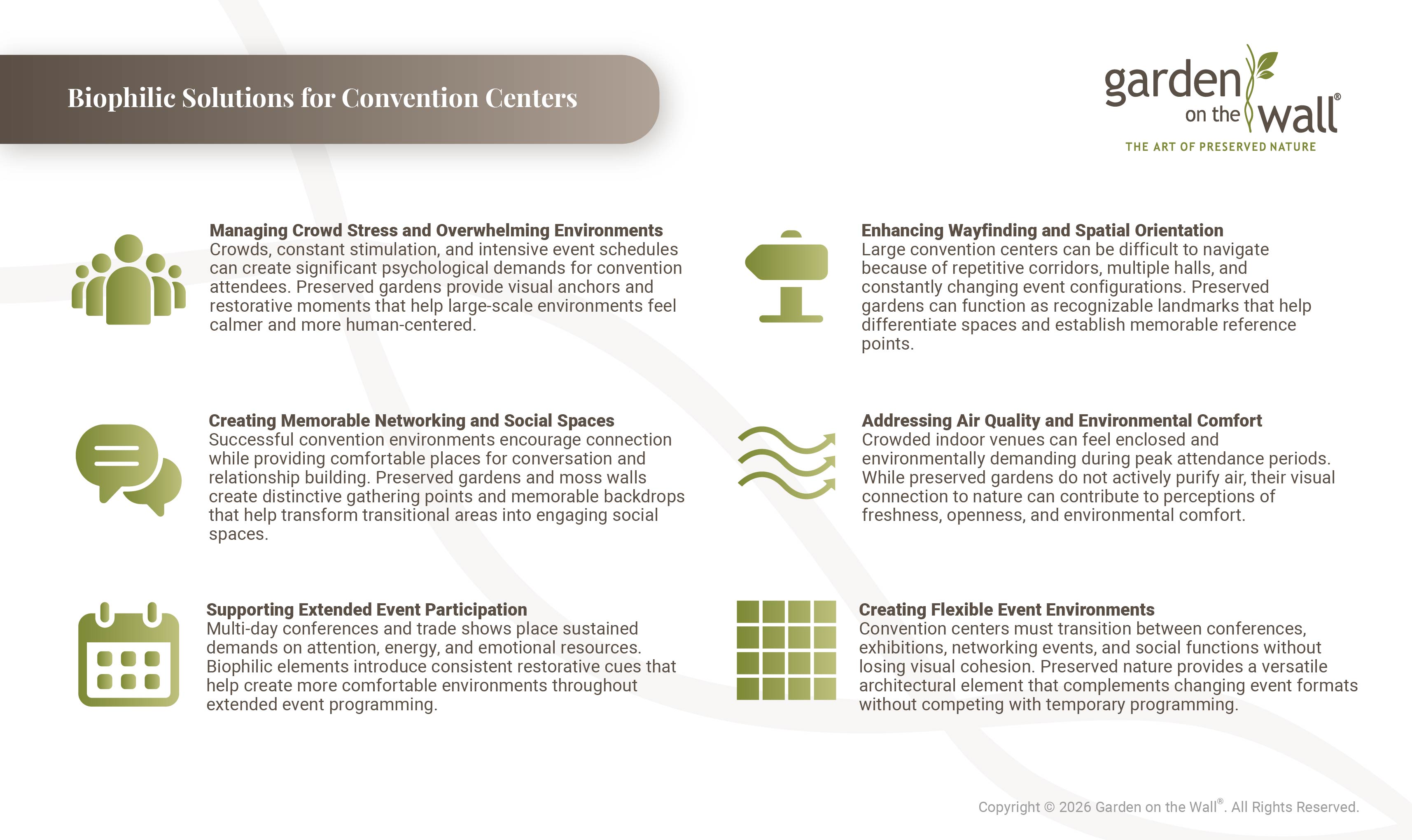
Enhancing Wayfinding and Spatial Orientation
Convention centers often feature complex layouts with multiple halls, meeting rooms, and activity areas that can create challenging navigation environments for attendees unfamiliar with the space. Preserved gardens and moss installations serve as natural landmarks that improve wayfinding while creating visually appealing reference points that help attendees orient themselves within large, potentially confusing spaces.
The strategic placement of preserved foliage installations creates intuitive navigation pathways that guide attendees through convention centers while providing the aesthetic appeal that enhances overall venue experience. Draping preserved greenery and carefully positioned garden elements help break up large, monotonous spaces into more manageable, human-scaled environments that support comfortable navigation and space utilization.
Addressing Air Quality and Environmental Comfort
Large gatherings in enclosed spaces can create air quality challenges and environmental discomfort that impact attendee wellbeing and event success. While preserved gardens don't provide the air purification benefits of living plants, they create psychological associations with fresh, clean environments that can enhance perceived air quality and environmental comfort during crowded events.
The visual presence of natural elements helps create psychological connections to outdoor environments that can alleviate the sense of confinement often experienced in large indoor gatherings. Preserved moss walls and garden installations provide visual relief that helps attendees maintain comfort and engagement even during peak attendance periods when spaces become crowded and potentially overwhelming.
Creating Flexible Event Environments
Convention centers must accommodate diverse event types, from trade shows to conferences to social gatherings, requiring flexible environments that enhance various programming formats. Preserved nature installations provide consistent aesthetic appeal that complements different event styles while maintaining the visual interest essential for creating memorable venue experiences.
The neutral beauty of preserved gardens creates environments that enhance rather than compete with event programming while providing visual richness that supports venues when they transition between different event types and configurations. This versatility makes preserved moss installations particularly valuable for convention centers that serve multiple functions and must maintain aesthetic appeal across diverse programming and attendee demographics.
Investing in Long-Term Venue Appeal
Convention centers represent significant infrastructure investments that must maintain competitiveness in markets where venue selection often determines event success and attendee satisfaction. The integration of preserved gardens, moss walls, and preserved foliage installations that require no maintenance creates distinctive venue features that differentiate convention centers while providing long-term aesthetic value that supports marketing and client retention efforts.
Garden on the Wall®'s proven track record with over 1,880 installations and industry-leading longevity of 10-12 years extendable to 20+ years provides the reliability essential for major venue investments where operational disruptions cannot be tolerated. The company's maintenance-free approach eliminates the complexity of caring for living plants in high-traffic commercial environments while ensuring that biophilic benefits remain consistent regardless of event schedules or facility usage patterns, making preserved nature installations a practical and beautiful solution for creating convention environments that truly serve both event organizers and attendees.
For more information on this subject, read this article: Nature Inspired Spatial Planning Optimizing Flow and Function and other related information, please visit our website: www.gardenonthewall.com.