The Sound of Productivity: Acoustic Biophilia in Open Office Design Through Preserved Nature Elements

Key Takeaways Before You Read the Full Article:
30 Second Executive Summary
Open offices encourage flexibility and collaboration, but uncontrolled noise can undermine concentration, privacy, and employee comfort. Acoustic biophilia integrates preserved moss walls and gardens into workplace design to help manage sound while simultaneously providing restorative visual connections to nature.
🔊 Acoustic Performance: Managing the Open Office Soundscape
Background conversations, equipment noise, and unpredictable sounds can interrupt focused work and increase cognitive demands. Strategic sound absorption helps create more comfortable acoustic conditions without sacrificing workplace openness.
🧠 Cognitive Performance: Designing Sound for Focus
Acoustic conditions directly influence concentration and the ability to perform complex tasks. Combining sound management with restorative biophilic elements creates environments that support both cognitive performance and employee wellbeing.
💬 Speech Privacy: Supporting Focus and Communication
Open workplaces must balance collaboration with employees' need for privacy and uninterrupted concentration. Preserved moss walls can contribute to acoustic and visual zoning that helps separate different work modes without complete physical isolation.
🏢 Strategic Integration: Aligning Acoustics With Workflow
Focused work, meetings, collaboration, and transition areas require different acoustic conditions. Mapping preserved installations to workplace activity patterns helps create more intentional acoustic gradients across shared environments.
📊 Measurable Impact: Evaluating Acoustic Experience
Sound-level measurements provide quantitative evidence, while employee feedback reveals how people actually experience concentration, privacy, and acoustic comfort. Together, these measures help organizations refine acoustic strategies around real workplace needs.
Ready to explore how nature and acoustics can work together to create more productive open offices? The full article examines how preserved moss walls and gardens can support sound management, concentration, speech privacy, and restorative workplace experiences.
Understanding Acoustic Biophilia in Modern Workplace Design
Acoustic biophilia represents the integration of natural sound principles and sound-dampening elements derived from nature to create more productive and comfortable work environments. Open office designs, while promoting collaboration and flexibility, often create significant acoustic challenges including noise pollution, speech interference, and auditory distractions that reduce productivity and increase stress. Traditional acoustic solutions like foam panels and fabric barriers address sound control but miss opportunities to enhance environmental quality through biophilic design principles.
The intersection of acoustic design and biophilic principles offers comprehensive solutions for open office sound management. Natural environments provide acoustic models for creating pleasant, productive soundscapes while preserved moss walls and garden installations deliver superior sound absorption compared to synthetic alternatives. These preserved nature elements absorb sound waves through their complex organic structures while providing visual connections to nature that support cognitive function and stress reduction, creating environments where productivity flourishes through both acoustic comfort and biophilic benefits.
The Science of Sound and Cognitive Performance
Acoustic environments significantly influence cognitive performance, with specific sound characteristics either supporting or undermining different types of mental work. Research in environmental psychology demonstrates that background noise levels above 55 decibels reduce cognitive performance for complex tasks, while unpredictable sounds create startle responses that interrupt sustained focus. Open office environments frequently exceed optimal noise levels while providing little control over acoustic conditions that support different work activities.
Natural sound absorption differs fundamentally from synthetic acoustic treatments through the complex, irregular surfaces that preserved moss and foliage provide. These organic textures scatter and absorb sound waves across multiple frequencies rather than targeting specific frequency ranges like engineered acoustic panels. Preserved gardens create more natural, pleasant acoustic environments that reduce noise pollution while avoiding the institutional atmosphere that synthetic acoustic treatments often create.
Creating Productive Soundscapes Through Nature Elements
Productive soundscapes balance acoustic privacy for focused work with environmental openness that supports collaboration and communication. This balance requires sophisticated acoustic design that manages sound levels without creating isolating or sterile environments that undermine the collaborative benefits of open office layouts. Preserved moss walls and garden installations provide acoustic solutions that enhance rather than diminish environmental quality.
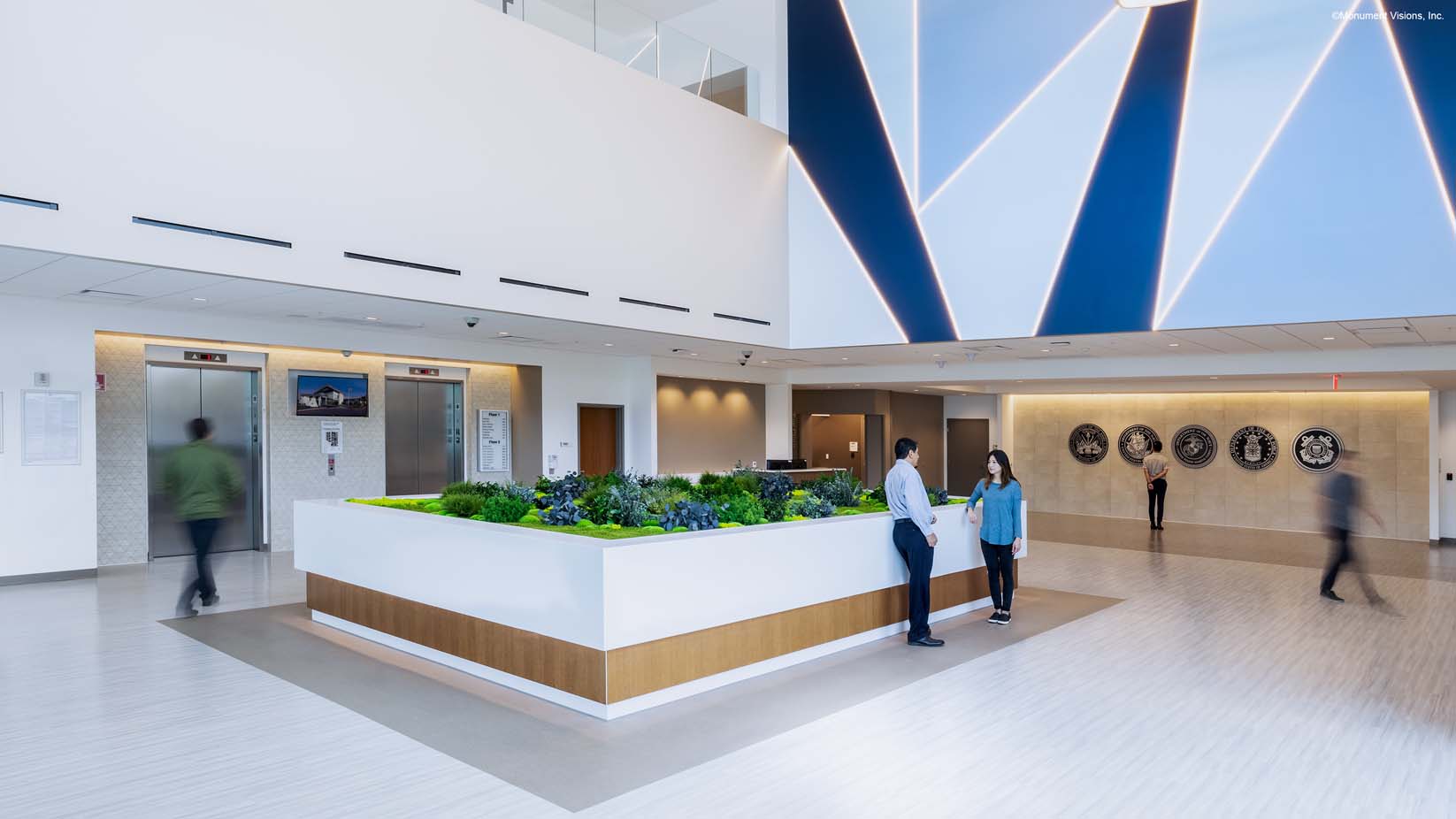
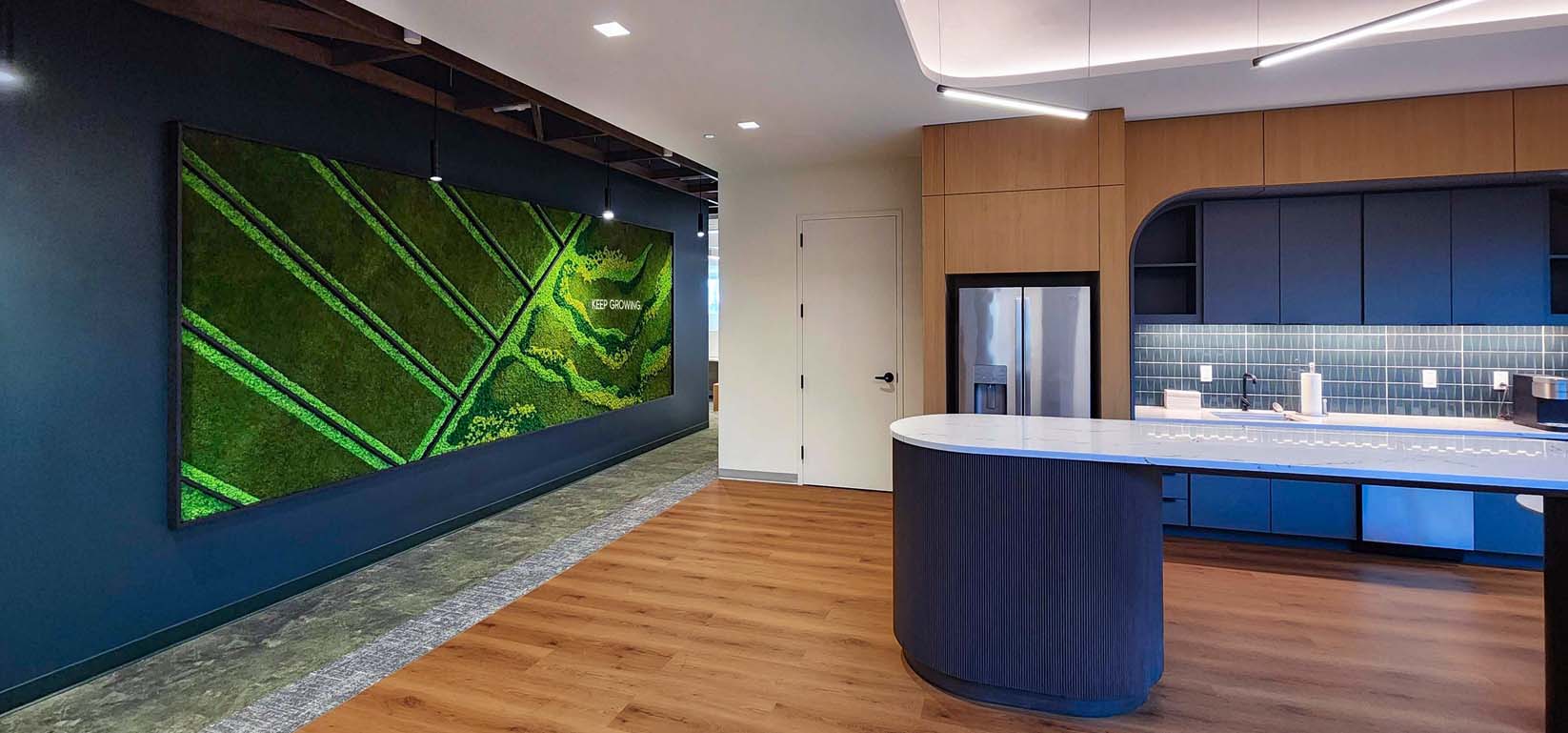
Strategic placement of preserved nature elements helps create acoustic zones within open offices that support different work activities. Preserved moss walls positioned between workstations provide sound absorption that reduces speech interference while maintaining visual connectivity that supports team collaboration. These installations create acoustic privacy without physical barriers, allowing teams to benefit from both focused work conditions and collaborative accessibility as work activities require.
Biophilic Sound Absorption Advantages
Preserved nature elements offer unique advantages for acoustic design through their authentic organic structures that provide superior sound absorption characteristics compared to artificial alternatives. The irregular surfaces, varied textures, and complex geometries found in preserved moss and foliage create multiple acoustic interfaces that effectively dissipate sound energy across broad frequency ranges. This natural sound absorption creates more pleasant acoustic environments than synthetic treatments.
The visual benefits of preserved gardens complement their acoustic properties by providing environments that support both auditory comfort and visual restoration essential for sustained cognitive performance. Unlike purely functional acoustic treatments that may create institutional atmospheres, preserved nature elements enhance environmental aesthetics while delivering acoustic benefits. This integration supports both the acoustic conditions and environmental quality necessary for optimal workplace productivity.
Addressing Speech Privacy and Concentration
Speech privacy represents a crucial factor in open office acoustic design, as conversations can both distract neighboring workers and create privacy concerns that limit communication effectiveness. Traditional solutions like white noise systems or background music often create additional acoustic pollution that may mask but not eliminate privacy concerns. Preserved moss walls provide natural sound absorption that reduces speech transmission while maintaining environmental quality.
Preserved garden installations absorb conversational frequencies effectively while providing visual screening that enhances privacy perception without creating physical barriers that inhibit collaboration. These installations help create acoustic zones where confidential conversations can occur without disturbing neighboring work activities, supporting both privacy needs and acoustic comfort throughout open office environments.
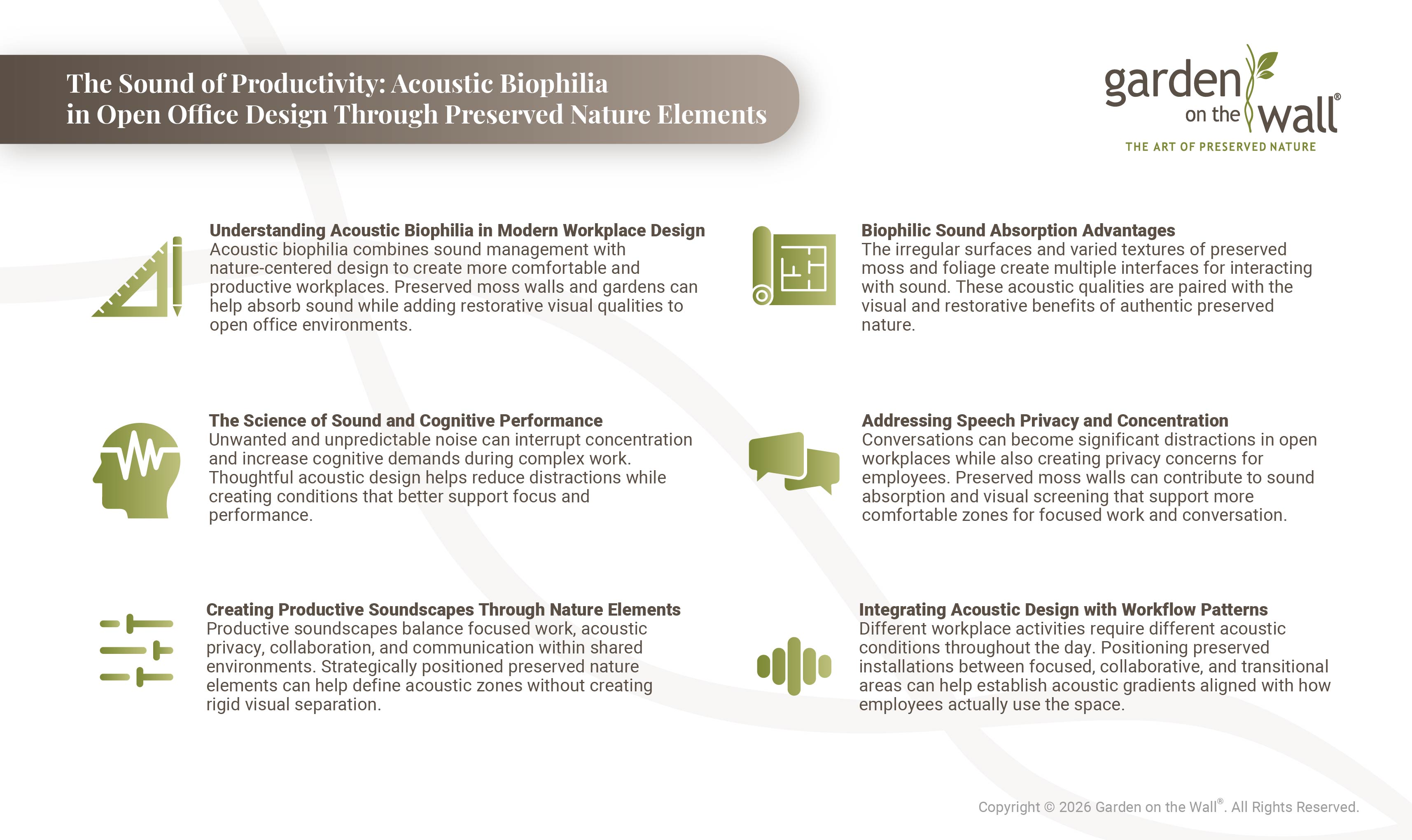
Integrating Acoustic Design with Workflow Patterns
Effective acoustic biophilia requires understanding workflow patterns and communication needs that determine optimal placement for sound absorption elements. Different work activities require different acoustic conditions, with focused individual work benefiting from quiet environments while collaborative activities may require more acoustic openness that supports team communication. Preserved nature installations can support these varying needs through strategic placement and design.
Preserved moss walls positioned at transition points between collaborative and focused work areas help create acoustic gradients that support different work activities within connected spaces. These installations provide sound absorption where it's most needed while maintaining environmental continuity that supports flexible work patterns. The result is acoustic zoning that supports productivity without creating rigid separations that limit workplace adaptability.
Measuring Acoustic Biophilia Effectiveness
Acoustic effectiveness can be measured through both quantitative sound level monitoring and qualitative employee feedback about acoustic comfort and concentration ability. Sound level measurements help validate that preserved nature installations achieve target noise reduction while environmental quality assessments confirm that acoustic improvements enhance rather than diminish overall workplace experience. These measurements guide optimization of acoustic biophilia implementations.
Employee feedback about concentration ability, speech privacy, and acoustic satisfaction provides crucial insights into the practical effectiveness of acoustic biophilia solutions. Regular assessment helps organizations understand whether preserved nature installations successfully support the diverse acoustic needs of open office environments while enhancing environmental quality through biophilic benefits.
The Future of Acoustic Workplace Design
The future of open office design increasingly recognizes acoustic quality as essential for both productivity and employee satisfaction, requiring sophisticated solutions that address sound management while enhancing environmental aesthetics. Acoustic biophilia provides pathways for achieving both acoustic performance and environmental quality through integrated design approaches that support human wellbeing alongside practical workplace requirements.
Preserved gardens, moss walls, planter inserts, and draping preserved foliage offer scalable solutions for implementing acoustic biophilia throughout open office environments. These installations provide sound absorption that enhances productivity while creating beautiful, restorative environments that support employee satisfaction and organizational culture. The future of workplace acoustic design lies in solutions that solve acoustic challenges while actively enhancing human experience through biophilic connections.
For more information on this subject, read this article: The 3-Second Rule How Preserved Gardens and Moss Walls Create Instant Emotional Connection in Commercial Spaces and other related information, please visit our website: www.gardenonthewall.com.