Biophilic Design in Addiction Recovery
Key Takeaways Before You Read the Full Article:
30 Second Executive Summary
Addiction recovery environments must support emotional stability, stress reduction, and long-term healing. Preserved gardens and moss walls create trauma-informed, biophilic spaces that enhance recovery outcomes by fostering calm, focus, and positive environmental associations.
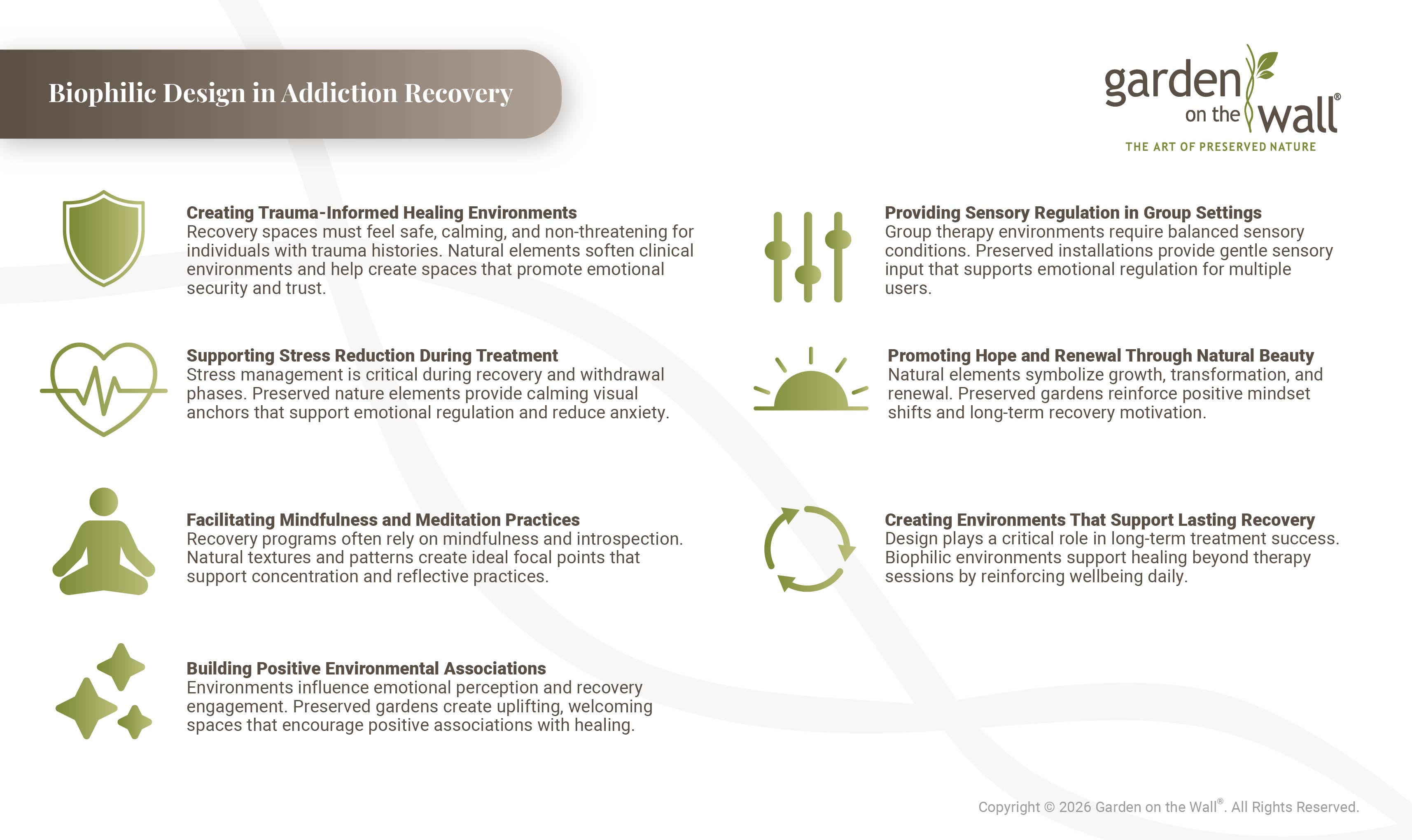
🛡️ Trauma-Informed Design: Creating Safe Environments
Natural elements soften clinical settings and promote emotional security. These environments support trust and psychological comfort.
💙 Stress Reduction: Supporting Emotional Regulation
Biophilic design helps reduce anxiety and stress responses. Calming environments enhance the effectiveness of therapeutic interventions.
🧘 Mindfulness Support: Enhancing Focus and Reflection
Natural focal points improve meditation and introspection practices. Preserved gardens create environments conducive to mental clarity.
🌅 Positive Associations: Reinforcing Healing Environments
Beautiful, natural spaces encourage engagement and optimism. These environments support mindset shifts essential for recovery.
🔄 Long-Term Impact: Environments That Support Sustained Recovery
Consistent, calming environments reinforce wellbeing over time. Design becomes an active contributor to long-term recovery success.
Ready to see how biophilic design transforms addiction recovery environments?
The full article explores how preserved gardens create supportive spaces for healing, resilience, and long-term transformation.
Addiction recovery environments require thoughtful design that supports healing, reduces stress, and promotes emotional stability during vulnerable periods of treatment and rehabilitation. The integration of preserved gardens, moss walls, and preserved foliage installations provides essential biophilic elements that create calming, restorative spaces conducive to recovery and personal transformation. These natural installations offer psychological benefits that complement therapeutic interventions while creating environments that feel welcoming rather than clinical or institutional.
The strategic use of preserved nature in recovery facilities acknowledges the profound connection between environmental quality and healing outcomes, recognizing that beautiful, nature-rich spaces can significantly impact motivation, emotional regulation, and overall treatment success. By incorporating preserved greenery and natural design elements, recovery facilities can create supportive environments that foster hope, tranquility, and positive associations with the healing process.
Creating Trauma-Informed Healing Environments
Many individuals entering addiction recovery have experienced trauma that makes traditional institutional environments feel threatening or overwhelming. Preserved moss walls and garden installations create softer, more welcoming environments that support trauma-informed care principles by providing visual comfort and natural beauty that promotes feelings of safety and calm.
The organic forms and natural patterns found in preserved foliage installations help counteract the stark, clinical atmosphere often associated with treatment facilities, creating spaces that feel more like healing sanctuaries than medical institutions. This environmental shift supports the psychological work of recovery by providing external calm that facilitates internal healing and emotional processing essential for sustainable recovery outcomes.
Supporting Stress Reduction During Treatment
Addiction recovery involves significant stress as individuals navigate withdrawal, therapy, and major life changes, making stress reduction environmental interventions particularly valuable. Preserved gardens and moss installations provide consistent visual anchors that support nervous system regulation and promote the parasympathetic responses necessary for healing and recovery.
The calming presence of preserved nature elements helps create environments where stress responses are naturally diminished, supporting the emotional regulation skills being developed through therapeutic interventions. Planter inserts with preserved foliage and strategically placed garden installations provide visual rest areas where individuals can practice stress management techniques while benefiting from the inherent calming properties of natural beauty.
Facilitating Mindfulness and Meditation Practices
Mindfulness and meditation practices are central to many addiction recovery programs, requiring environments that support focus, introspection, and emotional awareness. Preserved moss walls and garden installations create ideal focal points for mindfulness exercises while providing the sensory richness that enhances meditative practices and contemplative activities.
The natural patterns and textures of preserved gardens offer objects of contemplation that support mindfulness training without the distractions or maintenance concerns associated with living plants. These installations create dedicated spaces for reflective practices that are essential components of recovery programs while maintaining the cleanliness and consistency required in treatment environments.
Building Positive Environmental Associations
Recovery often involves changing negative associations and building new, positive connections with healthy environments and experiences. Preserved nature installations help create positive environmental associations by surrounding individuals with beauty and natural elements that promote feelings of hope, growth, and renewal essential for long-term recovery success.
The aesthetic appeal of preserved gardens and moss walls creates environments that individuals want to spend time in, supporting engagement with treatment programs and therapeutic activities. Draping preserved greenery and carefully designed natural installations transform recovery spaces into places of beauty and tranquility that support positive mindset shifts and emotional healing processes.
Providing Sensory Regulation in Group Settings
Group therapy and community activities are essential components of addiction recovery programs, requiring environments that support diverse sensory needs and emotional states within shared spaces. Preserved nature installations provide sensory regulation opportunities that can benefit multiple individuals simultaneously without creating distractions or conflicts.
The varied textures and visual elements found in preserved moss and foliage installations offer gentle sensory input that can help individuals self-regulate during intense group work or emotional processing sessions. These natural elements create calming environmental influences that support productive group dynamics while providing individual comfort and emotional support during challenging therapeutic work.
Promoting Hope and Renewal Through Natural Beauty
Recovery is fundamentally about renewal and positive change, making the symbolic and psychological impact of natural elements particularly meaningful in treatment environments. Preserved gardens represent growth, beauty, and the possibility of positive transformation, providing powerful visual metaphors that support the psychological work of recovery.
The timeless beauty of preserved moss walls and vertical garden installations that are crafted and installed from providers with proven longevity and sustainability standards like Garden on the Wall® creates environments that feel alive and vibrant without the unpredictability that might trigger anxiety in vulnerable individuals. These installations provide consistent reminders of natural beauty and life force that can inspire hope and motivation during difficult periods of recovery and personal transformation.
Creating Environments That Support Lasting Recovery
The design of addiction recovery environments plays a crucial role in treatment outcomes and long-term recovery success. By incorporating preserved gardens, moss walls, and preserved foliage installations, recovery facilities can create environments that actively support healing rather than simply providing neutral spaces for treatment activities.
The transformation of clinical treatment environments into healing sanctuaries through biophilic design represents an important evolution in addiction treatment philosophy, recognizing that environmental quality directly impacts recovery outcomes. As the addiction treatment field continues to embrace evidence-based environmental interventions, the integration of preserved nature installations will become increasingly recognized as an essential component of comprehensive recovery programming that addresses the whole person rather than just the addiction itself.
For more information on this subject, read this article: Healthcare Revolution: How Preserved Greenery Accelerate Patient Recovery Through Evidence-Based Design and other related information, please visit our website: www.gardenonthewall.com