
Biophilic Design for Memory Care
Key Takeaways Before You Read the Full Article:
30 Second Executive Summary
Biophilic design plays a critical role in memory care environments by supporting cognitive function, reducing agitation, and creating calming, predictable spaces. Preserved gardens and moss walls provide therapeutic natural elements without maintenance risks, making them ideal for healthcare settings.
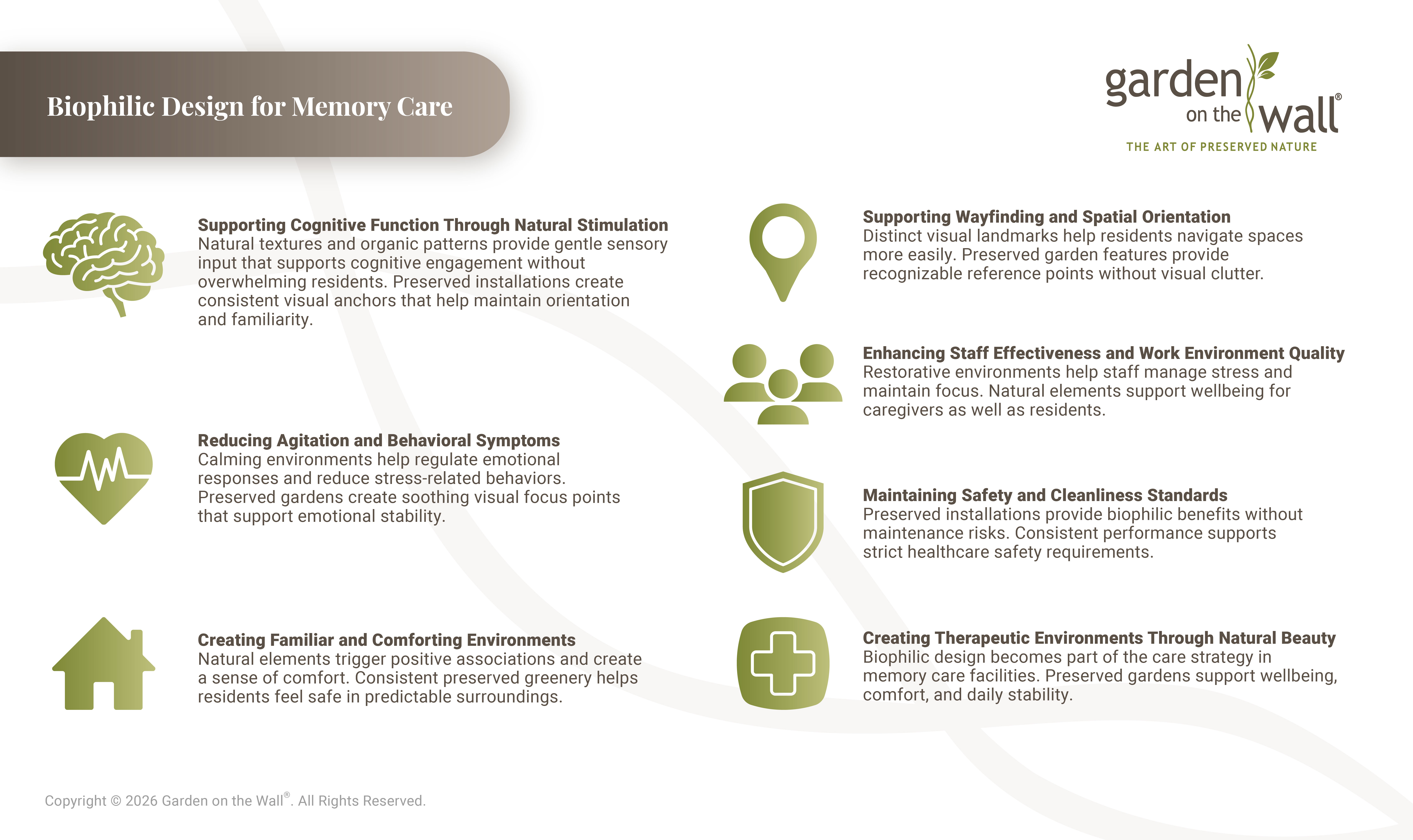
🧠 Cognitive Support: Natural Stimulation Without Overload
Organic textures and patterns provide gentle sensory engagement. Consistent preserved installations help maintain orientation and familiarity.
💙 Behavioral Benefits: Calming and Stress Reduction
Natural environments help regulate emotional responses. Preserved gardens create soothing visual focus points that reduce agitation.
📍 Wayfinding Support: Clear Visual Landmarks
Distinct natural features help residents navigate spaces. Moss walls and preserved foliage provide memorable reference points.
🛡️ Safety First: Maintenance-Free Natural Elements
Preserved installations eliminate watering, soil, and pests. This ensures healthcare environments remain clean and predictable.
🏥 Therapeutic Design: Environment as Care Strategy
Biophilic design enhances wellbeing for residents and staff. Thoughtful natural installations support comfort, stability, and quality of life.
Ready to see how preserved gardens improve memory care environments?
The full article explains how biophilic design becomes part of therapeutic healthcare design.
Memory care environments require specialized design approaches that address the unique cognitive, emotional, and behavioral needs of individuals living with dementia and other memory-related conditions. The integration of preserved gardens, moss walls, and preserved foliage installations provides essential biophilic elements that support cognitive function, reduce agitation, and create calming environments that enhance quality of life for residents while supporting staff effectiveness. These natural installations offer particular benefits in memory care settings where consistent, predictable environments become crucial for maintaining resident comfort and orientation.
The thoughtful incorporation of preserved nature in memory care facilities acknowledges that environmental design plays a critical role in managing behavioral symptoms, supporting cognitive function, and creating therapeutic spaces that enhance rather than complicate daily care activities for both residents and healthcare providers.
Supporting Cognitive Function Through Natural Stimulation
Memory care residents benefit from gentle cognitive stimulation that engages attention without overwhelming processing capabilities, making preserved moss walls and garden installations ideal for providing appropriate sensory input. The natural patterns and textures found in preserved foliage offer visual complexity that stimulates cognitive engagement while remaining predictable and non-threatening for individuals with compromised memory function.
Preserved gardens and moss walls provide consistent visual anchors that support spatial orientation and memory cues without the unpredictability associated with living plants that grow and change over time. Planter inserts with preserved greenery and strategically positioned moss installations create familiar natural references that can trigger positive memories and emotional responses while supporting the cognitive engagement essential for maintaining mental acuity in memory care environments.
Reducing Agitation and Behavioral Symptoms
Agitation and restlessness represent common challenges in memory care that can be significantly reduced through environments that provide calming influences and stress reduction opportunities. Preserved moss walls and garden installations offer immediate calming effects that help regulate emotional responses and reduce the environmental stressors that can trigger behavioral episodes in memory care residents.
The natural beauty of preserved foliage installations creates soothing environments that support emotional regulation while providing visual focal points that can redirect attention during periods of agitation or confusion. Draping preserved greenery and carefully positioned garden elements create calming environments where residents can find comfort and emotional stability during difficult moments while supporting staff efforts to manage behavioral symptoms through environmental interventions.
Creating Familiar and Comforting Environments
Memory care residents often respond positively to environments that evoke familiar experiences and positive memories from earlier life periods, making the nostalgic appeal of preserved gardens particularly valuable for creating comforting therapeutic environments. Natural elements trigger deep-seated positive associations that can provide emotional comfort even when recent memory function is compromised.
The timeless beauty of preserved moss installations and garden elements creates environments that feel familiar and welcoming without relying on specific cultural or generational references that might not resonate with all residents. These natural installations provide universal comfort that transcends individual backgrounds while creating environments where residents can feel safe, calm, and emotionally supported throughout their daily activities and care routines.
Supporting Wayfinding and Spatial Orientation
Memory care environments require clear wayfinding systems that help residents navigate facility layouts without becoming confused or distressed, making preserved nature installations valuable as landmark elements that support spatial orientation. The distinctive visual characteristics of preserved gardens and moss walls create memorable reference points that residents can use for navigation while providing attractive environmental features that enhance rather than complicate facility design.
Strategic placement of preserved foliage installations creates intuitive wayfinding pathways that guide residents through memory care facilities while providing visual interest that maintains engagement during movement between activity areas. These natural landmarks become particularly important for residents who struggle with spatial memory but can still recognize and respond to visual cues that support independent navigation within familiar environments.
Enhancing Staff Effectiveness and Work Environment Quality
Memory care staff face significant emotional and physical demands that can be alleviated through work environments that provide stress reduction opportunities and psychological support. Preserved gardens and moss installations in staff areas, nursing stations, and break rooms create restorative environments that help healthcare workers manage the emotional challenges associated with memory care while maintaining the energy and patience essential for providing quality care.
The presence of natural beauty in work environments acknowledges that staff wellbeing directly impacts care quality, creating environments where healthcare workers can find moments of restoration and emotional renewal during demanding shifts. These biophilic elements become essential components of memory care facilities that support both resident and staff wellbeing through environmental design that recognizes the interconnected nature of care quality and work environment quality.
Maintaining Safety and Cleanliness Standards
Memory care environments require strict attention to safety and cleanliness that can be challenging to maintain with living plants that require ongoing care and present potential safety hazards. Preserved gardens eliminate these concerns while providing all the psychological and aesthetic benefits of natural beauty, ensuring that memory care facilities can incorporate biophilic elements without compromising safety or operational efficiency.
The maintenance-free nature of preserved moss walls and garden installations makes them particularly valuable for memory care environments where staff attention must focus on resident care rather than facility maintenance. Garden on the Wall®'s comprehensive safety testing and proven performance across over 1,880 installations provides the reliability essential for memory care environments where resident safety and care quality cannot be compromised by environmental design choices that create operational challenges or safety concerns.
Creating Therapeutic Environments Through Natural Beauty
The integration of preserved gardens, moss walls, and preserved foliage installations in memory care environments represents a powerful therapeutic intervention that supports cognitive function, emotional wellbeing, and behavioral management through environmental design. These biophilic elements create healing environments that enhance quality of life for residents while supporting staff effectiveness and family satisfaction with care quality.
For designers creating memory care environments, prioritizing preserved nature installations that meet the highest standards for safety, reliability, and aesthetic consistency becomes essential for creating therapeutic spaces that truly serve residents, families, and care providers. The unique challenges of memory care require biophilic solutions that provide consistent beauty and therapeutic benefits without creating operational complexity or safety concerns that could compromise the specialized care these vulnerable populations require.
For more information on this subject, read this article: Unlocking the Mind: How Biophilic Design Boosts Cognition and Sparks Creativity and other related information, please visit our website: www.gardenonthewall.com

_Photos%20by%20Jason%20O%27Rear.jpg)