Third-Party Testing and Transparency: Setting New Standards in Preserved Gardens and Moss Walls
_Photos%20by%20Jason%20O%27Rear.jpg)
Key Takeaways Before You Read the Full Article:
30 Second Executive Summary
Third-party testing and material transparency are essential for specifying preserved gardens and moss walls in commercial environments. Verified fire ratings, VOC testing, and material disclosures ensure safety, performance, and long-term reliability.
🔥 Safety First: Whole-System Fire Testing Matters
Complete ASTM E84 testing confirms that preserved gardens meet real building code requirements. Component testing alone is not sufficient for commercial specification.
🌬️ Healthy Interiors: Verified Low Emissions
VOC testing ensures preserved installations support indoor air quality. Certified low-emission materials protect occupant health in enclosed environments.
📋 Material Transparency: Know What You Specify
Health Product Declarations provide full disclosure of ingredients and chemical content. Transparency allows designers to make informed, compliant specification decisions.
🛡️ Risk Reduction: Compliance Protects Projects
Red List verification, HPD documentation, and bio-based testing reduce liability risks. Verified materials ensure preserved gardens meet modern commercial standards.
Ready to understand why testing and transparency define premium preserved gardens? The full article explains how third-party verification sets the standard for safety, durability, and performance.
The preserved garden and moss wall industry which is still quite new in US Commercial Interior Design realm has historically operated with limited transparency regarding product composition, safety testing, and performance verification, creating challenges for interior designers who must specify biophilic installations with confidence in commercial environments. As these gardens and planters all look green and natural, they didn’t invoke the need of the testing inquiry from design professionals or the owners.
However, not all the preserved gardens or moss walls crafted equally. Chemistry required them to look the same for long time must be transparent, and safe. The chemistry that makes them stay green for long years should not include any VOC or carcinogenic elements. So, the transparency and independent 3rd party testing is extremely important in preserved green walls, moss walls, and preserved foliage, and must always be demanded from the providers.
The emergence of comprehensive third-party testing and material transparency represents a significant advancement that enables evidence-based specification decisions while protecting both designers and clients from potential safety, health, or performance issues that could arise from inadequately tested products.
The movement toward transparency and comprehensive testing reflects growing awareness that preserved moss walls and garden installations require the same rigorous safety and performance documentation expected from other commercial interior products. For design professionals specifying preserved foliage installations in healthcare, educational, and corporate environments, access to verified testing data and material transparency becomes essential for meeting project requirements and ensuring occupant safety.
Comprehensive Fire Safety and Building Code Compliance
Fire safety testing represents one of the most critical aspects of preserved garden specification, yet many providers offer only limited or component-specific testing that may not accurately reflect whole-system performance in actual fire conditions. Comprehensive third-party fire testing evaluates complete garden systems rather than individual materials, providing accurate flame spread and smoke development ratings essential for building code compliance.
Industry-leading testing protocols include ASTM E84 evaluation of entire preserved garden assemblies, including moss, foliage, substrate materials, and mounting systems to ensure accurate safety ratings. Garden on the Wall®'s commitment to whole-system testing across their complete product line, validated through over 1,880 installations, demonstrates the level of safety documentation necessary for confident specification in commercial environments where fire safety compliance cannot be compromised through inadequate testing protocols.
Since preserved gardens and moss walls should not be sprayed with liquids – to ensure their structural integrity and longevity - after-install Fire retardants cause damage these gardens. So, if the preserved garden or moss wall provider does not offer ASTM E-84 Class 1 or Class A test results for their garden construct (again, the whole construct), the gardens that are provided with not tested suppliers cannot be made Fire rated, by applying the Fire Retardant sprays. This action will simply damage the moss walls and preserved gardens.
Indoor Air Quality and VOC Emissions Documentation
Volatile organic compound emissions from preserved gardens can significantly impact indoor air quality, particularly in enclosed commercial environments where occupant health and comfort depend on maintaining low emission levels from all interior materials. Comprehensive VOC testing requires evaluation of complete garden systems under standardized conditions that simulate actual installation environments.
Third-party VOC testing following CDPH (California Department of Public Health) standards provides the most rigorous evaluation of preserved garden emissions, ensuring compliance with stringent indoor air quality requirements common in commercial projects. This testing documentation becomes essential for projects pursuing LEED certification or other green building standards that require verified low-emission materials throughout the interior environment.
Health Product Declaration and Material Transparency
Health Product Declarations represent the gold standard for material transparency in commercial interior products, requiring disclosure of all ingredients down to 100 parts per million and evaluation of potential health impacts throughout the product lifecycle. Comprehensive HPD documentation enables designers to specify preserved gardens with complete understanding of material composition and health implications.
The availability of detailed material documentation distinguishes transparent providers from companies using undisclosed preservation chemicals or manufacturing processes that could pose unknown health risks. For commercial projects requiring comprehensive material health documentation, access to verified HPD information becomes essential for meeting project requirements and protecting occupant health through informed material selection decisions.
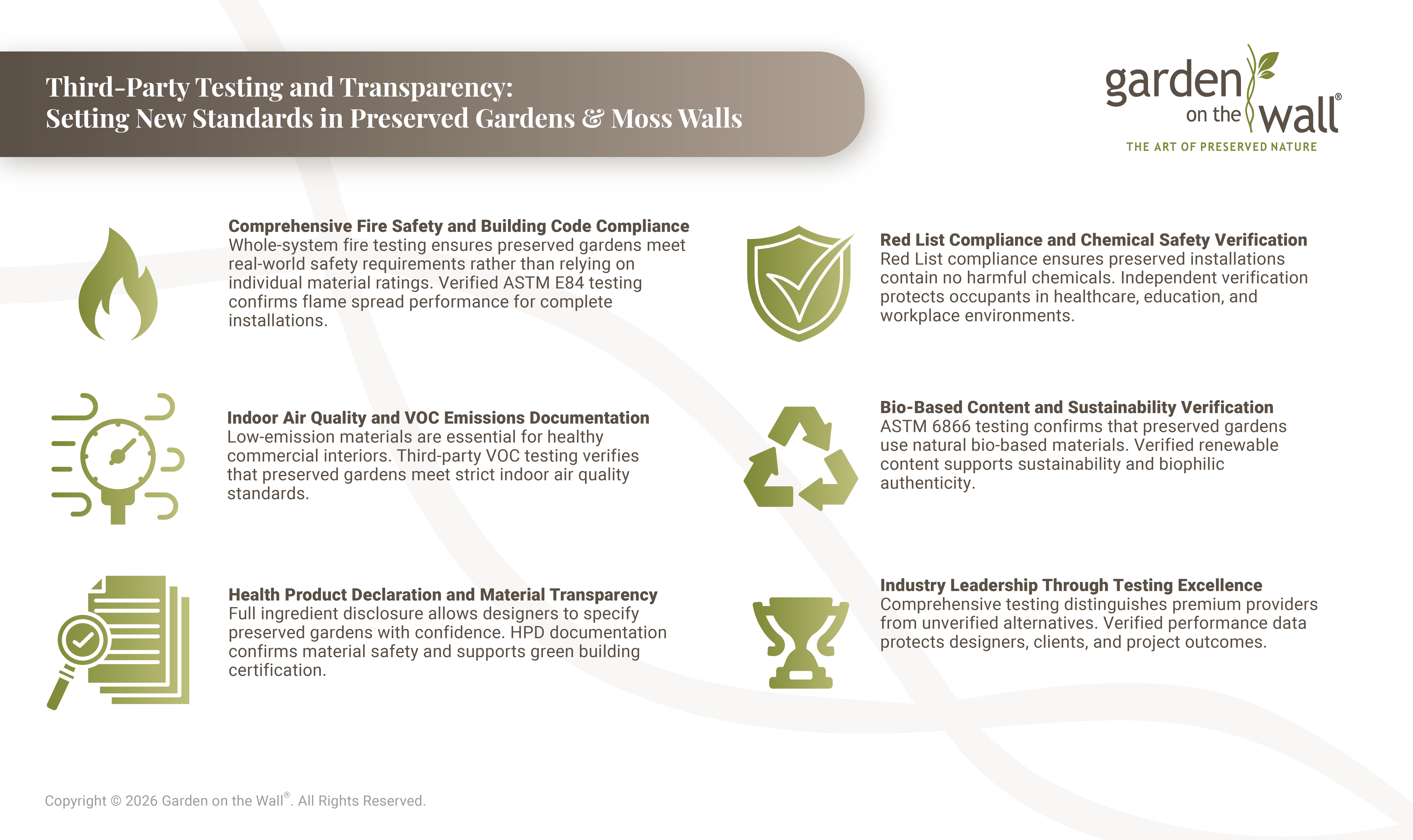
Red List Compliance and Chemical Safety Verification
Red List compliance ensures that preserved garden installations contain no materials identified as harmful to human health or environmental safety, providing additional assurance for sensitive commercial environments. Verification of Red List compliance requires comprehensive testing of all garden components rather than selective evaluation of individual materials that might not reflect complete system safety.
Third-party verification of Red List compliance provides the independent confirmation necessary for confident specification in healthcare, educational, and other sensitive environments where chemical safety requirements exceed standard commercial building standards. This verification becomes particularly important for preserved gardens where preservation chemicals and manufacturing processes could potentially introduce harmful substances not immediately apparent through visual inspection or basic safety testing.
Bio-Based Content and Sustainability Verification
ASTM 6866 testing for bio-based carbon content provides verification that preserved gardens derive from renewable natural sources rather than petroleum-based synthetic materials that might be marketed as "natural" products. This testing documentation becomes essential for projects requiring verified natural content or sustainability certifications that depend on renewable material sourcing.
The distinction between genuinely natural preserved materials and synthetic alternatives becomes crucial for maintaining the authenticity of biophilic design while meeting sustainability goals. Third-party verification of bio-based content ensures that preserved moss walls and garden installations deliver authentic natural benefits rather than synthetic alternatives that might compromise both biophilic effectiveness and environmental goals.
Industry Leadership Through Testing Excellence
The establishment of comprehensive testing standards represents a critical advancement for the preserved garden industry that enables confident specification based on verified performance data rather than marketing claims or limited testing documentation. Industry leaders who commit to comprehensive third-party testing set standards that protect both designers and clients while advancing the overall credibility of preserved garden solutions.
For interior designers, demanding comprehensive testing documentation and material transparency becomes essential for protecting professional reputation and client interests in an industry where quality levels vary significantly between providers. The preserved garden market includes companies offering vastly different levels of testing and transparency, making careful evaluation of documentation essential for identifying providers who meet the rigorous standards necessary for commercial specification.
When specifying preserved foliage installations, designers must prioritize providers (like Garden on the Wall®) who demonstrate industry-leading commitment to testing excellence and material transparency, ensuring that biophilic design investments deliver verified safety, performance, and health benefits that protect both immediate project success and long-term client satisfaction.
For more information on this subject, read this article: Premium Preserved Moss Walls: Understanding Industry-Leading Durability Standards and other related information, please visit our website: www.gardenonthewall.com