Before the Storm: Anticipatory Design That Prevents Workplace Burnout

Key Takeaways Before You Read the Full Article:
30 Second Executive Summary
Workplace burnout develops through the gradual accumulation of environmental and psychological stressors. Anticipatory design uses preserved gardens and moss walls to interrupt stress cycles before they lead to exhaustion, disengagement, and decreased performance.
🧠 Stress Prevention: Addressing Burnout Before It Starts
Burnout develops over time through repeated exposure to workplace stressors. Strategic environmental interventions help prevent stress from reaching harmful levels.
📍 Strategic Design: Targeting High-Impact Locations
Entrances, transition zones, and break spaces offer powerful opportunities for stress reduction. Preserved gardens create restorative moments throughout the workday.
🛡️ Environmental Buffers: Supporting Everyday Resilience
Biophilic elements help absorb workplace pressures before they accumulate. Moss walls and preserved foliage provide consistent calming influences.
👥 Personalized Support: Accommodating Diverse Needs
Different employees respond to stress in different ways. Thoughtful workplace design provides universal benefits while supporting individual wellbeing.
📈 Long-Term Value: Building Healthier Organizations
Preventive workplace environments improve engagement, retention, and productivity. Organizations that invest in stress prevention create sustainable competitive advantages.
Ready to explore how workplace design can prevent burnout before it begins? The full article reveals how preserved gardens and moss walls create environments that actively support resilience, wellbeing, and long-term employee performance.
Before the Storm: Anticipatory Design That Prevents Workplace Burnout
Workplace burnout has evolved from an occasional concern to a widespread epidemic affecting productivity, employee retention, and organizational success across industries. Traditional approaches to employee wellness focus on reactive interventions - addressing stress and exhaustion after symptoms become apparent. However, anticipatory design represents a revolutionary shift toward preventing workplace burnout before it develops, using environmental elements to interrupt stress accumulation at its source rather than treating its consequences.
Anticipatory design principles recognize that workplace stress accumulates through repeated exposure to environmental stressors including poor lighting, noise pollution, lack of visual interest, and disconnection from natural elements. These micro-stresses compound throughout days, weeks, and months until they overwhelm individual coping capacity, leading to chronic exhaustion, cynicism, and decreased productivity. Preserved gardens, moss walls, and planter inserts offer strategic environmental interventions that provide consistent stress-reduction opportunities, helping employees maintain emotional equilibrium throughout demanding work periods.
Understanding Stress Accumulation Patterns
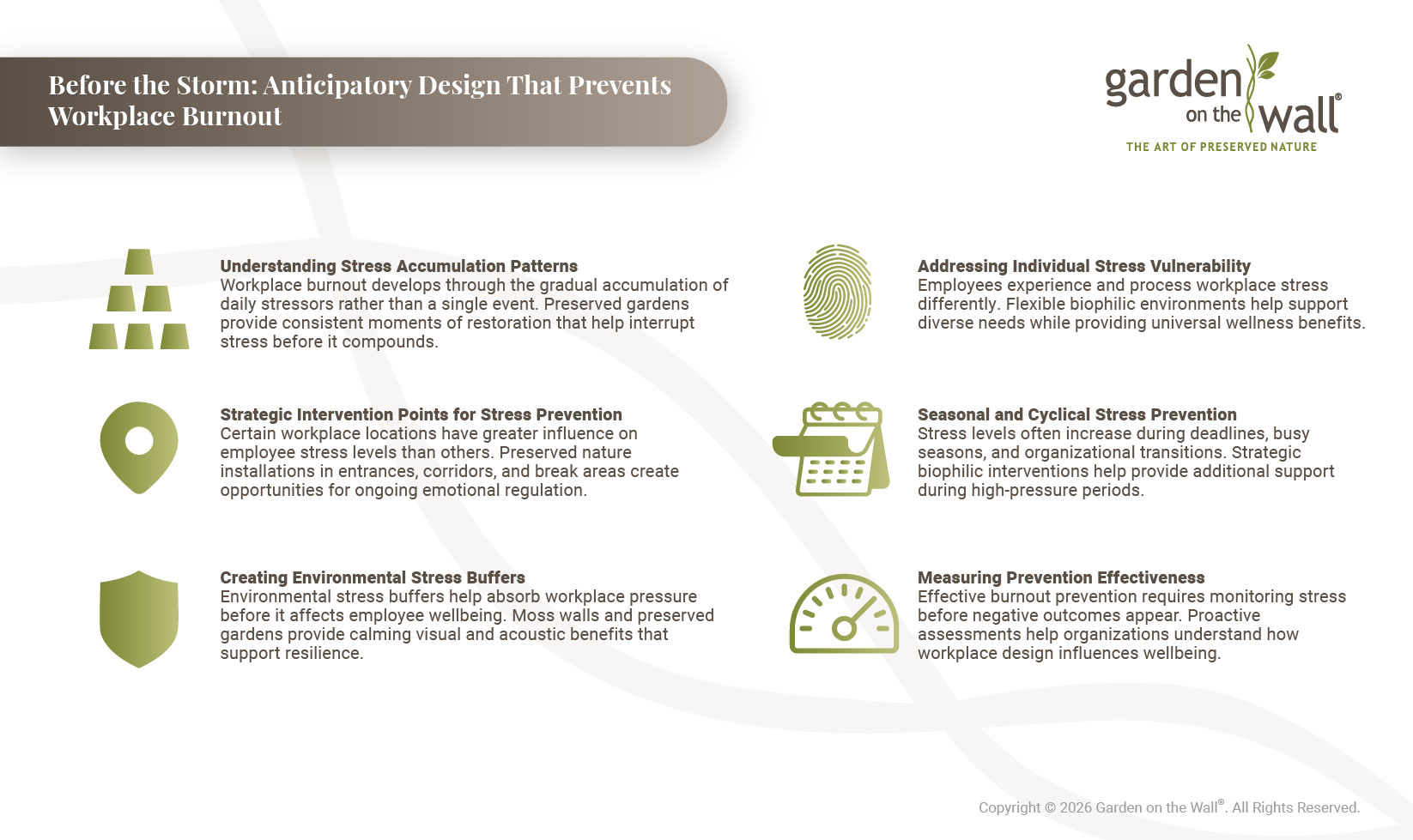
Workplace stress doesn't develop overnight. It accumulates through repeated exposure to environmental stressors: poor lighting, noise pollution, lack of visual interest, and disconnection from natural elements. These factors create micro-stresses that compound throughout the day, week, and month until they overwhelm individual coping capacity.
Research in occupational psychology reveals predictable patterns in stress accumulation. Morning stress sets the tone for entire days, while weekly patterns establish monthly trajectories toward either resilience or burnout. Environmental interventions positioned at strategic points in these cycles can interrupt stress accumulation before it reaches problematic levels. Preserved moss walls and garden installations provide consistent stress-reduction opportunities that help employees maintain emotional equilibrium throughout demanding work periods.
Strategic Intervention Points for Stress Prevention
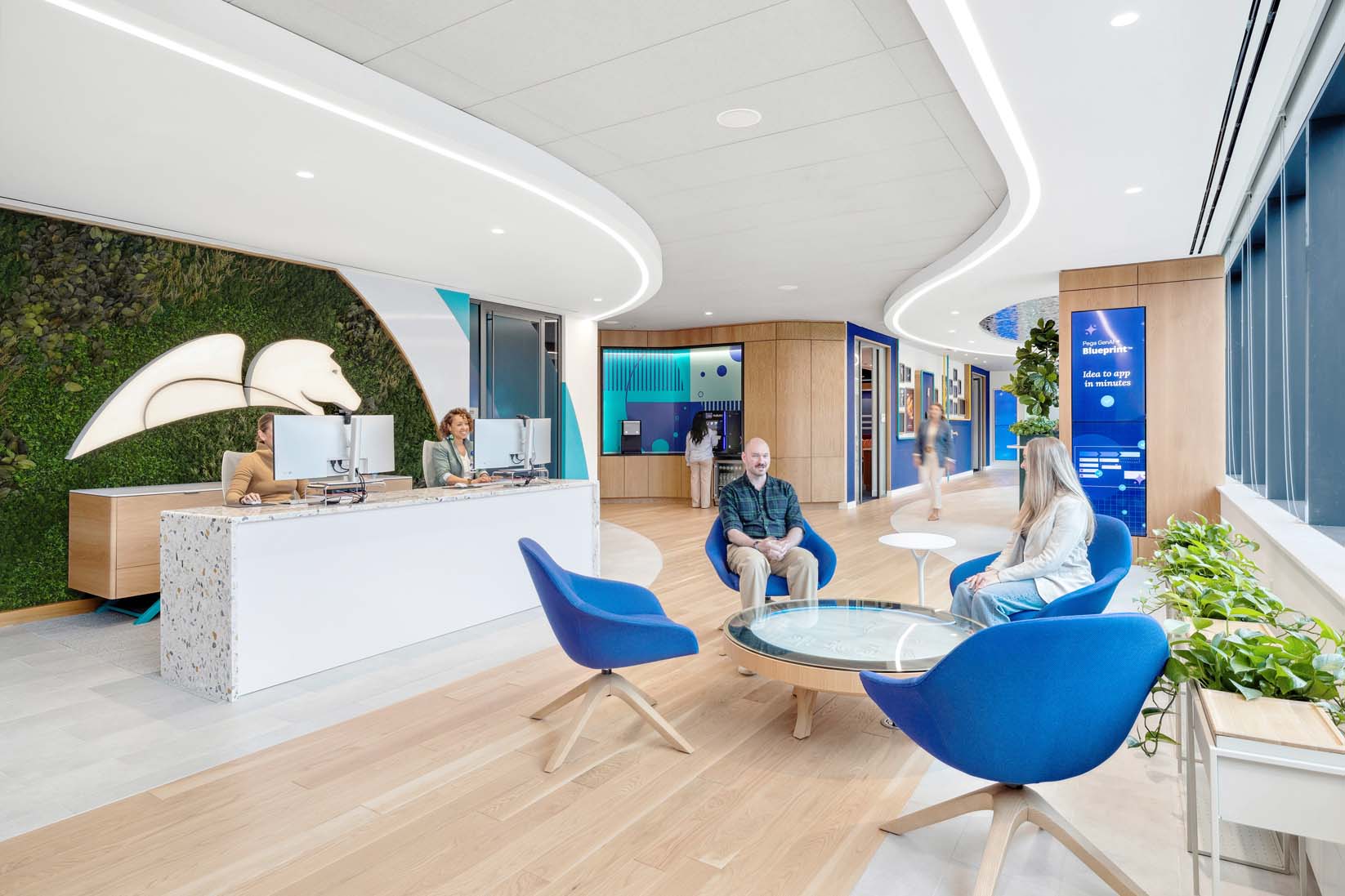
Anticipatory design identifies specific moments and locations where environmental interventions can prevent stress buildup most effectively. Entrance areas provide crucial first impressions that set daily stress baselines. Preserved garden installations in reception areas help employees begin their workday with reduced cortisol levels and improved emotional regulation capacity.
Transition zones between different types of work areas offer additional intervention opportunities. Preserved moss walls in corridors connecting high-stress departments provide brief restoration moments that prevent stress transfer between work activities. Break areas enhanced with draping preserved foliage create environments that support genuine recovery rather than simple time away from work tasks, helping employees return to demanding activities with restored mental resources.
Creating Environmental Stress Buffers
Effective anticipatory design creates environmental buffers that absorb workplace stress before it impacts employees. These buffers don't eliminate challenging work demands but provide ongoing support that helps individuals navigate difficulties without accumulating harmful stress levels.
Visual stress buffers include preserved nature installations that provide calming focal points during high-pressure activities. When employees work on demanding projects, peripheral visual contact with moss walls and preserved gardens helps maintain nervous system balance without requiring conscious attention or effort. Acoustic stress buffers incorporate the sound-absorbing properties of preserved installations to create quieter environments that reduce one of the most common sources of workplace stress accumulation.
Addressing Individual Stress Vulnerability
Different employees have varying vulnerability to workplace stress based on personality traits, life circumstances, and coping resources. Anticipatory design must accommodate these individual differences while providing universal stress prevention benefits.
Introverted employees often experience higher stress levels in open office environments and benefit from preserved installations that create visual privacy without complete isolation. Preserved planter inserts can be positioned to provide subtle barriers that reduce overstimulation while maintaining collaborative accessibility. Employees with anxiety tendencies benefit from the consistent presence of preserved nature elements that provide reliable environmental anchors during unpredictable work situations.
Seasonal and Cyclical Stress Prevention
Workplace stress often follows predictable seasonal and cyclical patterns related to fiscal cycles, project deadlines, and organizational rhythms. Anticipatory design addresses these patterns by providing enhanced environmental support during high-risk periods.
End-of-quarter periods typically involve increased deadline pressure and longer work hours. During these times, additional preserved foliage installations can be temporarily deployed in high-traffic areas to provide extra stress relief when employees need it most. Garden on the Wall®'s flexible installation options allow for seasonal adjustments that respond to changing stress levels throughout the year, ensuring that environmental support scales with organizational demands rather than remaining static regardless of stress patterns.
Measuring Prevention Effectiveness
The success of anticipatory stress prevention requires measurement approaches that capture stress reduction before negative outcomes become apparent. Traditional metrics like sick leave usage and turnover rates reflect reactive rather than preventive success.
Proactive measurement includes regular stress assessments, energy level surveys, and engagement indicators that reveal stress trends before they become problematic. Heart rate variability monitoring can provide objective data about stress accumulation patterns and environmental intervention effectiveness. Employee feedback about workspace comfort, visual appeal, and stress levels provides qualitative insights that complement physiological measurements and guide ongoing refinements to anticipatory design strategies.
Implementation for Maximum Prevention Impact
Successful anticipatory design requires comprehensive understanding of organizational stress patterns and individual employee needs. Begin with stress mapping exercises that identify when, where, and why stress accumulates most rapidly within your specific workplace environment.
Pilot anticipatory interventions in areas with highest stress risk - deadline-driven departments, customer service areas, and spaces where difficult decisions are made regularly. Start with preserved moss walls and garden installations in transition areas where brief stress relief can prevent accumulation without disrupting productivity. Monitor stress indicators before and after installation to validate prevention effectiveness and guide expansion to additional areas.
The Future of Preventive Workplace Design
As organizations recognize the tremendous costs of employee burnout - estimated at $190 billion annually in healthcare costs alone - preventive approaches become increasingly valuable. Anticipatory design represents the evolution from reactive wellness programs to proactive environmental health infrastructure.
Commercial interior designers have unprecedented opportunities to create workplaces that actively protect employee wellbeing rather than simply accommodating it. Through strategic placement of preserved gardens, moss walls, planter inserts, and draping preserved foliage, you can design environments that interrupt stress accumulation cycles and support sustained employee engagement. The future belongs to organizations that invest in stress prevention rather than stress recovery, creating competitive advantages through environmental design that keeps talented employees healthy, engaged, and productive throughout their entire tenure.
For more information on this subject, read this article: Beyond Stress Reduction: How Salutogenic Design with Preserved Gardens Creates Health-Generating Environments and other related information, please visit our website: www.gardenonthewall.com.