
Preserved Gardens vs. Living Walls vs. Faux Greenery
Greenery in commercial interiors takes three forms: living walls, faux greenery and preserved gardens. All three look green on opening day. They differ in what they ask of the building afterward: maintenance, infrastructure, documentation, longevity and cost.
This comparison is for architects, interior designers, owners and facility teams. Each option has a legitimate use. The aim is to match the option to the project.
Living Walls: Alive and Demanding
A living wall is real, growing planting. For a project with the budget and the operational commitment to run one, it can be the right choice.
That commitment includes irrigation and plumbing, grow lighting, horticultural service and replanting. A living wall suits a project where a living system is the point and the owner has agreed to operate it.
Living walls disappoint when they are specified for the opening photograph and handed to a facilities team that never agreed to run a garden.
Faux Greenery: Low First Cost, No Real Plant
Faux greenery is manufactured, almost always from petrochemical-based plastics. It is not plant material. It collects dust and needs regular cleaning, and few faux products can answer fire and VOC questions with third-party documentation.
Its honest use is narrow: spaces where first cost is the only criterion and no biophilic or sustainability outcome is expected.

Preserved Gardens: Real Plants, No Upkeep
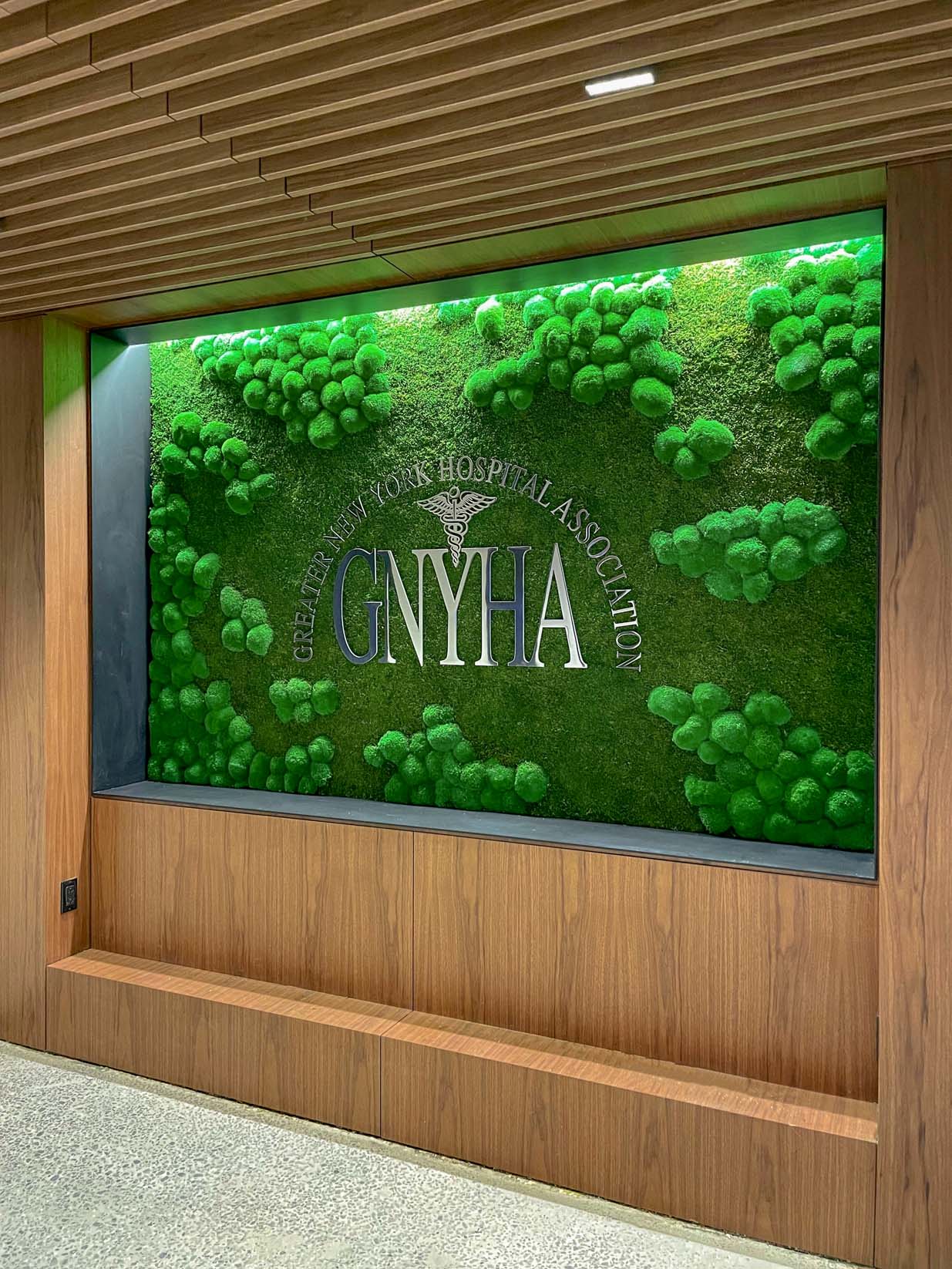
Preserved gardens are made from real moss, foliage and flowers that have been stabilized through a preservation process. They keep their natural texture and color without water, soil or light. There is no irrigation, no plumbing, no grow lighting and no horticultural contract.
Quality varies widely within the category. Our provider evaluation guide sets out what to ask.
Side-by-Side Comparison
How to Choose
Choose a living wall when a living system is central to the design and the owner commits to operating it. Choose a preserved garden when the project wants real natural material with no maintenance and third-party documentation. Choose faux greenery only when no biophilic or sustainability outcome is expected from the space.
For most commercial interiors the deciding questions are operational. Who will maintain it? What is the total cost of ownership over 20 years? What documents support it?
Frequently Asked Questions on Comparing the Options
What is the difference between preserved and artificial greenery?
Preserved greenery is real plant material, stabilized so it keeps its natural texture and color without water or care. Artificial greenery is manufactured, almost always from petrochemical-based plastics. They can look similar in a photograph and are different materials.
What is the difference between a living wall and a preserved green wall?
A living wall uses live plants and needs irrigation, lighting, horticultural service and replanting. A preserved green wall uses real, stabilized plants and needs no water, light or care.
Are preserved gardens sustainable?
Garden on the Wall® publishes a cradle-to-grave EPD with negative cradle-to-gate embodied carbon, holds a Declare Label with Red List Free status, and runs the Re-Leaf take-back program. Preserved gardens use no water and no lighting energy in service.
Which option needs the least maintenance?
Preserved gardens. They need no watering, trimming, lighting or plant care. Living walls need ongoing horticultural service, and faux greenery needs regular cleaning.
Related resources