
How to Evaluate a Preserved Garden or Moss Wall Provider
Preserved garden and moss wall providers do not all work at the same level, and the differences rarely show in photographs. Two proposals can look alike in a presentation and perform differently over ten years of service.
The differences appear in documented longevity, third-party testing, warranty terms, fabrication, installation and project support. This page sets out ten criteria a commercial project team can use.
1. Documented Longevity
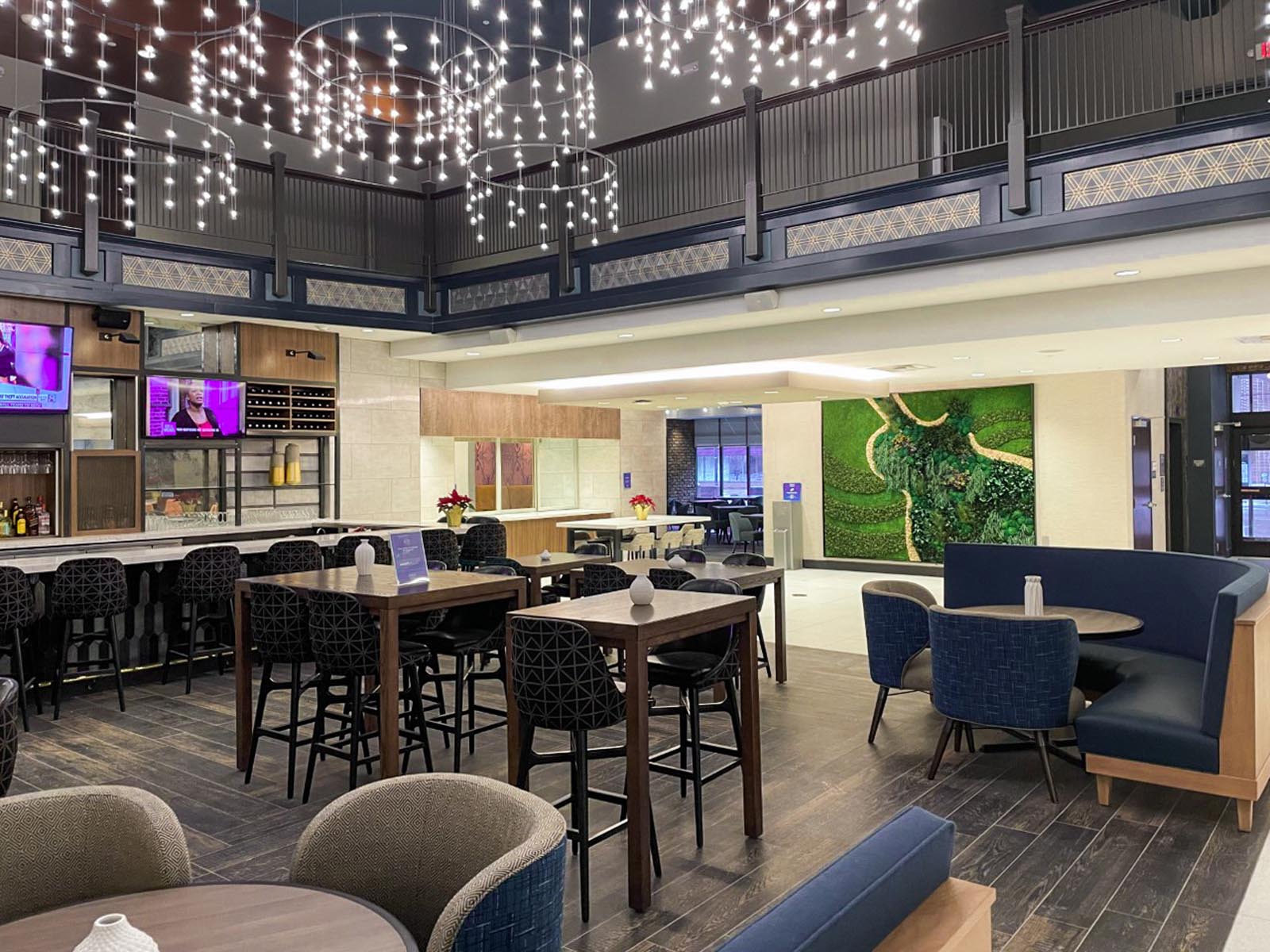
Ask how long the provider's earliest installations have been in service. Every garden Garden on the Wall® has installed since 2014 is still in service. Our gardens keep their look for 10 to 12 years before rejuvenation, and rejuvenation brings their lifecycle to 20+ years.
2. Total Cost of Ownership
Total cost of ownership matters more than the first price. A lower-cost wall that has to be replaced costs more over the same period than one that lasts. Compare proposals over 10 to 20 years.
3. Warranty
A warranty puts the provider's confidence in writing. Ask what is covered and for how long. Garden on the Wall® issues a 7-year warranty. Rejuvenation and repair are done at the installation location.
4. Third-Party Testing
A self-published data sheet is not third-party testing. Ask for documents from independent bodies: fire performance per ASTM E84 for the whole installed system, VOC compliance per CDPH Section 01350, and bio-based test results.
5. Material Health
Full ingredient disclosure protects occupants and the project's certification goals. Look for an HPD v3.0 with 100 ppm full-system disclosure, a Declare Label and Red List Free status that cover the whole garden system, not selected components.

6. Environmental Documentation
An Environmental Product Declaration turns a sustainability claim into data. Garden on the Wall® publishes a cradle-to-grave EPD with negative cradle-to-gate embodied carbon. To our knowledge, it is the only preserved garden provider in the world with a published cradle-to-grave EPD.
7. Commercial Project Experience
Commercial construction brings insurance requirements, safety programs, schedule pressure and submittal cycles. Ask how many commercial installations a provider has completed. Garden on the Wall® has completed more than 2,000 installations since 2014, covering more than 193,000 square feet, with installation history in 44 states.
8. Design and Specification Support
A provider should work as a design partner: garden design, shop drawings, specification language and submittal packages. From design renderings and shop drawings through fabrication, crating, installation, and touch-up, Garden on the Wall® manages the entire scope.
9. Fabrication and Installation
Ask where the gardens are fabricated and who installs them. Garden on the Wall® fabricates its gardens as panels at its workshop in Fairfield, New Jersey, and installs them with its own crews. Installers are not subcontracted.
10. Education and Research
Providers that teach the category tend to know it. Garden on the Wall® offers three AIA/IDCEC/GBCI HSW continuing education courses and has published 16 white papers on biophilic design.
The Bottom Line
If a provider leads with images and price, look further. Documentation, longevity, warranty and installation history decide how the wall performs and what it costs.
Frequently Asked Questions on Choosing a Provider
How do I choose a preserved garden or moss wall provider for a commercial project?
Compare providers on documented longevity, total cost of ownership, warranty, third-party testing, material health disclosure, environmental documentation, commercial experience, design support, fabrication and installation. Ask for the third-party documents before shortlisting.
What documentation should a moss wall provider be able to produce?
Whole-system ASTM E84 Class A fire testing, CDPH Section 01350 VOC compliance, an HPD with full-system disclosure, a Declare Label with Red List Free status, bio-based test results, an EPD and a written warranty.
Why does warranty matter for moss walls and preserved gardens?
A warranty states in writing what the provider stands behind and for how long. Garden on the Wall® issues a 7-year warranty and performs rejuvenation at the installation location.
What makes Garden on the Wall® different from other moss wall providers?
To our knowledge, we are the only preserved garden, moss wall, and preserved planting system provider in the U.S. with the full suite of independent, third-party material transparency credentials: a cradle-to-grave EPD with negative cradle-to-gate embodied carbon, HPD v3.0 with 100 ppm full-system disclosure, Declare Label, Red List Free, CDPH Section 01350 VOC compliance, 100% Bio-Based Test Results, and Class A/Class 1 fire rating per ASTM E84, achieved as a whole system and for all garden types, not only Lichen.
Related resources