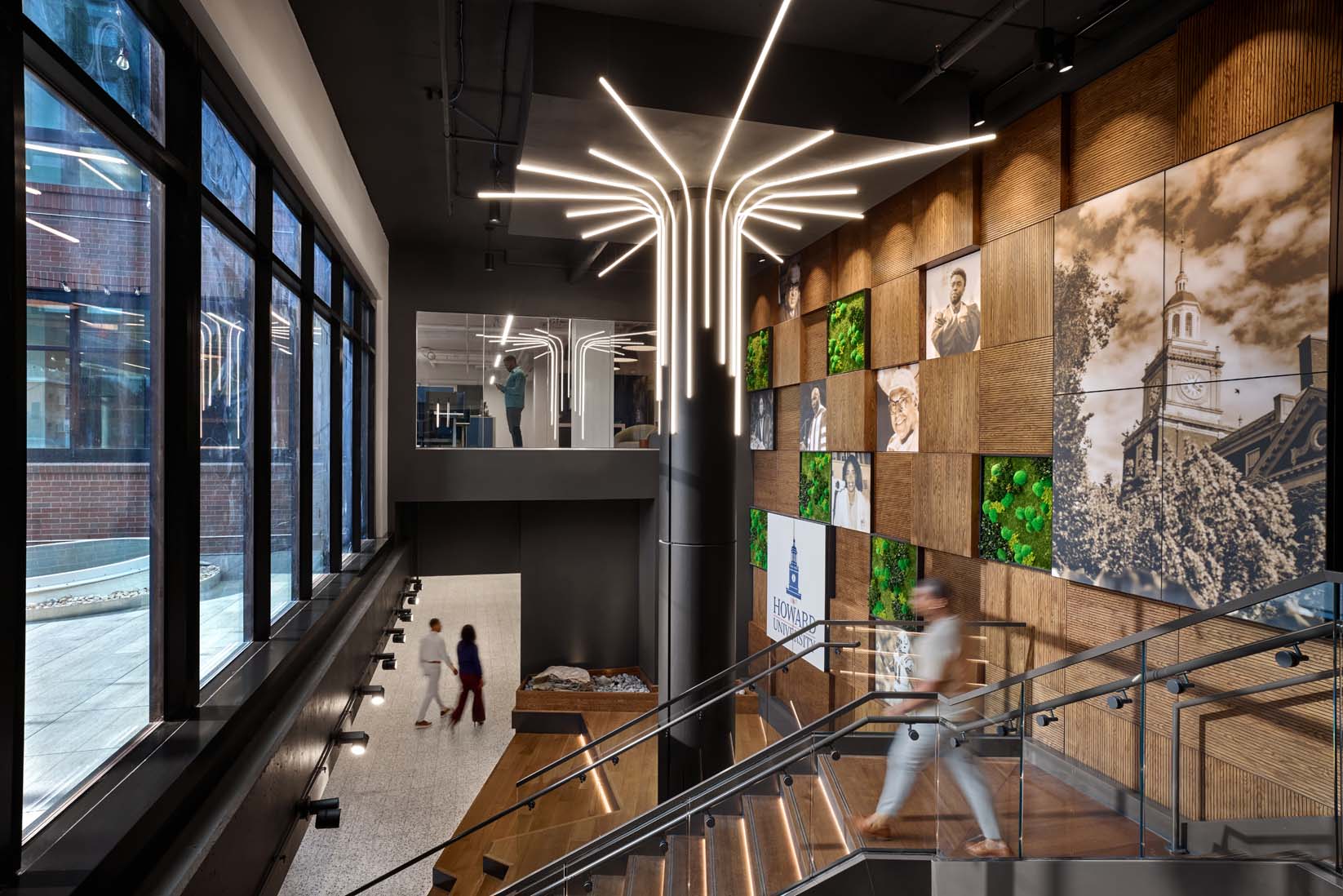
Living Wall Vs Preserved Green Wall: Maintenance, Cost, Longevity, And Design Differences
Living walls, preserved green walls, moss walls, vertical gardens, and planter inserts all bring nature into commercial interiors, but they differ sharply in infrastructure, maintenance, cost, longevity, material health, and operational burden. This Industry Insights article compares the options so project teams can choose the right solution.
Designers, architects, owners, and facilities teams often use terms like green wall, living wall, vertical garden, moss wall, and preserved green wall interchangeably. They are related, but they are not the same. The differences matter because the system a project team chooses can affect irrigation, drainage, lighting, maintenance contracts, installation coordination, long-term cost, and the way the space performs over time.
A living wall is an active plant system. It uses live plants and typically requires water, light, growing media, irrigation, drainage, pruning, plant replacement, and ongoing horticultural care.
A preserved green wall is made from real moss and foliage that have been preserved to retain their natural appearance, texture, and botanical character without water, soil, sunlight, misting, or trimming. It is not a living wall, and it is not faux greenery. For climate-controlled commercial interiors, that distinction can make preserved green walls a highly practical way to deliver the visual and biophilic impact of nature without the operational burden of a live plant system. When material health and sustainability documentation matter, the provider matters too: Garden on the Wall® distinguishes itself through whole-system third-party testing, published environmental documentation, and a certification stack that helps designers avoid unsupported green claims.
Quick Answer: Which Is Better?
Neither system is universally better. They solve different project needs.
A living wall may be the right choice when a project specifically wants live plant growth and can support the infrastructure and care that live plants require. That includes irrigation, drainage, lighting, plant replacement, pest monitoring, pruning, and maintenance access.
A preserved green wall is often the better fit when a commercial interior needs natural materiality, visual consistency, long-term durability, and a dramatically lower maintenance burden. Preserved green walls are especially useful in lobbies, reception areas, workplaces, healthcare interiors, hospitality spaces, amenity areas, airports, schools, and other interiors where a living wall may be difficult to operate over time.
The most important question is not simply "Which looks greener?" The better question is: which system can the building realistically support for the life of the installation?
First, Clarify The Vocabulary: Green Wall, Living Wall, Vertical Garden, Moss Wall, And Planter Insert
Searchers and project teams often use several terms as if they mean the same thing. For specification, pricing, and maintenance planning, the distinctions matter.
A green wall is the broadest term. It can refer to a living wall, a preserved green wall, a moss wall, or even an artificial/faux green wall. The term describes the visual category, not the system behind it.
A living wall is a live plant wall. It is a biological system that needs water, light, root support, irrigation, drainage, and horticultural care.
A vertical garden is another broad term. In many projects, it refers to a living plant wall or exterior planted system. In commercial interiors, it can also be used informally to describe preserved vertical gardens or preserved botanical wall installations.
A moss wall may be live, artificial, or preserved. For commercial interiors, preserved moss walls are the most relevant comparison to living walls because they use real moss that has been preserved for indoor display without water, sunlight, soil, or trimming.
A preserved garden usually combines preserved moss with preserved foliage, ferns, forest species, eucalyptus, or other botanical elements. It can be flatter and moss-forward, more dimensional and foliage-forward, or designed at different density tiers depending on the project.
A planter insert is a horizontal or built-in planter application. Instead of filling millwork or planters with live plants that need soil, watering, and replacement, preserved foliage planter inserts can provide a natural botanical effect with no horticultural maintenance.
This article uses "preserved green wall" as the umbrella term for Garden on the Wall®'s preserved vertical gardens, preserved moss walls, moss-and-foliage gardens, and related preserved botanical wall applications.
What Is A Living Wall?
A living wall is a vertical plant system made with live plants. Depending on the design, it may include trays, pockets, growing media, irrigation lines, drainage, waterproofing, fertilizer delivery, lighting, and a maintenance program.
Living walls can be beautiful and appropriate when a project has the budget, infrastructure, access, and long-term care plan to keep live plants healthy. They can also be operationally demanding. A living wall is not simply a decorative surface. It is a horticultural system attached to a building.
Common living wall requirements may include:
- irrigation or hand-watering
- drainage and water management
- waterproofing coordination
- grow lights or reliable natural light
- pruning and plant replacement
- pest and disease monitoring
- fertilization or nutrient management
- access for regular maintenance
- periodic system checks
- facility coordination if leaks, plant loss, or humidity issues occur
For some projects, those requirements are acceptable. For others, they create exactly the kind of maintenance burden the design team is trying to avoid.
What Is A Preserved Green Wall?
A preserved green wall is made with real natural moss and foliage that have gone through a preservation process. The goal is to maintain the look, texture, and organic complexity of plant material without requiring the plant to remain biologically active.
Garden on the Wall® designs, fabricates, and installs preserved botanical environments for commercial interiors, including preserved gardens, moss walls, planter inserts, and preserved draping foliage. These installations are intended for climate-controlled indoor applications and are custom designed for the project.
For SEO and specification clarity, this matters: a preserved moss wall is not the same as a living moss wall, and a preserved planter insert is not the same as a live planter. A preserved moss wall uses real preserved moss and may be designed as a clean moss canvas, a textured moss composition, or a moss-and-foliage garden. A preserved planter insert uses preserved foliage arranged for horizontal planter conditions, built-in millwork, or freestanding interior planters without watering, soil, drainage, or plant replacement.
Preserved green walls do not require:
- water
- soil
- sunlight
- misting
- trimming
- fertilizing
- irrigation infrastructure
- drainage systems
- plant replacement cycles typical of live plant walls
That does not mean preserved green walls are indestructible or appropriate for every condition. They should be protected from outdoor exposure, excessive humidity, direct water contact, harsh UV exposure, heat sources, and aggressive cleaning. But when specified and installed correctly in an appropriate indoor environment, they can provide long-lasting biophilic impact with far less operational complexity than a living wall.
Living Wall Vs Preserved Green Wall: Side-By-Side Comparison
| Consideration | Living Wall | Preserved Green Wall |
|---|---|---|
| Plant material | Live plants | Real preserved moss and foliage |
| Water requirement | Yes, typically through irrigation or hand-watering | No water required |
| Soil/growing media | Typically required | Not required |
| Sunlight or grow lights | Usually required | Not required |
| Irrigation and drainage | Usually required | Not required |
| Maintenance | Ongoing horticultural care | Minimal plant maintenance; proper indoor care conditions required |
| Plant replacement | Expected over time | Not a live-plant replacement cycle |
| Facility burden | Higher due to water, access, care, plumbing, lighting, and system monitoring | Lower due to no irrigation, drainage, grow lights, or live-plant care |
| Visual consistency | Can fluctuate with plant health and seasonality | Designed for consistent appearance over time |
| Outdoor suitability | Possible with proper exterior system and plant selection | Not recommended for outdoor exposure |
| Best fit | Projects that specifically want active live plants and can support them | Climate-controlled interiors needing natural materiality with low maintenance |
| Related terms | Living plant wall, live green wall, vertical garden, plant wall | Preserved green wall, preserved moss wall, moss wall, preserved garden, preserved planter insert |
Maintenance: The Biggest Practical Difference
Maintenance is often where the difference becomes clearest.
A living wall is alive. That means it needs care. The plants need water, light, nutrients, pruning, cleaning, and replacement when individual plants decline. The system itself may also need monitoring for irrigation, drainage, moisture control, and access.
For a homeowner or small private installation, that care may be acceptable. For a commercial lobby, healthcare corridor, airport lounge, office amenity space, or hospitality environment, maintenance is not a small detail. It becomes an operational commitment.
A preserved green wall removes the horticultural care layer. There is no watering schedule, no irrigation system, no drainage line, no grow-light strategy, no pruning, and no fertilizing. That makes preserved green walls especially attractive for commercial interiors where facility teams want the presence of nature but do not want to manage a live plant system.
Preserved green walls still need appropriate conditions. They should be installed indoors in climate-controlled environments and protected from direct water, excessive humidity, heat sources, harsh UV, and unnecessary physical handling. Cleaning should be gentle and consistent with the care instructions for the specific installation. For detailed maintenance guidance, see our Maintenance and Longevity FAQ for Preserved Gardens, Moss Walls, and Planter Inserts.
The practical distinction is simple: a living wall must be kept alive; a preserved green wall must be properly protected.
Cost: Why Living Walls Usually Require Higher Initial Investment
One of the most common questions is whether a living wall or preserved green wall costs more. In commercial interiors, a living wall is typically more expensive before maintenance even begins because it is not just a decorative surface. It is a planted mechanical/horticultural system that needs physical depth, water management, lighting, controls, and maintenance access.
Living wall systems often require an insulated space or cavity, commonly in the range of 18 to 24 inches deep, to house the planter system, trays, root media, irrigation lines, water collection, filtration, and supporting components. They may also require plumbing coordination, drainage strategy, water filtration, grow lights that remain on for long daily periods, and ongoing system controls.
Based on Garden on the Wall® project experience, living wall systems are often at least 25% more expensive in initial investment than a comparable Garden on the Wall® preserved green wall scope. With some other preserved greenery suppliers, the gap may be even wider, with living walls reaching roughly 40% more than preserved alternatives. The exact difference depends on the project, but the infrastructure burden is real and should be evaluated early.
A useful comparison should look beyond initial square footage and evaluate both upfront cost and total cost of ownership.
For a preserved green wall by Garden on the Wall®, turnkey pricing is not a one-size-fits-all number because every project is custom designed, fabricated, and installed. Pricing can be shaped by:
- total square footage
- design tier
- density of foliage over moss
- garden height above finished floor
- site access
- installation complexity
- project schedule
- geographic location
- freight, travel, and mobilization requirements
Geography matters. Garden on the Wall®'s workshop and team are based in New Jersey, so logistics can affect project pricing. The same square footage may price differently in Los Angeles than in New York because travel, freight, labor mobilization, and installation coordination are different.
That is why publishing a generic turnkey price can be misleading. It may create a false expectation before the design, site conditions, access, location, and installation requirements are understood.
Total Cost Of Ownership: The Better Comparison
The better question is not only "What does it cost to install?" It is "What does it cost to own, operate, and maintain over time?"
A living wall may include both upfront infrastructure costs and ongoing costs such as:
- horticultural maintenance contracts
- irrigation system service
- water use
- plant replacement
- pruning and cleaning
- grow-light energy and maintenance
- pest or plant health management
- facility coordination for leaks or moisture issues
- access equipment for high or difficult-to-reach installations
A preserved green wall may have a higher or lower initial cost depending on the design, but it avoids many of the ongoing requirements associated with live plant systems. There is no irrigation system to monitor, no drainage system to coordinate, no live plants to replace, and no routine horticultural maintenance contract needed to keep the wall alive.
That maintenance delta can be substantial. Based on Garden on the Wall® project experience, a typical 100 sq. ft. living wall can spend up to $75,000 annually on maintenance and system upkeep. A preserved garden by Garden on the Wall® has $0 horticultural maintenance cost because it does not require watering, pruning, fertilizing, plant replacement, irrigation service, or live-plant management.
For commercial interiors, that can make the preserved option more predictable from an operational standpoint. The value is not only the visual result. It is the reduction of complexity and recurring cost after installation.
Longevity And Visual Consistency
Living walls change over time because plants grow, decline, are replaced, and respond to light, water, temperature, humidity, pests, and maintenance quality. For some projects, that evolving living quality is part of the appeal. For others, especially brand-sensitive commercial interiors, variability can become a concern.
Preserved green walls are designed for visual consistency. Garden on the Wall®'s preserved moss and foliage installations are described on the company's site as retaining their fresh-cut state for 10 to 12 years in appropriate indoor conditions. Longevity depends on the project environment, material palette, exposure, humidity, UV conditions, handling, and care. For maintenance and lifecycle details, see our Preserved Moss Wall Maintenance and Longevity FAQ.
Garden on the Wall® also distinguishes itself through a post-installation tune-up and rejuvenation program. The company schedules a complimentary tune-up visit within 18 to 24 months to evaluate how the garden has acclimated to its environment and to train building maintenance staff on light dusting methods. Garden on the Wall® also describes a unique rejuvenation technique designed to restore color affected by sunlight, UV rays, or improper lighting, extending the life-cycle of the installation to 20+ years when conditions allow.
This is where specification quality matters. A preserved botanical installation is not just a collection of plant material. It is a designed and fabricated system, and the long-term result depends on materials, craft, installation method, site conditions, post-installation care, and whether the provider has a credible process for renewal rather than simple replacement. For lifecycle expectations and renewal guidance, read our preserved moss wall maintenance and longevity FAQ.
Sustainability And Material Health
It is tempting to assume that a living wall is always the more sustainable choice because the plants are alive. In commercial interiors, the answer is more nuanced.
A responsible comparison should look at the full system:
- water use
- irrigation infrastructure
- drainage and waterproofing
- lighting energy
- plant replacement
- maintenance visits
- fertilizers or plant-care inputs
- materials used in the wall system
- durability and replacement cycles
- end-of-life considerations
Preserved green walls should also be evaluated carefully. The strongest case is not simply that they are low maintenance. It is that they can use real preserved botanical materials to create a natural, long-lasting interior feature without the water, irrigation, drainage, grow-light energy, and live-plant maintenance demands of living walls.
Explore why preserved gardens are a greener, more sustainable choice for commercial interiors.
They should also be distinguished from faux greenery. Faux green walls may imitate nature visually, but they are not natural botanical material. Preserved green walls occupy a different category: real plant material, preserved for interior use.
For projects where material health documentation, sustainability claims, or certification support matter, the design team should review the provider's third-party documentation rather than rely on generic claims. This is one of Garden on the Wall®'s clearest differentiators. The company positions itself as setting the gold standard in preserved greenery through whole-system transparency and third-party documentation, including EPD, HPD, CDPH VOC compliance, ASTM E84 fire testing, ASTM 6866 bio-based testing, Red List Free and Declare documentation, Mindful Materials and Sustainable Minds transparency resources, and building-rating-system support. The key point is whole-system proof: backing, adhesives, preserved moss, and preserved foliage should be evaluated together, not through isolated component claims.
Use our wayfinding guide to avoid greenwashing when evaluating environmental claims.
Which Option Is Better For Commercial Interiors?
For many commercial interiors, preserved green walls offer a stronger balance of natural appearance, design flexibility, operational simplicity, and long-term value.
That does not mean living walls are wrong. It means they should be selected when the project genuinely wants a living horticultural system and is prepared to support it.
Choose a living wall when:
- active live plant growth is a project requirement
- the required 18 to 24 inch system depth, irrigation, drainage, plumbing, filtration, lighting, and access can be integrated properly
- lighting conditions can support the plant palette
- ongoing horticultural care is budgeted
- facility teams can support access and system maintenance
- plant variability is acceptable
- Choose a preserved green wall when:
the space is climate-controlled and indoors no irrigation or drainage is preferred maintenance burden must stay low long-term visual consistency matters natural materiality is preferred over faux greenery the project needs biophilic impact without live-plant infrastructure total cost of ownership and operational predictability matter
What About Moss Walls And Planter Inserts?
Moss walls and planter inserts deserve special attention because they often appear in the same search journey as living walls and green walls.
A preserved moss wall can be a strong alternative when the project wants a natural, textured, biophilic surface but does not want the depth, watering, lighting, or maintenance required by a living wall. Preserved moss walls can also be useful where a thinner wall profile matters, since they do not need the deep planting cavities, root systems, or irrigation infrastructure associated with live plant walls.
A preserved garden expands on the moss wall idea by layering preserved foliage over moss. The density of foliage over moss is one of the factors that affects design tier, visual richness, and project pricing.
Preserved planter inserts solve a different but related problem. Many commercial interiors include built-in planters, millwork planters, or freestanding planters that are difficult to maintain with live plants. Preserved foliage planter inserts provide the visual presence of planted material without soil, watering, drainage, pest concerns associated with live plant care, or routine plant replacement.
In other words, preserved green walls, preserved moss walls, preserved gardens, and preserved planter inserts are not separate from the living-wall comparison. They are the practical preserved botanical alternatives a project team can use when the goal is natural materiality without live-plant infrastructure.
Where Preserved Green Walls Work Especially WELL
Preserved green walls are especially useful in commercial interiors where the design team wants the experience of nature but the building does not want the obligations of a living system.
Common applications include:
- corporate lobbies
- workplace amenity areas
- reception walls
- hospitality interiors
- healthcare waiting areas and corridors
- senior living common areas
- airport lounges and transportation interiors
- education and campus environments
- multifamily amenity spaces
- retail and mixed-use interiors
- wellness and spa environments
- law firm and professional-service offices
These are the kinds of spaces where visual impact, durability, and low operational burden can matter as much as the design concept itself. To see how these applications look in real projects, explore our Project Gallery.
The Bottom Line
Living walls and preserved green walls both belong in the broader conversation about biophilic design. The right choice depends on the project.
If a team wants a live plant system and can support the water, light, drainage, maintenance, and plant-care requirements, a living wall may be appropriate.
If a team wants real botanical material, strong visual impact, long-term consistency, and minimal plant maintenance in a climate-controlled interior, a preserved green wall may be the more practical commercial solution. Explore our Project Gallery to see completed preserved garden and moss wall installations.
Garden on the Wall® designs, fabricates, and installs preserved botanical environments for commercial interiors. For project teams evaluating living walls, preserved green walls, moss walls, or planter inserts, the best next step is a project-specific conversation about site conditions, design intent, maintenance expectations, and long-term ownership goals. Design professionals can also visit our Designers Hub for specification resources.
Frequently Asked Questions
Is A Moss Wall The Same As A Living Wall?
No. A moss wall can be live, faux, or preserved, depending on the material and system. A living wall is a live plant system that needs water, light, root support, and horticultural care. A preserved moss wall uses real moss that has been preserved for indoor display without water, soil, sunlight, misting, or trimming. See the complete living wall vs. preserved green wall comparison.
What Is The Difference Between Preserved Moss And Live Moss?
Live moss is biologically active and needs suitable moisture, light, and environmental conditions to survive. Preserved moss is real moss that has gone through a preservation process so it can retain its natural appearance and texture indoors without remaining alive or needing live-plant care.
What Is A Vertical Garden?
A vertical garden is a broad term for greenery installed vertically. It may refer to a living wall, an exterior planted system, an indoor live plant wall, or a preserved botanical wall. Because the term is broad, project teams should clarify whether the proposed vertical garden is living, preserved, or artificial.
Where Do Planter Inserts Fit Into This Comparison?
Planter inserts are horizontal or built-in botanical applications rather than wall-mounted systems. Live planter inserts require soil, watering, drainage planning, plant care, and replacement. Preserved foliage planter inserts can provide a natural planted appearance without horticultural maintenance, making them a useful companion to preserved green walls and moss walls in commercial interiors.
Can Preserved Moss Get Wet?
Preserved moss and foliage should not be sprayed, washed, watered, or exposed to direct liquid contact. Water can cause premature color degradation, wilting, or material damage. Preserved botanical installations are intended for climate-controlled indoor environments, not wet or exterior conditions.
Does Preserved Moss Grow?
No. Preserved moss is real moss, but it is no longer biologically active. It does not grow, spread, root into a wall, or require trimming. That is one reason preserved moss walls can provide a natural look without the maintenance requirements of live plant systems.
What Is The Main Difference Between A Living Wall And A Preserved Green Wall?
A living wall is made with live plants and typically requires water, light, irrigation, drainage, and ongoing horticultural care. A preserved green wall is made with real moss and foliage that have been preserved to maintain their natural look and texture without water, soil, sunlight, misting, or trimming. For a full side-by-side comparison, see our Preserved Moss Walls and Preserved Gardens FAQ.
Are Preserved Green Walls Real Plants?
Yes. Preserved green walls use real natural moss and foliage that have gone through a preservation process. They are different from faux green walls, which use artificial or synthetic greenery.
Do Preserved Green Walls Need Water?
No. Preserved green walls do not require watering, irrigation, misting, soil, or fertilizing. They are designed for climate-controlled indoor environments.
Do Living Walls Require Irrigation?
Most living walls require irrigation or another planned watering method. Many also require drainage, waterproofing coordination, lighting consideration, and regular plant care.
Are Living Walls High Maintenance?
Living walls generally require more maintenance than preserved green walls because they contain live plants. Maintenance can include watering system checks, pruning, plant replacement, pest monitoring, fertilization, cleaning, and lighting adjustments.
Do Preserved Green Walls Need Maintenance?
Preserved green walls require little to no plant maintenance compared with living walls. They do not need water, sunlight, trimming, or soil. They do need appropriate indoor conditions and should be protected from excess humidity, direct water, harsh UV, heat sources, and aggressive cleaning.
How Long Do Preserved Green Walls Last?
Garden on the Wall® describes its preserved moss and foliage installations as retaining their fresh-cut state for 10 to 12 years in appropriate indoor conditions. Garden on the Wall® also offers a tune-up and rejuvenation program that can extend the life-cycle of botanical elements to 20+ years when conditions allow. Actual longevity depends on material selection, site conditions, humidity, UV exposure, handling, and care. Review our preserved moss wall maintenance and longevity FAQ for detailed lifecycle guidance.
Are Preserved Green Walls The Same As Faux Green Walls?
No. A preserved green wall uses real preserved plant material. A faux green wall uses artificial greenery, often made from synthetic materials. This distinction matters for aesthetics, material discussions, sustainability positioning, and biophilic design integrity.
Which Is More Cost-Effective Long Term: A Living Wall Or Preserved Green Wall?
In Garden on the Wall®'s experience, living walls are often at least 25% more expensive in initial investment because of required depth, planters or root systems, plumbing, irrigation, water collection, filtration, grow lights, and controls. Some comparisons can show a wider gap depending on the preserved-wall supplier and project scope. Maintenance can widen the gap further: a typical 100 sq. ft. living wall can spend up to $75,000 annually on maintenance and system upkeep, while a Garden on the Wall® preserved garden has $0 horticultural maintenance cost. A fair comparison should look at total cost of ownership, not only initial installation cost. See our complete cost and total cost of ownership comparison. For more pricing and preserved-garden guidance, visit our Preserved Moss Walls and Preserved Gardens FAQ.
What Affects Preserved Green Wall Pricing?
Pricing depends on the specific project. Key factors include square footage, design tier, foliage density over moss, garden height above finished floor, site access, installation complexity, schedule, and geographic location. Because Garden on the Wall® is based in New Jersey, freight, travel, and mobilization can also affect pricing in different markets.
Can Preserved Green Walls Be Used Outdoors?
Garden on the Wall®'s preserved gardens, moss walls, and planter inserts are intended for climate-controlled indoor applications. Outdoor exposure, direct weather, uncontrolled humidity, water contact, and harsh UV exposure can damage preserved botanical materials.
When Should A Project Choose A Preserved Green Wall?
A preserved green wall is often the better choice when the project is indoors and climate-controlled, requires natural materiality, needs strong visual impact, cannot support irrigation or drainage, and values low maintenance, visual consistency, and predictable long-term ownership.
_Photos%20by%20Jason%20O%27Rear.jpg)