
The Empathy Engine: Designing Spaces That Teach Compassion and Understanding

Key Takeaways Before You Read the Full Article:
30 Second Executive Summary
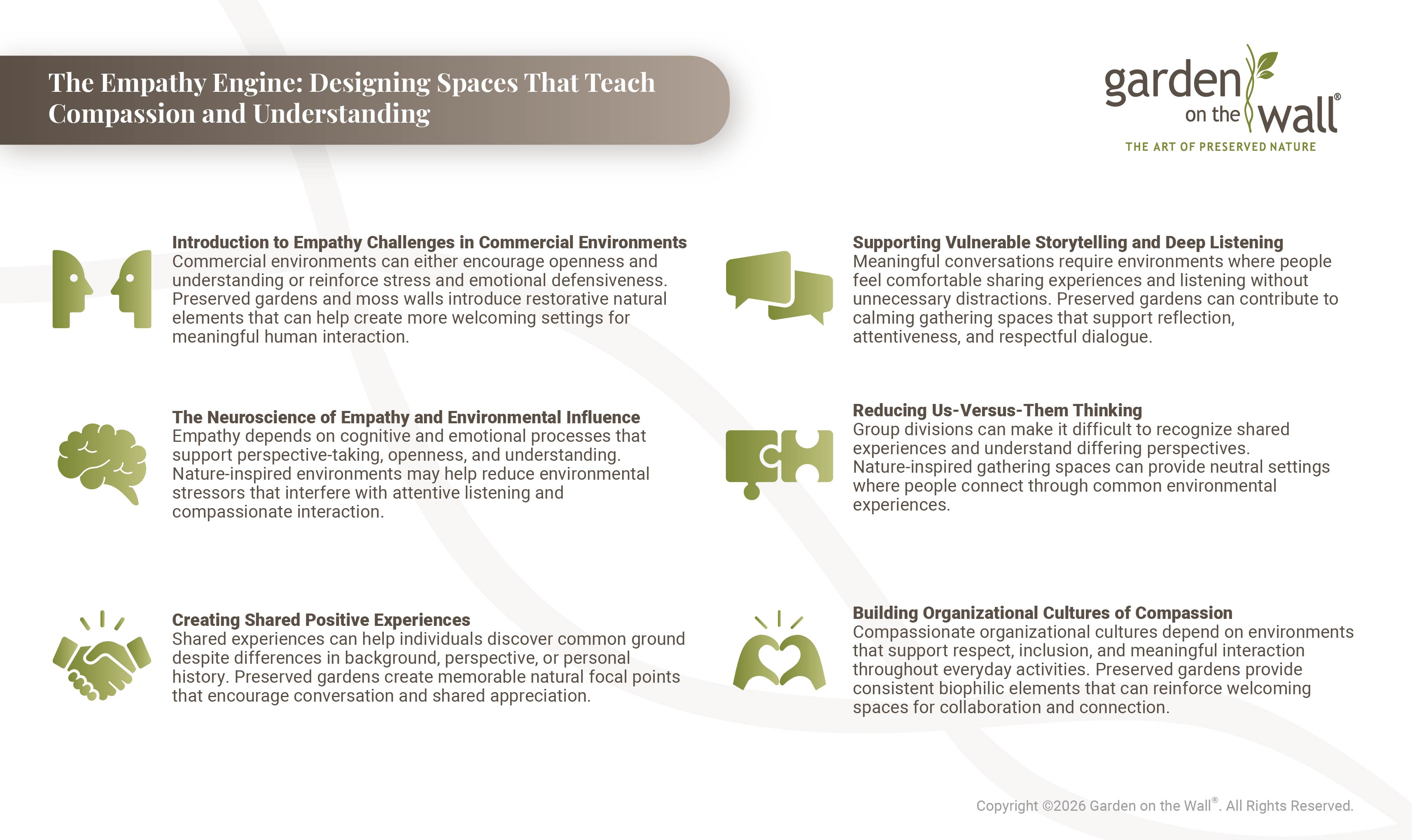
Empathy-centered environmental design recognizes that physical surroundings can influence the conditions in which people communicate, collaborate, and understand one another. Preserved gardens and moss walls introduce restorative natural elements that may reduce environmental stress, encourage shared experiences, and create more welcoming settings for compassionate interaction.
🧠 Research Foundation: Understanding Empathy and Environmental Influence
Empathy involves emotional awareness, perspective-taking, and the ability to engage with different viewpoints. Environments that reduce unnecessary stress and discomfort can help create more supportive conditions for attentive listening and meaningful communication.
🤝 Shared Experiences: Finding Common Ground Through Nature
Shared positive experiences can encourage connection between individuals with different backgrounds and perspectives. Preserved gardens create distinctive gathering points that offer opportunities for conversation, reflection, and mutual appreciation.
💬 Communication: Supporting Vulnerable Conversations and Deep Listening
Meaningful dialogue requires emotional comfort, attentive listening, and respect for different experiences. Biophilic gathering spaces can provide calming surroundings that support more thoughtful conversations without demanding attention.
🧩 Social Connection: Moving Beyond Group Divisions
Differences in background, identity, and perspective can create barriers to understanding. Neutral, welcoming environments provide opportunities for people to recognize shared experiences and engage beyond established group boundaries.
❤️ Organizational Culture: Creating Environments That Encourage Compassion
Empathy and compassion develop through ongoing interactions rather than isolated initiatives alone. Thoughtful biophilic design can support workplace and community environments where respect, cooperation, and human connection are encouraged.
Ready to explore how environmental design can support compassion and understanding? The full article examines how preserved gardens and moss walls can contribute to spaces that encourage shared experiences, deep listening, psychological comfort, and meaningful human connection.
Introduction to Empathy Challenges in Commercial Environments
Empathy development through environmental design represents an emerging understanding that physical spaces can actively cultivate compassion, understanding, and authentic connection between individuals with different backgrounds, perspectives, and experiences. Traditional approaches to empathy building focus on training programs, facilitated conversations, and structured activities while often overlooking how environmental factors can either support or inhibit the neurological and psychological conditions necessary for genuine empathetic engagement. Commercial environments hosting crucial interactions requiring empathy often work against rather than support the delicate process of opening hearts and minds to different viewpoints through harsh lighting, sterile aesthetics, and institutional atmospheres that trigger defensive rather than receptive states.
Environmental psychology research reveals that empathy involves complex neurological processes requiring specific brain states characterized by openness, curiosity, and reduced defensiveness that can be significantly influenced by environmental conditions. Stress, anxiety, and environmental discomfort consistently inhibit empathetic responses by triggering self-protective mechanisms that prioritize personal safety over understanding others. Preserved moss walls and garden installations create neurological conditions that support empathetic engagement by reducing stress responses and promoting the relaxed awareness necessary for genuine listening, perspective-taking, and the vulnerable sharing essential for building bridges across difference.
Environmental design becomes crucial for creating conditions where empathy can develop naturally rather than being forced through programmatic interventions that may feel artificial or imposed. Preserved gardens, moss walls, and vertical green walls provide environmental foundation for empathetic interaction by reducing stress responses and creating psychological conditions that support rather than threaten authentic connection between individuals with different backgrounds or conflicting perspectives.
The Neuroscience of Empathy and Environmental Influence
Empathy involves complex neurological processes that allow individuals to understand and share emotional experiences of others. This capacity requires specific brain states characterized by openness, curiosity, and reduced defensiveness. Stress, anxiety, and environmental discomfort can inhibit empathetic responses by triggering self-protective mechanisms that prioritize personal safety over understanding others.
Preserved moss walls and garden installations create neurological conditions that support empathetic engagement by reducing stress responses and promoting relaxed awareness necessary for genuine listening and perspective-taking. The organic patterns and natural textures activate parasympathetic nervous system responses that counteract defensive activation that often interferes with empathy.
Research in environmental psychology shows that natural elements increase cooperative behaviors and prosocial attitudes, creating foundation conditions for empathetic interaction. No-upkeep green walls provide consistent environmental support for empathy development without maintenance disruptions that could interfere with sensitive empathy-building activities or group dynamics.
Creating Shared Positive Experiences
Empathy often emerges through shared positive experiences that create common ground between individuals with different backgrounds or conflicting viewpoints. Traditional meeting environments focused on efficiency and functionality rarely provide opportunities for these bonding moments that can transform adversarial relationships into collaborative partnerships.
Natural elements provide universal positive experiences that transcend cultural, generational, and socioeconomic differences. Preserved gardens create shared appreciation for beauty and growth that can serve as foundation for deeper connection and understanding. When individuals from different backgrounds gather in environments enhanced with preserved nature installations, they often discover unexpected common ground through shared positive responses to natural textures, patterns, and colors.
Wall plant art installations create focal points that provide conversation starters while supporting emotional regulation during challenging empathy-building conversations. Moss art installations offer opportunities for shared aesthetic appreciation that can help bridge differences and create foundation for mutual understanding and respect.
Garden on the Wall® demonstrates installation expertise through professional training programs and turn-key implementation that ensures empathy-supporting environments achieve optimal effectiveness while maintaining operational efficiency for organizations focused on empathy development.
Supporting Vulnerable Storytelling and Deep Listening
Empathy development requires both courage to share personal experiences vulnerably and capacity to listen deeply to perspectives that may challenge existing beliefs. These processes demand environments that signal safety, acceptance, and respect for different viewpoints and experiences while supporting emotional regulation during difficult conversations.
Preserved nature, moss wall or preserved planter insert installations create psychological safety by suggesting that diversity and complexity are natural rather than problematic. The varied textures and patterns within moss walls provide visual metaphors for richness that emerge from difference, while organic integration demonstrates how diverse elements can combine harmoniously. Draping preserved foliage can create acoustic privacy that encourages intimate sharing while maintaining visual connection to supportive group environments.
Planter inserts with preserved foliage offer flexible solutions that can be adjusted based on group dynamics and empathy-building activities while providing consistent environmental support for vulnerable communication throughout different phases of empathy development work.
Reducing Us-Versus-Them Thinking
One of primary barriers to empathy involves categorical thinking that divides people into "us" and "them" groups based on perceived differences. These mental categories can prevent individuals from recognizing shared humanity and common experiences that could serve as foundation for understanding and connection between seemingly different groups.
Natural environments have unique ability to reduce categorical thinking by connecting all participants to universal human experiences of nature appreciation and biophilic response. Preserved gardens remind individuals of shared evolutionary heritage and common biological needs that transcend social and cultural divisions. The timeless quality of natural elements suggests perspectives that extend beyond immediate conflicts or differences, encouraging broader thinking about human connection.
Vertical green walls create shared focal points that help groups maintain collective attention during difficult conversations while providing environmental anchors for emotional regulation. The universal appeal of natural beauty helps establish common ground that can serve as foundation for empathy development across different cultural, socioeconomic, and experiential backgrounds.
Building Organizational Cultures of Compassion
Empathy training and compassion development represent ongoing organizational needs rather than one-time interventions. Environments that consistently support empathetic interaction help establish organizational cultures where understanding and compassion become normal rather than exceptional responses to difference and conflict.
Preserved foliage garden and moss wall installations provide continuous environmental messaging about growth, patience, and natural diversity that supports empathy development throughout daily interactions. Unlike program-based empathy interventions that occur sporadically, preserved gardens offer ongoing environmental support for compassionate interaction that becomes integrated into organizational culture. The consistent beauty and calming presence help maintain empathetic baseline attitudes that support positive relationship development.
Conference areas enhanced with preserved nature installations often experience improved group dynamics, increased collaborative problem-solving, and greater appreciation for diverse perspectives and contributions. Environmental beauty helps create conditions where empathy feels natural and valuable rather than forced or artificial.
No-upkeep green walls ensure that empathy-supporting environmental conditions remain consistently available without operational burden that could compromise empathy-building activities or create additional stress during sensitive group processes.
Conclusion
As organizations and communities recognize empathy as crucial skill for navigating increasingly diverse and complex social environments, design that actively supports compassion development becomes increasingly valuable. Environments that facilitate rather than hinder empathetic connection create advantages in conflict resolution, team collaboration, and community building.
Commercial interior designers have opportunities to create spaces that serve as empathy laboratories where understanding and compassion can develop naturally through environmental support rather than forced programming. Through thoughtful integration of preserved gardens, moss walls, planter inserts, and draping preserved foliage, designers can create environments that teach compassion through daily experience while supporting vulnerable conversations necessary for genuine understanding and connection between different perspectives and experiences.
For more information on this subject, read this article: What Makes A Design Human-Centric and other related information, please visit our website: www.gardenonthewall.com.


