The Dignity Revolution: Restoring Human Worth Through Environmental Design

Key Takeaways Before You Read the Full Article:
30 Second Executive Summary
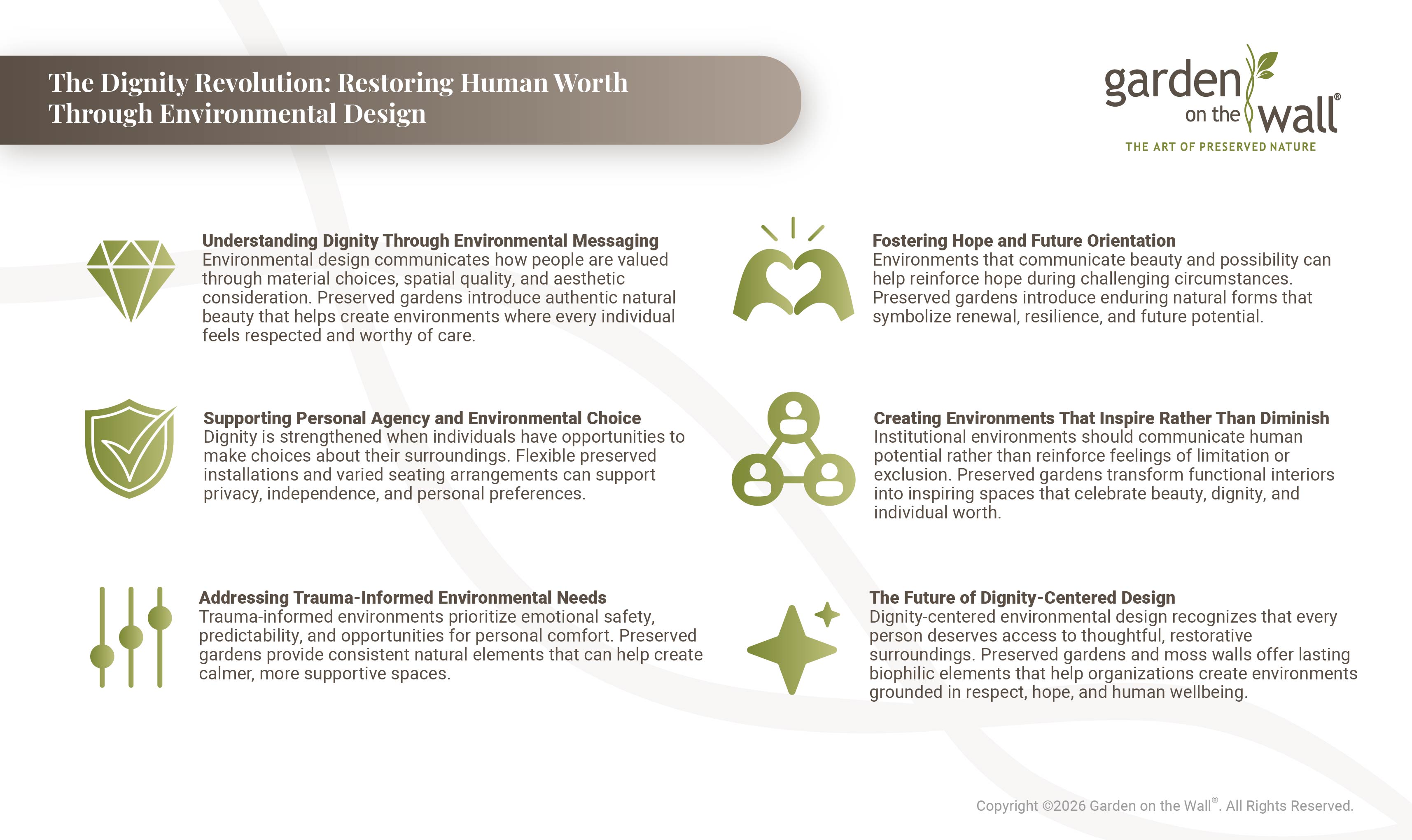
Dignity-centered environmental design recognizes that the quality of a space communicates how its occupants are valued. Preserved gardens and moss walls help transform institutional and service environments into welcoming, restorative spaces that support personal agency, emotional safety, hope, and the recognition of inherent human worth.
💎 Human Dignity: Communicating Worth Through Design
Material choices, environmental beauty, and thoughtful spatial planning communicate respect for the people using a space. Preserved gardens introduce authentic natural elements that reinforce the importance of quality environments for every individual.
🎛️ Personal Agency: Restoring Choice and Independence
Dignified environments provide opportunities for occupants to exercise control over their surroundings. Flexible layouts, privacy options, and thoughtfully integrated preserved nature can support autonomy and individual preferences.
🛡️ Trauma-Informed Design: Creating Environments of Emotional Safety
Individuals experiencing trauma may benefit from predictable, comfortable environments that reduce unnecessary stressors. Preserved gardens provide stable natural elements that can contribute to restorative spaces without requiring ongoing plant maintenance.
🌅 Hope and Renewal: Designing for Future Possibilities
Restorative environments can reinforce optimism by introducing beauty, continuity, and positive environmental associations. Preserved nature offers enduring visual reminders of resilience and the possibility of renewal.
🤝 Long-Term Impact: Environments That Honor Human Potential
Dignity-centered design moves beyond institutional efficiency to recognize the emotional and psychological importance of everyday surroundings. Thoughtful biophilic integration helps organizations create lasting environments that communicate respect, inclusion, and human worth.
Ready to explore how environmental design can restore dignity and reinforce human worth? The full article examines how preserved gardens and moss walls help create spaces that support personal agency, emotional safety, hope, and more compassionate human experiences.
Understanding Dignity Through Environmental Messaging
Dignity restoration through environmental design represents a fundamental shift from institutional approaches that prioritize efficiency over human worth to design philosophies that actively communicate respect, value, and inherent human dignity through every spatial element. Traditional service environments often inadvertently undermine the very people they aim to serve through sterile, cost-focused design choices that signal processing over care, creating environments that compound rather than alleviate the shame and diminished self-worth that often accompany challenging life circumstances. Environmental messaging becomes crucial for dignity restoration, as spaces communicate values about human worth through material selections, aesthetic investments, and the quality of environmental consideration given to vulnerable populations.
Human dignity encompasses the inherent worth that belongs to every person regardless of their current circumstances, life challenges, or need for institutional support. Environmental design can either support or systematically undermine this dignity through conscious and unconscious messaging embedded in spatial choices. When organizations invest in authentic beauty, quality materials, and thoughtful environmental design for spaces serving vulnerable populations, they communicate that the people using these spaces deserve the same environmental consideration as any premium commercial facility. Preserved moss walls and garden installations provide powerful tools for dignity restoration because they represent genuine investment in long-term environmental quality rather than temporary or superficial improvements.
Preserved moss walls and garden installations provide powerful tools for dignity restoration because they represent investment in beauty and long-term environmental quality. When organizations install authentic preserved nature elements in spaces serving vulnerable populations, they communicate that people using these spaces deserve same quality of environment as any premium commercial facility.
Understanding Dignity Through Environmental Messaging
One of the most direct ways to restore dignity involves introducing genuine beauty into spaces where people might not expect to encounter it. Beauty signals that someone cared enough to create something lovely, that space and its occupants matter enough to deserve aesthetic consideration. This environmental messaging can begin shifting internal narratives from shame and worthlessness toward recognition of inherent value and potential.
Preserved gardens bring sophisticated beauty to environments that often prioritize function over form due to budget constraints or institutional attitudes. Unlike artificial decorations that can feel patronizing or temporary, preserved nature installations provide authentic aesthetic experiences that communicate respect for occupants' capacity to appreciate and benefit from beautiful environments. The organic textures and natural patterns create visual richness that elevates daily experience while requiring no ongoing maintenance resources.
Wall plant art and moss art installations demonstrate organizational investment in environmental quality that extends dignity to service recipients while creating inspiring focal points that communicate worth and value through authentic beauty rather than institutional sterility.
Supporting Personal Agency and Environmental Choice
Dignity involves having choices and some measure of control over one's environment. Institutional settings often remove most environmental choices from occupants, creating learned helplessness that can persist long after individuals leave institutional care. Environmental design can restore elements of personal agency while respecting operational requirements and safety considerations.
Flexible preserved installations can provide opportunities for limited environmental choice within institutional constraints. Planter inserts with preserved foliage can be positioned based on individual preferences, while different seating arrangements near moss walls allow for varying levels of privacy and social interaction. These small choices may seem insignificant but can provide crucial opportunities for individuals to exercise agency and express personal preferences.
No-upkeep green walls provide consistent environmental quality without requiring operational maintenance that could limit access or create scheduling restrictions around environmental care activities. This reliability ensures that dignity-supporting environmental elements remain consistently available for individual choice and environmental interaction.
Addressing Trauma-Informed Environmental Needs
Many individuals in dignity-restoration environments have experienced trauma that affects their relationship with physical spaces. Trauma can create hypervigilance, anxiety about exits and safety, and difficulty trusting new environments. Design that ignores these realities can inadvertently retraumatize vulnerable individuals rather than supporting their healing and dignity restoration.
Natural elements provide universal comfort that can help regulate nervous systems activated by trauma responses. Preserved moss walls offer visual calm and organic patterns that signal safety to primitive brain systems, while draping preserved foliage can create partially enclosed spaces that provide security without complete isolation. The consistent presence of natural elements helps establish environmental predictability that trauma survivors often need for emotional regulation.
Garden on the Wall® demonstrates sustainability leadership through circular economy commitment and take-back programs that ensure dignity-supporting installations maintain their positive environmental impact throughout their lifecycle, resonating with values-conscious service organizations working to restore human dignity.
Fostering Hope and Future Orientation
Dignity restoration requires helping individuals develop hope and vision for positive future possibilities. Environments that feel terminal or focused only on current problems can reinforce hopelessness and resignation that interfere with recovery and growth processes. Environmental design can model possibility and renewal while supporting practical recovery work.
Preserved nature installations provide powerful symbols of growth, renewal, and natural recovery processes. Organic forms suggest that change and development are natural and possible, while beauty demonstrates that positive experiences remain accessible even in difficult circumstances. Garden installations maintain their beauty and symbolic power for decades, ensuring that these environmental messages of hope remain consistent throughout extended timeframes often required for dignity restoration.
Vertical green walls create inspiring focal points that communicate organizational belief in human potential and recovery possibilities, providing external validation that can support internal healing processes while maintaining sophisticated aesthetic appeal appropriate for professional service environments.
Creating Environments That Inspire Rather Than Diminish
Traditional institutional design often emphasizes control, efficiency, and risk management over human inspiration and potential development. These priorities can create environments that feel diminishing rather than empowering, reinforcing negative self-concepts rather than supporting personal growth and dignity restoration.
Preserved garden installations transform institutional atmospheres by introducing elements associated with growth, patience, and natural development processes. The installations suggest that occupants are individuals capable of appreciating beauty and experiencing positive emotions, rather than simply problems requiring management. The environmental upgrade communicates organizational belief in human potential and recovery possibilities.
Draping preserved foliage creates natural transitions that soften institutional edges while maintaining operational functionality. These installations provide ongoing environmental messaging about worth and possibility that supports dignity restoration through daily environmental exposure rather than programmatic intervention.
Conclusion
As society increasingly recognizes that environmental quality affects human potential and recovery outcomes, dignity-restoration design becomes understood as crucial infrastructure rather than optional luxury. Organizations that invest in dignity-supporting environments often achieve better service outcomes while creating more fulfilling work environments for staff. Commercial interior designers working with service organizations have opportunities to create environments that actively rebuild human dignity through strategic preserved garden, moss wall, planter insert and draping preserved foliage integration into built environments.
For more information on this subject, read this article: Trauma-Informed Design and the Healing Power of Biophilia and other related information, please visit our website: www.gardenonthewall.com.