Nature-Inspired Pediatric Spaces
Key Takeaways Before You Read the Full Article:
30 Second Executive Summary
Pediatric healthcare environments require design strategies that reduce anxiety, support emotional wellbeing, and create positive patient experiences. Preserved gardens and moss walls provide safe, maintenance-free biophilic solutions that transform clinical spaces into calming, healing environments.
🧸 Emotional Support: Reducing Anxiety in Young Patients
Natural elements provide comfort and familiarity in stressful environments. Preserved installations help regulate emotional responses and reduce fear.
🧠 Cognitive Engagement: Gentle Stimulation
Organic patterns and textures support attention and curiosity. These elements engage children without overwhelming their sensory systems.
👨👩👧 Family-Centered Design: Supporting Caregivers
Calming environments improve the experience for families. Emotional support for caregivers enhances overall care outcomes.
🛡️ Safety & Hygiene: Designed for Healthcare Standards
Preserved installations eliminate maintenance risks and hazards. This ensures safe, clean environments for pediatric care.
🏥 Healing Environments: Design as a Therapeutic Tool
Biophilic design supports cooperation, comfort, and recovery. Thoughtful environments improve both patient and staff experience.
Ready to see how biophilic design transforms pediatric healthcare environments?
The full article explores how preserved gardens create safer, more supportive spaces for children and families.
Nature-Inspired Pediatric Spaces
Pediatric healthcare environments present unique design challenges that require creating spaces that reduce anxiety for young patients while supporting family comfort and medical staff effectiveness. The integration of preserved gardens, moss walls, and preserved foliage installations provides essential biophilic elements that transform clinical environments into more welcoming, less intimidating spaces that support children's emotional wellbeing during medical treatment. These natural installations offer particular benefits in pediatric settings where environmental comfort can significantly impact treatment cooperation and recovery outcomes.
The thoughtful incorporation of preserved nature in pediatric facilities acknowledges that children respond differently to healthcare environments than adults, requiring design approaches that address developmental needs, fear reduction, and family support while maintaining the clinical functionality essential for quality medical care.
Reducing Medical Anxiety and Fear Responses
Healthcare environments can be particularly frightening for children who may not understand medical procedures or equipment, making the calming presence of preserved moss walls and garden installations valuable for reducing anxiety and fear responses. The natural beauty and organic forms found in preserved foliage provide visual comfort that helps counteract the intimidating atmosphere often associated with medical environments.
Preserved gardens and moss walls create familiar natural references that children can relate to from outdoor experiences, providing psychological anchors that help reduce stress during medical visits or extended hospital stays. The consistent, predictable nature of preserved installations eliminates concerns about plant care or safety issues while providing all the psychological benefits of natural beauty that support emotional regulation and anxiety management essential for successful pediatric care.
Creating Engaging and Developmentally Appropriate Environments
Children benefit from environments that provide appropriate visual stimulation and engagement opportunities without overwhelming their developing sensory processing capabilities. Preserved moss walls and garden installations offer natural complexity that engages children's attention while providing calming influences that support focus and cooperation during medical procedures and treatment activities.
The varied textures and patterns found in preserved nature installations provide opportunities for visual exploration and discovery that can serve as positive distractions during medical procedures while supporting the natural curiosity that characterizes healthy child development. Planter inserts with preserved greenery and strategically positioned garden elements create environments where children can find visual interest and comfort while receiving medical care.
Supporting Family Comfort and Participation
Pediatric healthcare often involves significant family stress and emotional challenges that can be alleviated through environments that provide psychological support and comfort for parents and caregivers. Preserved gardens and moss installations in family waiting areas, consultation rooms, and patient rooms create calming environments that help families cope with medical stress while maintaining focus on their child's care needs.
The presence of natural beauty in pediatric healthcare environments acknowledges that family wellbeing directly impacts child comfort and treatment cooperation, creating spaces where parents can find emotional support and restoration during difficult medical experiences. Draping preserved greenery and carefully positioned garden installations create family-friendly environments that feel less clinical and more supportive of the emotional needs that characterize pediatric healthcare experiences.
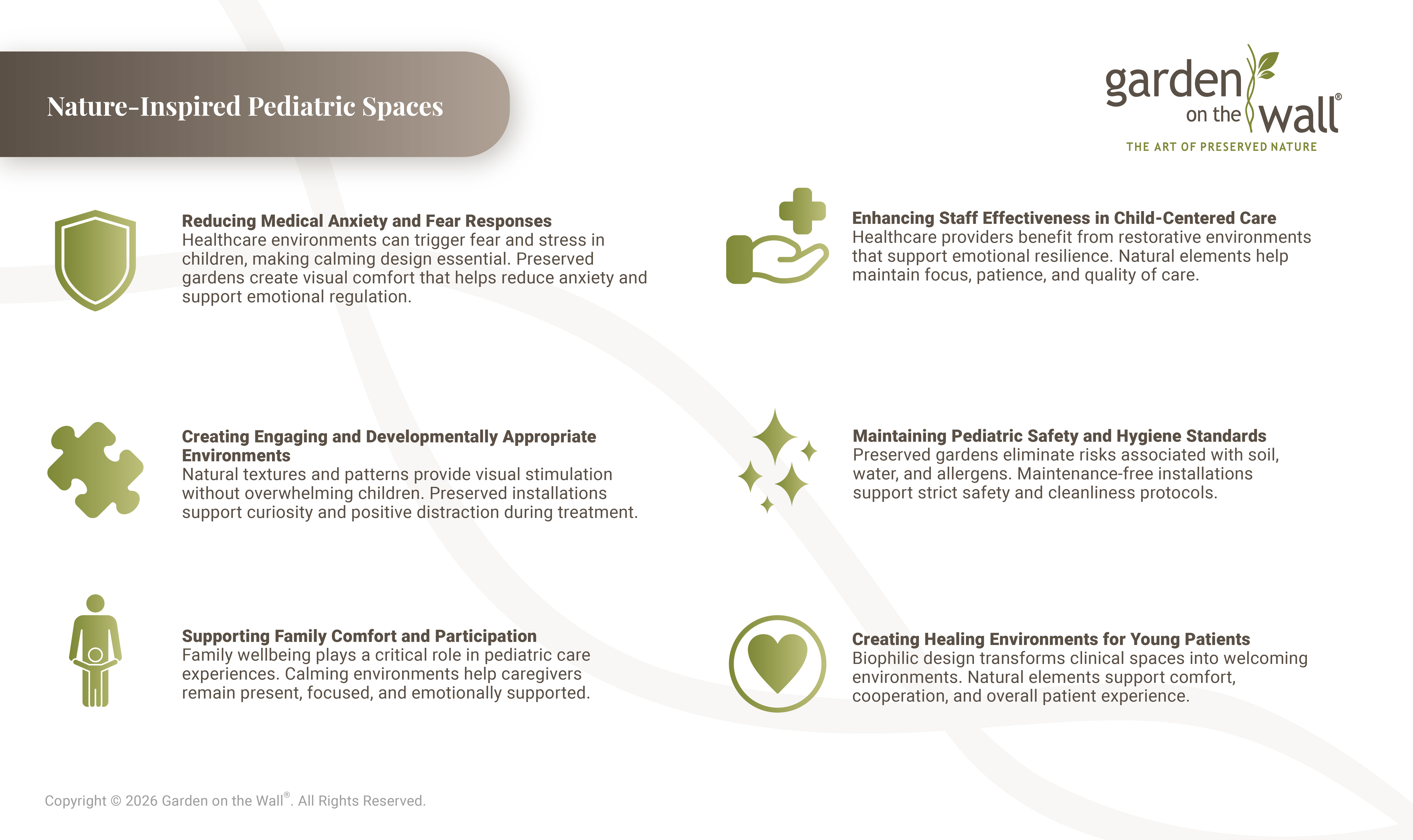
Enhancing Staff Effectiveness in Child-Centered Care
Pediatric healthcare providers face unique challenges in delivering medical care while maintaining child comfort and family confidence, requiring work environments that support both clinical excellence and emotional resilience. Preserved nature installations in nursing stations, staff areas, and treatment rooms create environments that help healthcare workers maintain the patience and emotional energy essential for effective pediatric care delivery.
The stress-reducing properties of preserved moss walls and garden installations become particularly valuable for pediatric staff who must manage their own emotional responses while providing comfort and reassurance to anxious children and worried families. These biophilic elements create work environments that support staff wellbeing while enhancing the emotional climate necessary for successful pediatric healthcare delivery.
Maintaining Pediatric Safety and Hygiene Standards
Pediatric environments require exceptional attention to safety and cleanliness that can be challenging to maintain with living plants that might present choking hazards, allergen concerns, or hygiene complications. Preserved gardens eliminate these safety concerns while providing all the psychological and aesthetic benefits of natural beauty, ensuring that pediatric facilities can incorporate biophilic elements without compromising child safety or clinical standards.
The maintenance-free nature of preserved installations makes them particularly valuable for pediatric environments where cleaning protocols must be rigorous and safety considerations paramount. Garden on the Wall®'s comprehensive safety testing and proven performance across over 1,880 installations provides the reliability essential for pediatric healthcare environments where child safety and care quality cannot be compromised by design choices that create operational challenges or safety risks.
Creating Healing Environments for Young Patients
The integration of preserved gardens, moss walls, and preserved foliage installations in pediatric healthcare represents a powerful intervention that supports child emotional wellbeing, family comfort, and staff effectiveness through environmental design that prioritizes human needs alongside clinical functionality. These biophilic elements transform sterile medical environments into healing spaces that recognize the unique needs of young patients and their families.
For designers creating pediatric healthcare environments, the selection of preserved nature installations must prioritize providers who demonstrate the highest standards for safety testing, material transparency, and reliability essential for environments serving vulnerable populations. When children's health and wellbeing are at stake, every design decision must reflect a commitment to quality and safety that protects young patients while creating environments that truly support healing, comfort, and positive healthcare experiences for children and families.
For more information on this subject, read this article: Salutogenic Design and the Future of Sustainable Architecture & Interior Design and other related information, please visit our website: www.gardenonthewall.com