
Evidence-Based Design for Improving Sleep Quality in Hotels / Hospitality Projects
Key Takeaways Before You Read the Full Article:
30 Second Executive Summary
Evidence-based hospitality design demonstrates that guest sleep quality is one of the strongest drivers of satisfaction, loyalty, and repeat bookings. Preserved gardens and moss walls support restorative hotel environments by reducing stress, improving acoustics, and creating calming biophilic experiences that enhance overnight recovery.
🛏️ Guest Experience: Better Sleep Creates Better Stays
Sleep quality influences nearly every aspect of the hospitality experience, from guest satisfaction to return visits. Designing environments that promote restorative sleep creates meaningful competitive advantages.
🧠 Research Foundation: The Science of Restorative Design
Environmental factors including lighting, acoustics, temperature, and nature exposure directly affect sleep quality. Evidence-based design integrates these elements to support healthier sleep cycles.
🌿 Biophilic Wellness: Nature Supports Relaxation
Preserved gardens and moss walls help reduce stress while creating visually calming environments that prepare guests for rest. Biophilic design strengthens both emotional wellbeing and overall guest comfort.
🔇 Environmental Comfort: Supporting Rest Through Design
Acoustic optimization, circadian lighting, and environmental comfort work together to reduce common sleep disruptions. These integrated strategies help create quieter, more restorative hospitality spaces.
📈 Hospitality Advantage: Sleep as a Competitive Differentiator
Hotels that prioritize guest wellbeing through evidence-based design often experience stronger guest loyalty, improved reviews, and increased revenue opportunities. Restorative environments become lasting business assets.
Ready to discover how evidence-based design improves guest sleep and hospitality performance? The full article explores how preserved gardens and biophilic design help create hotel environments that support healthier, more restorative stays.
Scientific Foundations of Sleep-Promoting Design
Evidence-based design represents a systematic approach to hospitality environments that utilizes scientific research to inform design decisions targeting measurable outcomes. In hotel applications, this methodology focuses specifically on creating environments that actively promote restful sleep and enhance guest well-being through strategic integration of proven design elements.
Sleep quality directly impacts guest satisfaction metrics, with research demonstrating that comfortable sleep environments constitute the primary factor influencing hotel selection among frequent travelers. Studies indicate that guests reporting superior sleep quality demonstrate 33% higher recommendation rates and 28% increased likelihood of return visits. This scientific foundation establishes sleep-promoting design as a critical competitive advantage in hospitality markets where differentiation determines operational success and revenue optimization.
Neurological Response to Sleep Environment Design
The human brain responds predictably to specific environmental stimuli that either support or disrupt natural sleep cycles. Research published in clinical sleep medicine journals demonstrates that environmental factors can suppress melatonin production by up to 50%, significantly impacting sleep onset and duration through circadian rhythm disruption.
Effective sleep-promoting design addresses multiple neurological pathways simultaneously, creating environments that trigger the body's natural relaxation responses while minimizing sleep disruption factors. This approach recognizes that sleep quality depends on complex interactions between light exposure, acoustic conditions, temperature regulation, and psychological comfort levels. Hotels implementing comprehensive sleep-focused design report measurable improvements in guest satisfaction scores and operational performance metrics across multiple hospitality sectors.
Light Management and Circadian Rhythm Support
Strategic light management represents the foundation of evidence-based sleep design, addressing both artificial and natural light sources that influence guest sleep cycles. Optimal implementations include blackout systems that eliminate external light intrusion, warm amber lighting options for evening use, and smart lighting technologies that automatically adjust color temperature throughout daily cycles.
Motion-activated night lighting prevents disruptive bright light exposure during nighttime navigation while maintaining safety standards. Advanced systems incorporate programmable controls that gradually dim lighting approaching typical sleep hours, supporting natural melatonin production and sleep onset. Hotels implementing comprehensive lighting strategies report significant improvements in guest-reported sleep quality and overall satisfaction metrics across diverse property types and guest demographics.
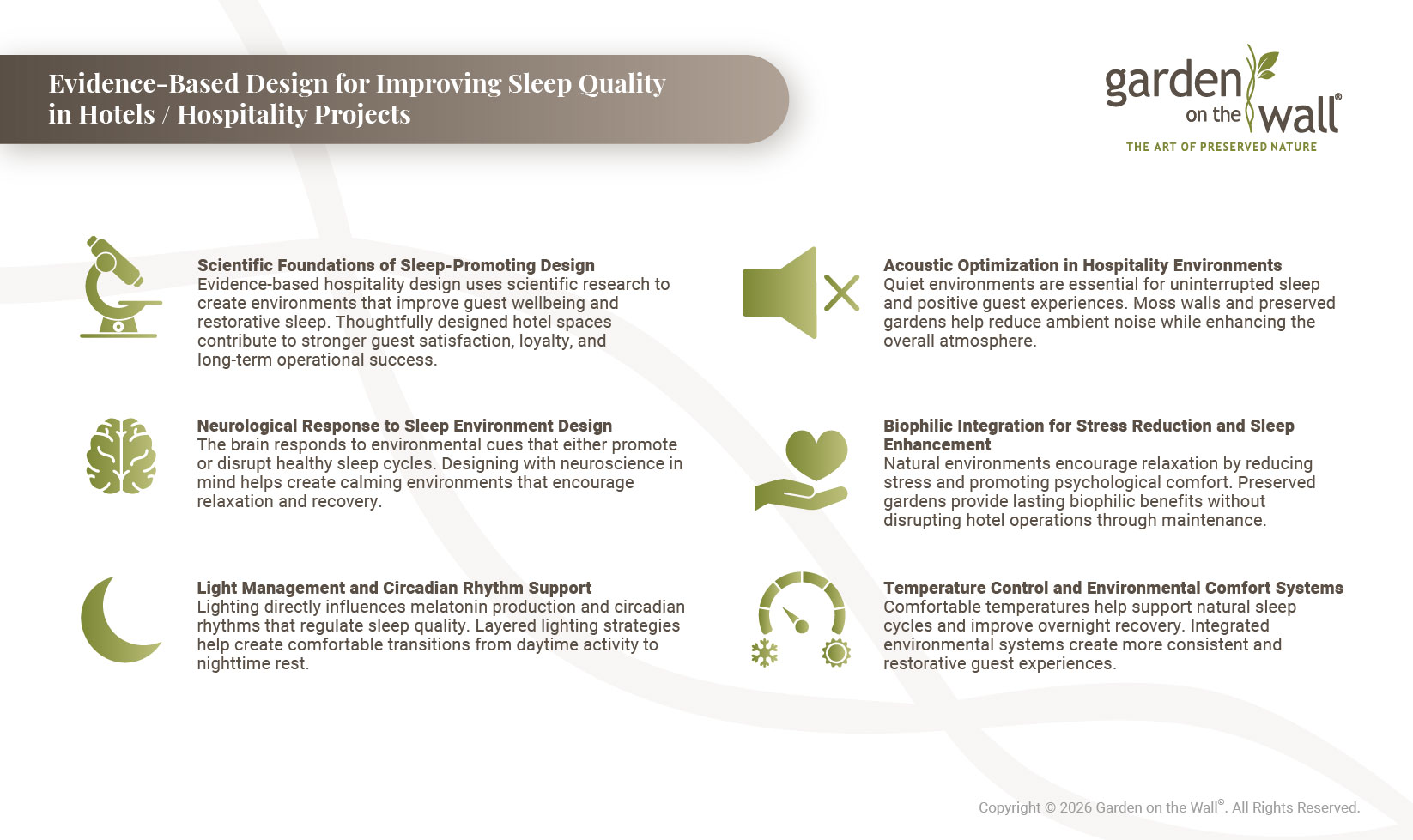
Acoustic Optimization in Hospitality Environments
Noise management constitutes a critical component of sleep-promoting design, with research indicating that nighttime noise levels exceeding 35 decibels significantly increase sleep disturbances and guest dissatisfaction. Effective acoustic strategies include enhanced wall insulation, strategic space planning that separates sleeping areas from operational zones, and sound-absorbing materials integrated throughout guest environments.
Moss walls and preserved gardens provide demonstrated acoustic benefits with noise reduction coefficients reaching 0.44, creating quieter sleeping environments while delivering aesthetic value. These installations absorb ambient noise and reduce echo effects that commonly disrupt sleep in hospitality settings. Hotels implementing comprehensive acoustic optimization strategies report substantial reductions in noise-related complaints and measurable improvements in guest retention rates across competitive markets.
Biophilic Integration for Stress Reduction and Sleep Enhancement
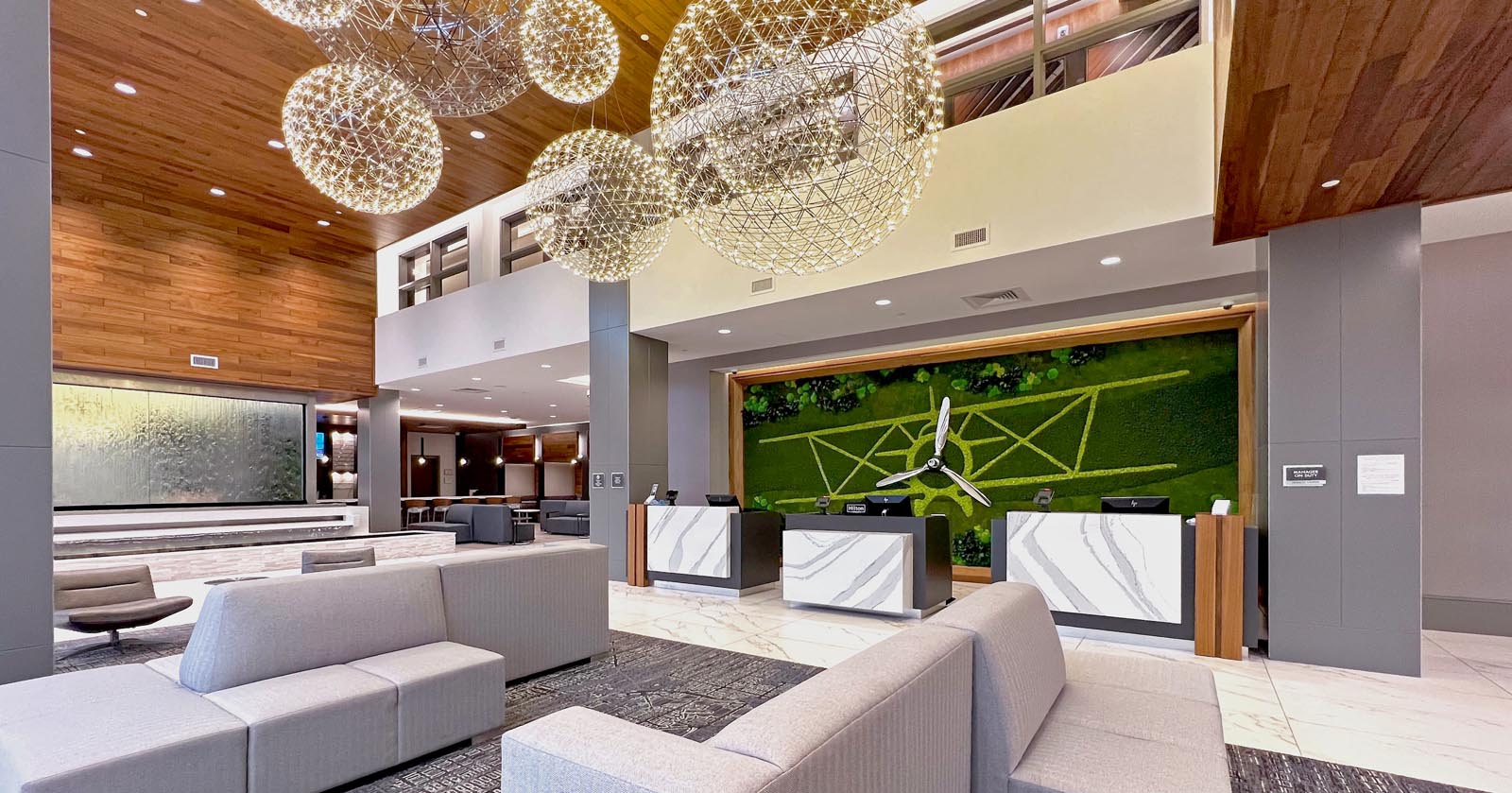
Biophilic design elements demonstrate measurable impacts on stress hormone levels, heart rate variability, and sleep quality through activation of natural relaxation responses. Preserved gardens offer unique advantages for hospitality applications, providing consistent visual and psychological benefits without maintenance disruptions that could disturb guest experiences.
Strategic integration of vertical green walls and wall plant art creates environments that signal psychological transition into rest-focused spaces. These installations maintain allergen-free conditions while delivering nature's calming effects throughout extended operational periods. Research demonstrates that guest rooms incorporating biophilic elements report 27% increases in sleep quality scores and 35% improvements in overall satisfaction ratings compared to conventional hospitality environments.
Temperature Control and Environmental Comfort Systems
Optimal sleep environments maintain temperatures between 60-67°F through individual climate control systems with programmable settings and smart thermostat technologies. Advanced implementations include bedding materials that regulate temperature and moisture while ensuring proper insulation and ventilation for consistent environmental conditions.
Hotels utilizing comprehensive temperature management strategies report improved guest comfort scores and reduced operational costs through efficient climate control systems. Integration with other environmental factors creates sleep ecosystems that address multiple comfort parameters simultaneously. Properties implementing evidence-based temperature control demonstrate competitive advantages in guest retention and premium rate opportunities across hospitality market segments.
Implementation Excellence and Competitive Advantage in Hospitality Design
Successful evidence-based sleep design requires systematic integration of multiple proven elements rather than reliance on individual interventions. Hotels implementing comprehensive approaches report 15-30% increases in sleep quality scores, 10-20% growth in direct bookings, and premium rate opportunities of 8-15% compared to conventional properties.
Garden on the Wall® installations provide ideal solutions for sleep-focused hospitality design, offering proven longevity of 12+ years with rejuvenation programs extending lifecycles to 20+ years. Their installations from trusted partnerships with leading hospitality brands demonstrate reliability in demanding commercial applications. Strategic placement at transition points signals psychological preparation for rest while delivering sustained biophilic benefits that enhance guest experiences and operational performance across diverse hospitality environments where sleep quality determines competitive success and revenue optimization.
For more information on this subject, read this article: The Future of Hospitality Nature Inspired Hotels and Restaurants and other related information, please visit our website: www.gardenonthewall.com.


