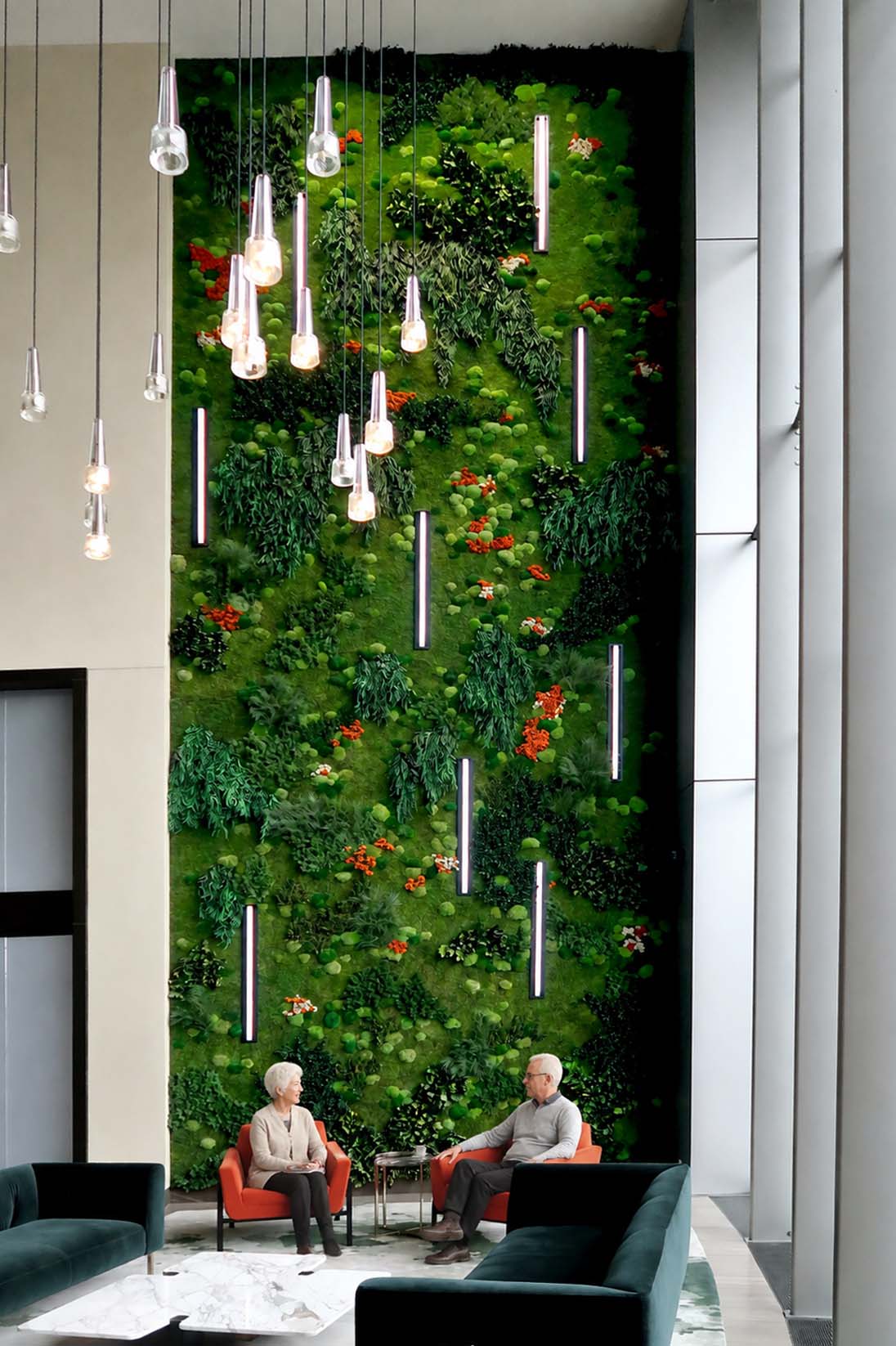
Rooted in Care: Human-Centric Biophilia for Senior Living Environments
Senior living environments face a convergence of demographic, clinical, and operational pressures. As the aging population grows, communities must support increasingly complex needs involving cognitive health, emotional well-being, social connection, and quality of life. For architects, interior designers, developers, and senior living operators, the physical environment is no longer simply a setting for care. It is an essential consideration in the resident experience and long-term operational performance.
Garden on the Wall® designs, fabricates, and installs preserved gardens, moss walls, and planter inserts for high-performance commercial interiors nationwide. For senior living communities where resident safety, material health, visual consistency, and operational simplicity are essential, preserved nature introduces authentic botanical materials without irrigation, soil, grow lighting, or routine horticultural maintenance.

The Only Choice: Why Specification Matters Here
In senior living environments - assisted living, memory care, skilled nursing, and rehabilitation facilities - biophilic specification decisions must balance resident well-being with material safety, maintenance requirements, and long-term performance.
Living plant systems provide authentic nature but introduce irrigation, soil, drainage, grow lighting, and ongoing horticultural maintenance. Faux greenery eliminates many of these requirements but substitutes synthetic materials for authentic botanical elements, with material-health and fire-performance documentation varying by product.
Preserved nature - specifically Garden on the Wall® preserved gardens, moss walls, and botanical installations - provides real botanical material without the operational demands of living systems. With documented material-health, environmental, and fire-performance credentials, preserved systems offer a practical solution for care environments where authenticity, consistency, and operational reliability must coexist.

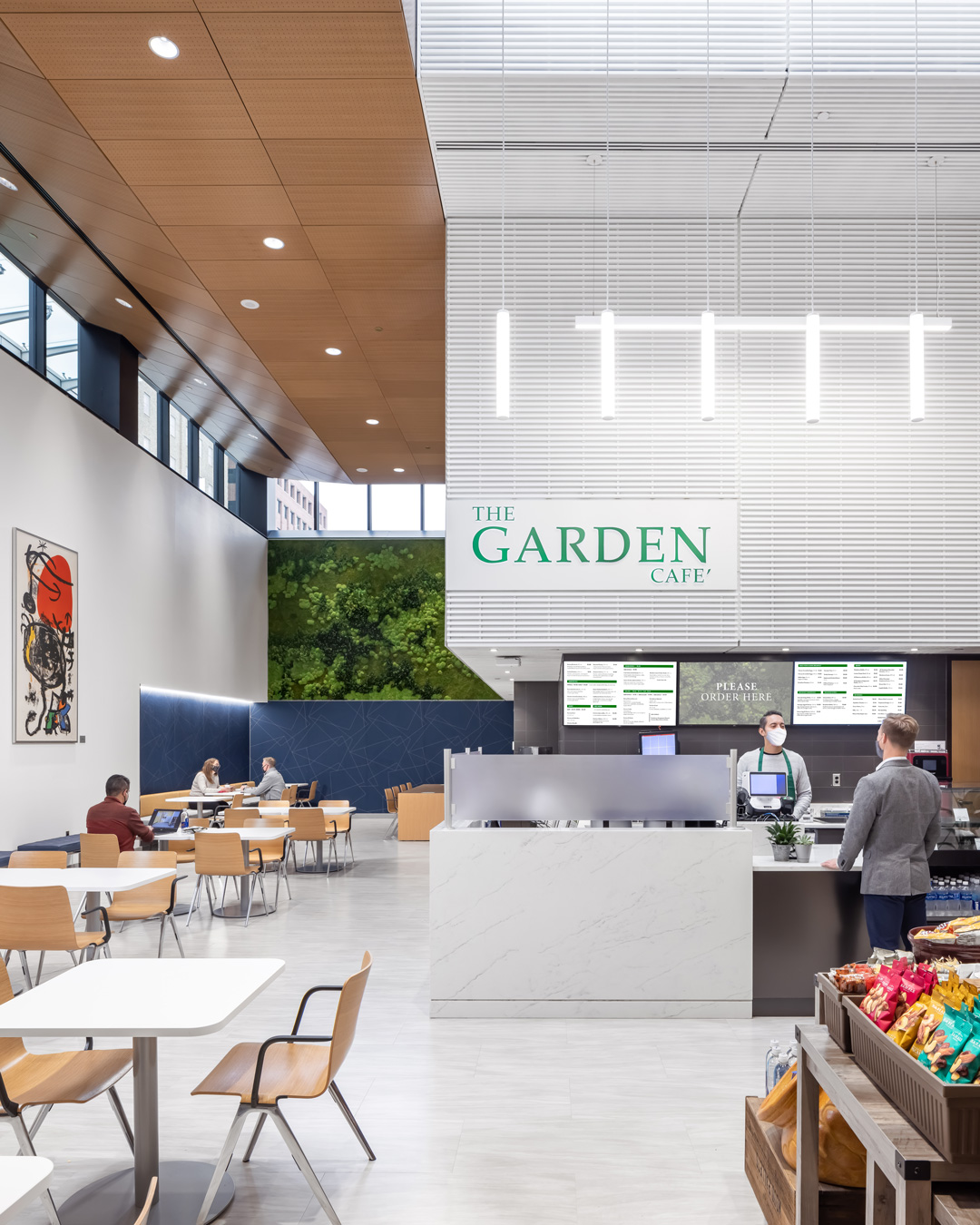
The Environment of Care: Designing for Dignity and Connection
Senior living environments should do more than accommodate daily routines. They should support familiarity, comfort, social connection, and the emotional well-being of residents navigating changes in health, independence, and cognitive function.
Research connects nature-integrated environments with reduced stress, improved emotional regulation, and opportunities for cognitive restoration. In memory care, consistent botanical landmarks may support familiarity and orientation, while natural focal points in lounges, dining areas, and corridors can encourage gathering and social interaction.
Preserved botanical installations introduce stable, authentic natural materiality into these environments, supporting a more welcoming and restorative atmosphere without the visual changes or maintenance demands associated with living plant systems.

The Senior Living Mandate: Designing for an Aging Population
By 2040, approximately 78.3 million Americans are projected to be age 65 or older, representing 22% of the U.S. population. At the same time, senior living providers face increasingly complex resident needs, rising family expectations, and nursing staff turnover exceeding 50% annually in skilled nursing facilities.
Research demonstrates the importance of restorative environments for aging populations. A 2025 meta-analysis of 29 studies involving 733 long-term care residents with dementia found that nature-based interventions significantly reduced agitation. Additional research connects nature exposure with stress reduction, while studies of daylight in nursing homes identify benefits for sleep quality and circadian regulation.
For senior living operators and design professionals, biophilic design extends beyond aesthetics. It is an evidence-informed strategy for supporting resident well-being, creating opportunities for social connection, improving the care environment, and addressing long-term operational priorities.
Explore the research connecting cognitive health, dementia care, physiological stress, sleep, social connection, and staff well-being in Rooted in Care: The Biophilic Case for Senior Living Environments.