Workplace Wellness: How Natural Elements Transform Corporate Culture

Key Takeaways Before You Read the Full Article:
30 Second Executive Summary
This article explores how preserved gardens, moss walls, and other biophilic elements can significantly enhance mental health, cognitive function, and overall well-being. Drawing on research in neuroscience, design psychology, and environmental studies, it highlights how integrating preserved greenery creates restorative, stress-reducing environments without the upkeep challenges of living plants.
🌿 Nature Connection in Corporate Spaces: Bringing nature indoors improves focus, lowers stress, and builds stronger employee engagement, especially in urban offices.
🧠 Boosting Creativity & Cognitive Function: Natural textures and patterns stimulate the brain, helping teams stay sharp, productive, and inspired.
🪷 Mindfulness & Mental Clarity: Preserved gardens provide calming visuals, reducing fatigue and encouraging focus throughout the workday.
🏢 Indoor Environmental Quality: Certified, chemical-free materials ensure healthier workplaces and align with sustainability goals.
💚 Stress Reduction Through Biophilia: Thoughtfully designed green installations support emotional well-being and create welcoming work environments.
🌱 Fostering Purpose & Belonging: Employees feel valued and inspired in nature-rich spaces, improving retention and morale.
✨ Restorative Design That Lasts: With preserved greenery, companies achieve enduring beauty and wellness benefits without heavy maintenance.
Ready to see how biophilic design can elevate culture and performance? The full article explores practical strategies to create human-centered spaces that empower people and businesses.
Workplace Wellness: How Natural Elements Transform Corporate Culture
In today’s competitive business landscape, companies increasingly recognize that their greatest assets are their people. Workplace wellness has evolved well beyond simple perks or amenities, with organizations now designing environments that actively support employee health, productivity, and engagement. At the center of this shift is the integration of natural elements into corporate spaces a strategy supported by extensive research showing its potential to transform workplace culture and performance.
The Evolution of Workplace Wellness
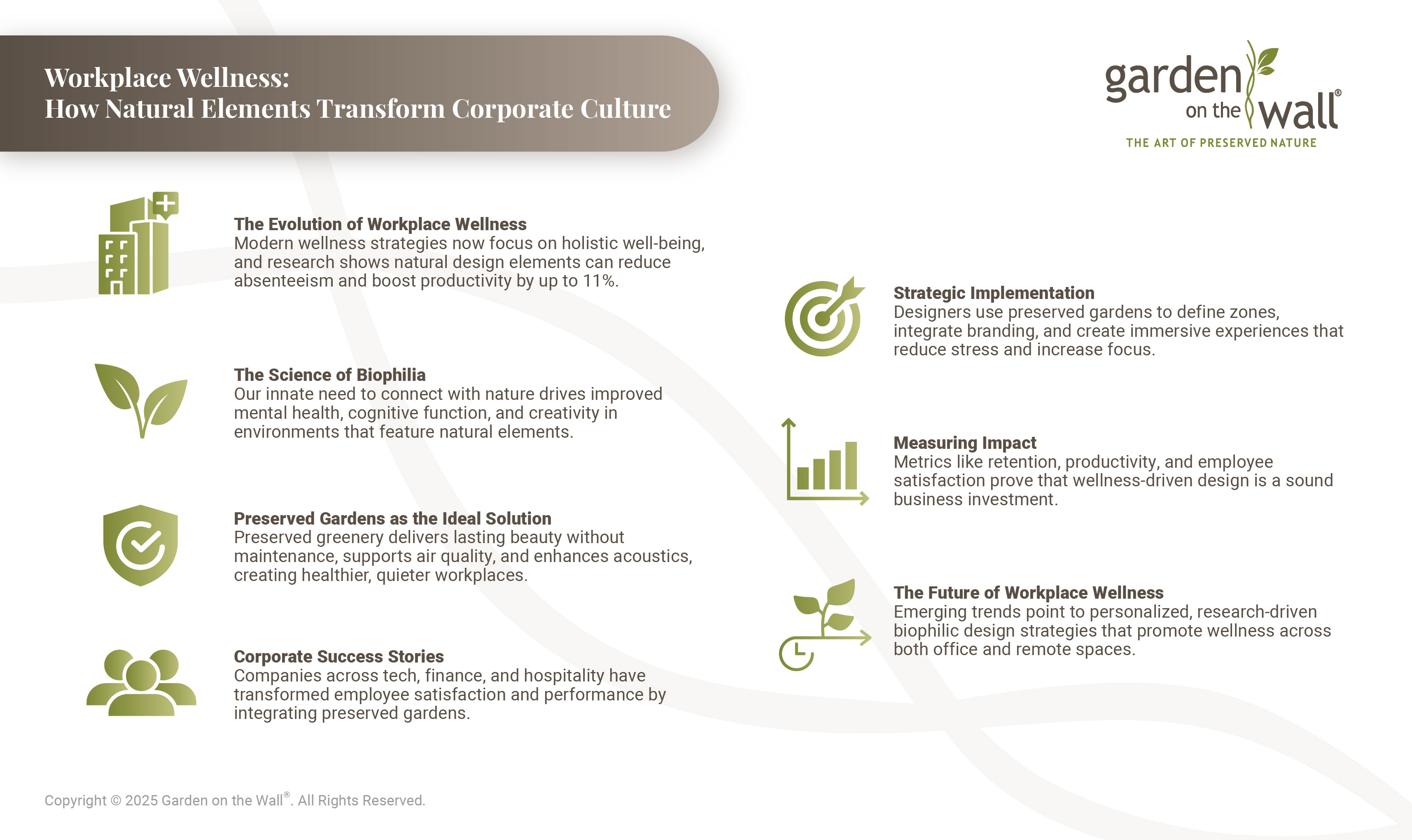
Corporate wellness programs have come a long way from their beginnings in basic health initiatives, growing into holistic strategies that consider physical, mental, and emotional well-being. The built environment has become a powerful tool in these efforts, shaping everything from employee morale to overall organizational performance.
Research by the World Green Building Council reveals that thoughtful workplace design can deliver measurable results, including productivity boosts of up to 11% from improved air quality and reductions in absenteeism of up to 15% when natural elements are incorporated. These benefits translate into real business value, with some studies estimating a return of two to four dollars for every dollar invested in workplace wellness programs. In today’s tight talent market, creating healthy and inspiring workplaces has become a strategic advantage. A survey by Future Workplace found that 67% of employees consider wellness benefits an important factor when evaluating job opportunities, demonstrating that strong wellness strategies are now critical for both attracting and retaining talent.
Biophilia in the Workplace: A Science-Based Approach
Biophilia, the human instinct to connect with nature, offers a scientific explanation for why natural elements have such a profound effect on people. This connection is not a mere preference; it is a deeply rooted biological need shaped by our evolutionary history. Studies across disciplines continue to confirm that nature-inspired environments support mental and emotional health while fostering productivity.
Research from the University of Hyogo found that even brief interactions with plants during the workday can significantly reduce stress levels. Employees with plants on their desks exhibited a 27% decrease in heart rate variability, a physiological marker of stress. The Journal of Environmental Psychology published findings that employees working in spaces featuring natural design elements scored 15% higher on attention and concentration tests compared to those in traditional work settings. At the University of Exeter, researchers reported that access to natural elements improved employee well-being by 15% and productivity by 6%. Further research from Texas A&M University found that workers in nature-rich environments generated 15% more ideas during creative tasks than those in offices lacking these features. Together, these findings demonstrate how biophilic design can transform workplaces from simple office spaces into dynamic environments that nurture innovation, focus, and overall satisfaction.
Preserved Gardens: An Optimal Solution for Corporate Spaces
While living plants are beneficial, they can be challenging to maintain in large corporate settings where lighting, maintenance schedules, and environmental conditions are often unpredictable. Preserved gardens and moss walls have emerged as an innovative solution, offering the psychological and aesthetic benefits of natural greenery without the need for constant upkeep.
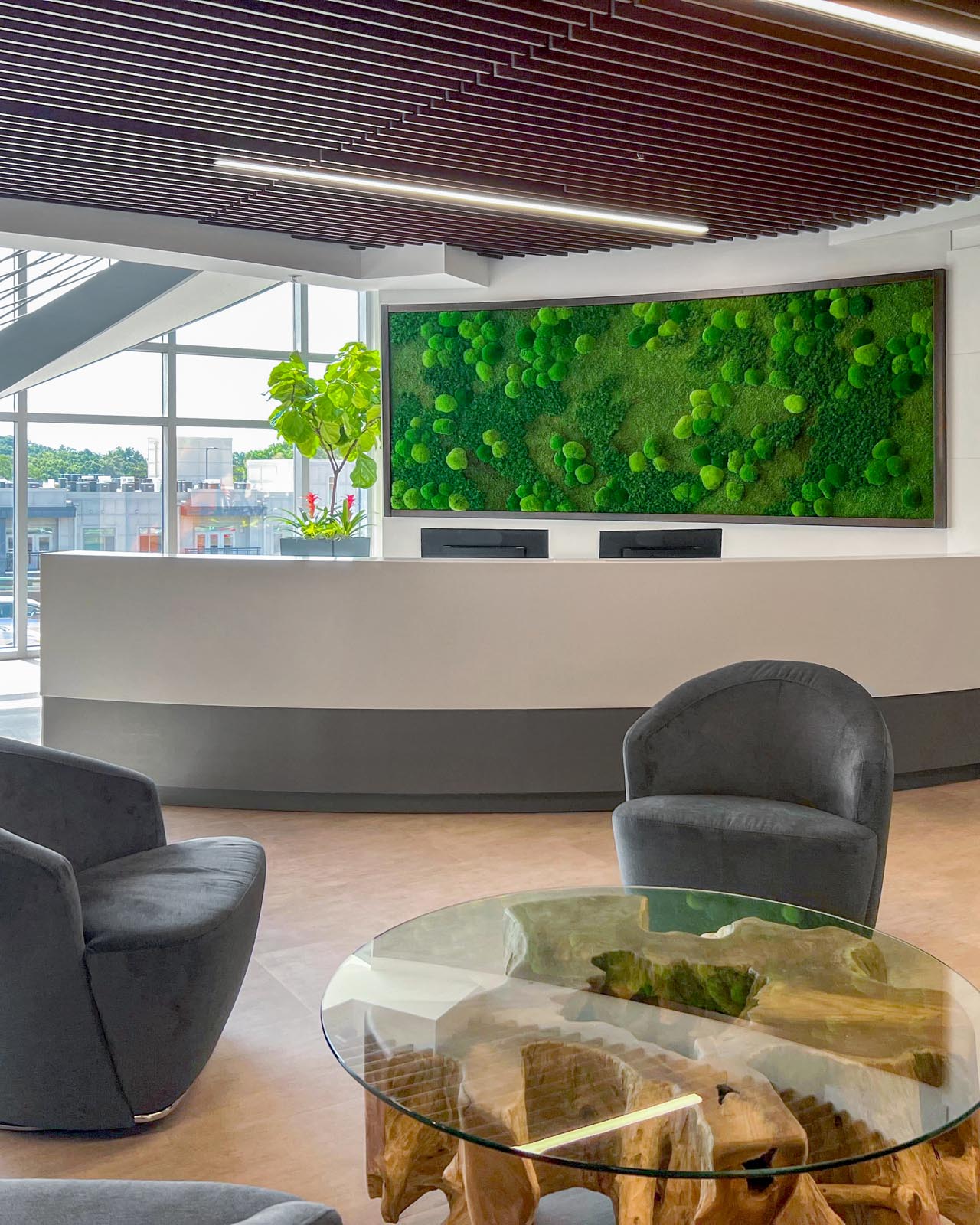
Garden on the Wall®’s preserved installations are specifically designed for long-lasting impact. Unlike living plants, they maintain their vibrant appearance for 10 to 12 years, and their longevity can extend to over 20 years with a unique rejuvenation program. These installations require no watering, pruning, or replacement, making them a cost-effective and practical option for busy corporate environments. In addition to visual appeal, preserved moss walls also enhance acoustics, addressing noise concerns common in open-plan offices. With a Noise Reduction Coefficient of 0.44 and a Sound Absorption Average of 0.45, they create quieter and more focused workspaces.
Material health and indoor environmental quality are also key considerations. Garden on the Wall® remains the only preserved garden provider offering comprehensive third-party testing, including Health Product Declarations (HPD v2.3) and compliance with California’s strict VOC standards. This ensures that installations not only enhance aesthetics but also contribute positively to air quality. Custom design flexibility allows these gardens to reflect brand identity, incorporating corporate colors, logos, and unique design elements that align with company culture while delivering wellness benefits.
Corporate Transformation Through Natural Elements
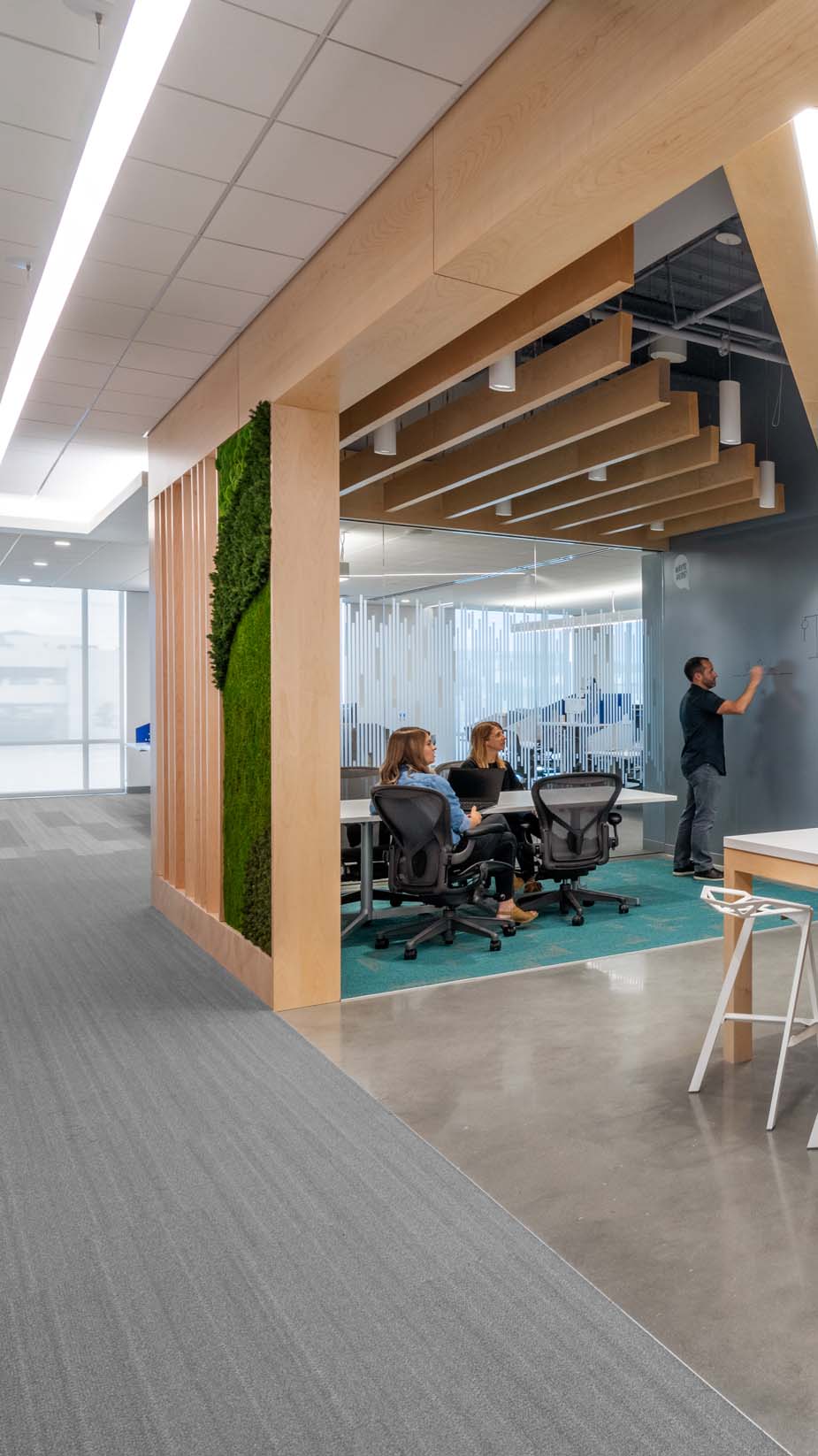
The transformative power of preserved gardens is evident in corporate projects across industries. TripAdvisor’s LEED Platinum-certified headquarters in Massachusetts features striking preserved garden installations designed by Baker Design Group. These green features have enhanced employee satisfaction, improved collaboration, and reinforced the company’s commitment to sustainability. A leading technology company used preserved gardens to create functional zones within an open-plan office, resulting in a 23% improvement in employee satisfaction and a 17% reduction in reported stress levels. A financial services firm introduced preserved moss walls to both employee areas and client-facing spaces, creating inviting environments that sparked conversation, strengthened relationships, and elevated pride in the workplace.
Strategies for Effective Implementation
Companies looking to incorporate preserved gardens should take a strategic approach to placement and design. Positioning installations in high-traffic areas or spaces where employees collaborate or focus can have a powerful impact on morale and productivity. Within open-plan environments, preserved gardens can be used to create visually distinct zones that help employees transition between tasks, while also serving as natural acoustic barriers.
Designers often work closely with organizations to weave brand identity into preserved garden features, integrating company colors, patterns, or shapes to create a sense of connection between the environment and the organization’s values. To create a fully immersive biophilic experience, companies may also pair these visual elements with other sensory features, such as natural textures or ambient sounds, to create a calming atmosphere. Involving employees in design decisions through surveys or focus groups ensures that installations meet their needs and contribute to a positive workplace culture.
Measuring ROI and Impact
The return on investment in natural design elements is measurable. Companies can track absenteeism and presenteeism rates, monitor employee satisfaction and stress levels, and evaluate changes in retention rates and productivity. Recruitment data often reflects the appeal of wellness-oriented workplaces, with job candidates responding positively to environments that prioritize well-being. Taken together, these metrics illustrate that investments in preserved gardens and similar features yield significant returns, enhancing both financial performance and employee engagement.
The Future of Workplace Wellness
As research continues to reveal the connection between our environment and well-being, the integration of natural elements into workplace design will become increasingly sophisticated. Future trends include more personalized biophilic experiences, with environments that adapt to individual preferences, and targeted designs informed by research on how specific natural elements impact cognitive and emotional states. Companies are also likely to extend wellness-oriented design principles to remote workspaces, offering preserved garden installations for home offices to create consistent, health-focused environments wherever employees work.
Conclusion: Cultivating a Culture of Wellness
The integration of natural elements into corporate environments is more than a design trend; it reflects a fundamental shift in how organizations value wellness. By incorporating preserved gardens and moss walls, companies can create workspaces that support employee health, enhance engagement, and strengthen company culture. Garden on the Wall®’s industry-leading installations, with their unmatched longevity, safety certifications, and proven benefits, represent a strategic investment in both design and human capital.
As competition for talent intensifies, organizations that embrace biophilic design will stand out as employers of choice, creating workplaces that do more than house daily activities they nurture people. By bringing nature indoors, companies can transform offices into thriving ecosystems that reflect their commitment to wellness and long-term success.
For more information on this subject, read this article: Designing for the Mind: Neuroarchitecture's Role in Creating Serene Spaces and other related information, please visit our website: www.gardenonthewall.com