The Science Behind Neuroarchitecture and Spatial Planning
Key Takeaways Before You Read the Full Article:
30 Second Executive Summary
This article explains how neuroarchitecture principles combined with preserved gardens and moss walls can shape environments that improve cognitive function, reduce sensory stress, and enhance overall well-being. It highlights how evidence-based design and biophilic elements support healthier, more intuitive, and more human-centric spaces.
🧠 Brain-Friendly Design
Thoughtfully designed environments influence how people feel, think, and behave. Neuroarchitecture uses research-backed strategies to support mental clarity, emotional balance, and improved cognitive performance.
🌿 Preserved Nature, Real Impact
Preserved gardens and moss walls deliver the benefits of natural exposure without maintenance demands. These elements reduce cortisol, increase comfort, and support healthy brain responses to natural textures and patterns.
🗺️ Better Wayfinding & Spatial Memory
When placed strategically, preserved nature installations act as recognizable landmarks that help users form cognitive maps of a space. This reduces cognitive load and makes navigation more intuitive.
🔊 Acoustic & Visual Comfort
Preserved nature enhances both sound absorption and visual restfulness two key contributors to reduced sensory overload. These dual benefits are especially critical in open-plan corporate, education, and healthcare environments.
✔️ Evidence-Based & Sustainable
Third-party tested preserved gardens align with safety, sustainability, and material-health standards. Designers can confidently implement these solutions knowing they support both human well-being and environmental goals.
Ready to see how neuroarchitecture and preserved nature can create healthier, more intuitive, and more productive environments? The full article breaks down the science, practical applications, and long-term benefits behind this innovative design approach.
Understanding Neuroarchitecture Principles
Neuroarchitecture examines how built environments affect human brain function, behavior, and well-being. This evidence-based approach combines neuroscience with architectural design to create spaces that optimize cognitive performance and emotional health. Research shows that thoughtfully designed environments can influence everything from stress levels to creativity and social interaction.
The integration of preserved gardens and moss walls into spatial planning represents a practical application of neuroarchitecture principles. These installations provide consistent exposure to natural elements, which studies have shown can improve cognitive function, reduce mental fatigue, and enhance overall well-being through their impact on neural pathways and hormone production.
The Role of Biophilia in Spatial Cognition
Our brains are wired to process and respond positively to natural environments. This evolutionary connection, known as biophilia, has profound implications for spatial planning. Preserved nature installations tap into this innate affinity, creating environments that feel intuitive and supportive of natural cognitive processes.
Research in neuroaesthetics demonstrates that exposure to natural elements, even in preserved form, triggers positive neurological responses including increased oxytocin production and reduced cortisol levels. These biological responses support better spatial cognition, wayfinding, and overall comfort within built environments.
Creating Cognitive Maps Through Natural Elements
The strategic placement of preserved gardens and moss walls can significantly enhance spatial understanding and navigation. These installations serve as memorable landmarks that help people create accurate mental maps of their environment, reducing cognitive load and supporting more intuitive movement through space.
By incorporating preserved nature elements at key decision points and transitions, designers can create spaces that are easier to navigate and remember. This application of biomimicry principles helps create more human-centric environments that support natural cognitive processes while maintaining sustainable design practices.
Supporting Different Cognitive States
Modern environments must accommodate various cognitive needs throughout the day. Preserved nature installations can help define spaces for different mental states, from high-focus work areas to relaxation zones. These elements support the principles of salutogenic design by creating environments that actively promote health and well-being.
The flexibility of preserved gardens in spatial planning allows designers to create differentiated environments that support both individual and group needs. This thoughtful zoning helps manage sensory input and cognitive load, particularly beneficial for neurodivergent individuals who may be more sensitive to environmental factors.
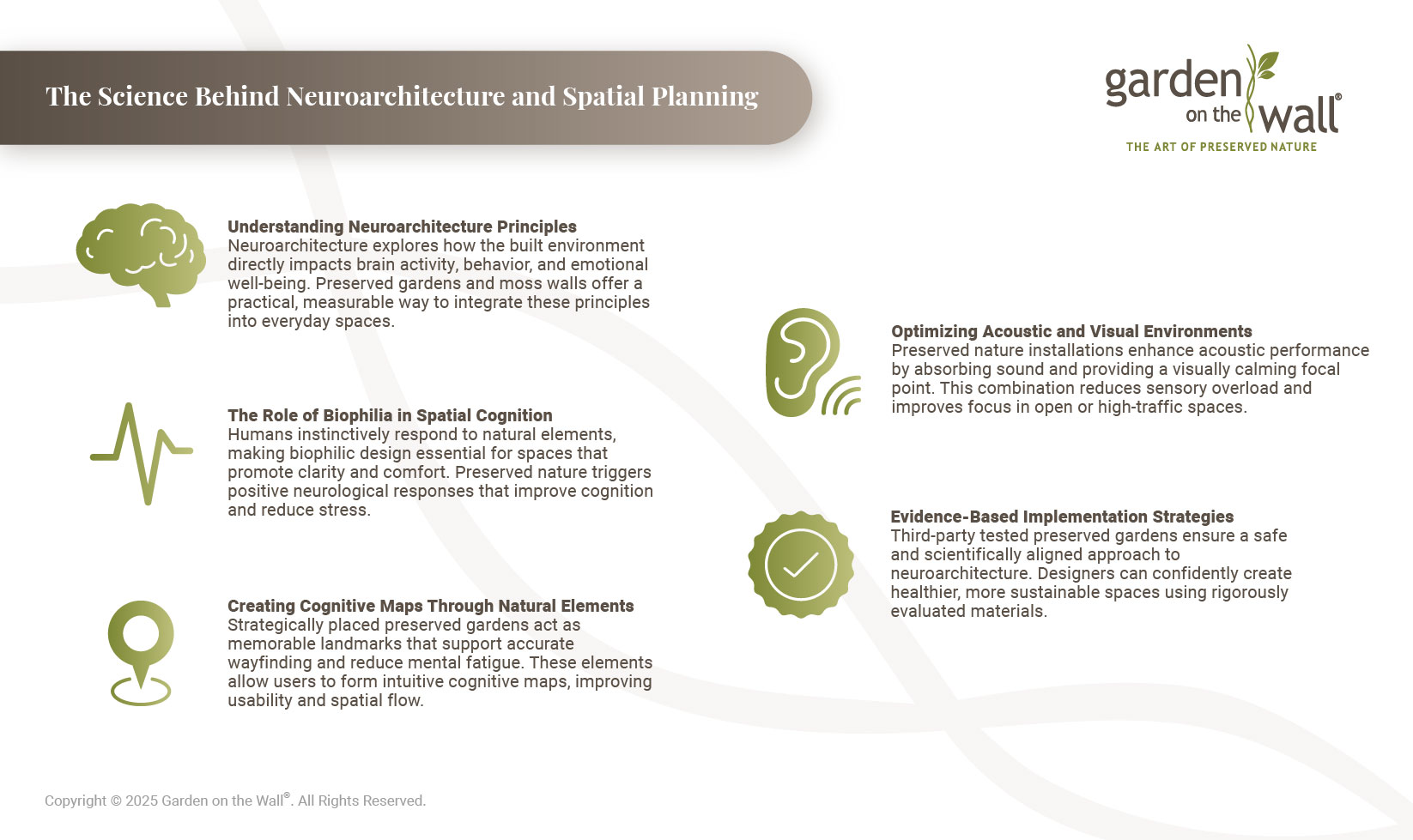
Optimizing Acoustic and Visual Environments
Preserved gardens and moss walls contribute to both acoustic and visual comfort in built environments. Their natural textures help absorb sound while providing visually restorative elements that support cognitive function. This dual benefit makes them particularly valuable in open-plan spaces where managing sensory input is crucial.
The consistent appearance of preserved nature installations ensures these benefits remain stable over time, supporting long-term planning goals while maintaining indoor environmental quality. Their ability to enhance both acoustic and visual environments contributes to more comfortable and productive spaces.
Evidence-Based Implementation Strategies
Successful integration of neuroarchitecture principles requires careful consideration of scientific evidence and practical application. Third-party tested preserved gardens provide a reliable way to implement these principles while ensuring safety and sustainability. Research supports their role in creating environments that promote positive neurological responses.
By choosing high-quality preserved nature installations that meet rigorous standards for material health and environmental impact, designers can create spaces that deliver consistent cognitive benefits while supporting sustainable design goals. This evidence-based approach helps ensure successful outcomes in spatial planning.
Conclusion
The application of neuroarchitecture principles through preserved nature installations represents a significant advancement in spatial planning. By creating environments that actively support cognitive function while maintaining sustainable practices, these solutions help organizations create more effective and human-centric spaces.
Understanding the science behind how our brains respond to natural elements allows designers to create more supportive and intuitive environments. The integration of preserved gardens and moss walls demonstrates how evidence-based design choices can enhance both the functionality and psychological impact of built environments.
For more information on this subject, read this article: How to Incorporate Neuroaesthetics & Neuroarchitecture Principles into Your Living or Workspace and other related information, please visit our website: www.gardenonthewall.com
_1.jpg)