
The Intersection of Neuroarchitecture and Neuroimmunology
Key Takeaways Before You Read the Full Article:
30 Second Executive Summary
The intersection of neuroarchitecture and neuroimmunology reveals how environmental design including preserved moss walls impacts immune function and neurological health through biophilic elements that support comprehensive wellness.
🔬 Research Foundation: Cutting-edge research validates how neuroarchitecture influences neuroimmunology through environmental factors that affect immune system function while preserved gardens contribute to immune health through stress reduction and neurological support.
💡 Innovation Edge: Understanding neuroimmunology impacts enables design choices that actively protect rather than compromise health while preserved moss walls provide consistent therapeutic benefits without environmental variables that might trigger immune responses.
📊 Performance Metrics: Advanced measurement techniques document how biophilic design influences immune markers, inflammation levels, and neurological function while indoor greenery provides measurable health benefits through neuroimmunology pathways.
🏗️ Project Integration: Neuroarchitecture principles guide preserved garden implementation for optimal neuroimmunological benefit while creating environments that support both brain health and immune system function.
Ready to understand how environmental design impacts immune and neurological health? The complete article reveals neuroarchitecture and neuroimmunology research that positions preserved gardens as essential wellness infrastructure.
The Intersection of Neuroarchitecture and Neuroimmunology: Creating Healing, Rejuvenating Spaces Through Biophilic Design
In today’s rapidly evolving world of architecture, neuroscience is reshaping how we design spaces that promote healing, wellness, and optimal function. At the forefront of this transformation is the intersection of neuroarchitecture, neuroimmunology, and biophilic design, working together to create environments that nurture mind and body.
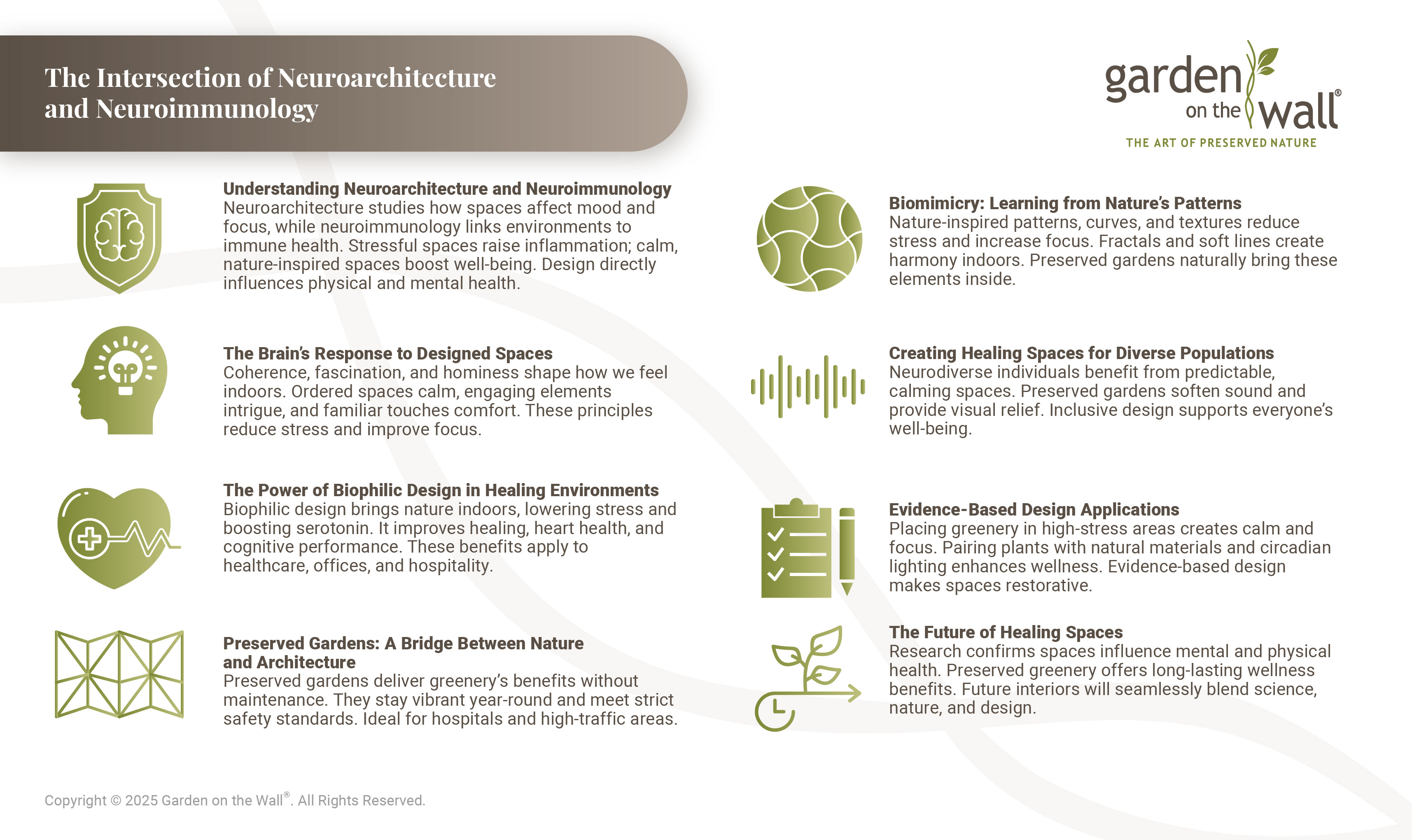
Understanding Neuroarchitecture and Neuroimmunology
Neuroarchitecture examines how built environments affect mental health and neurological responses, studying how design influences emotions, cognition, and physiological states. Architect and researcher Alex Coburn explains, “The architecture we inhabit envelopes our mind and body, influencing comfort, focus, hormonal patterns, recovery speed, and long-term health.”
Neuroimmunology explores the connection between the nervous and immune systems. Research shows that environments can influence immunity: stressful surroundings heighten inflammation, while calming, nature-inspired settings can reduce it. Together, these fields highlight how design directly impacts well-being.
The Brain’s Response to Designed Spaces
Neuroarchitecture research emphasizes three dimensions that shape how we experience spaces. Coherence refers to the sense of order and organization that makes spaces visually and mentally easy to process. Fascination reflects the intrigue and engagement created by elements that spark curiosity without overwhelming the senses. Hominess evokes a sense of comfort, safety, and belonging, often reminiscent of home environments. Designing with these principles in mind creates restorative, supportive spaces that positively influence mood and health.
The Power of Biophilic Design in Healing Environments
Biophilic design integrates nature into built spaces, tapping into our innate connection to the natural world. E.O. Wilson’s concept of “biophilia” highlights how humans thrive in nature-rich environments, and research consistently links natural elements to profound health benefits. Biophilic spaces are shown to lower stress levels and cortisol production, while also improving cognitive performance, creativity, and emotional well-being through elevated serotonin levels. In healthcare environments, natural design elements have been associated with faster healing, reduced blood pressure, and improved heart health. People in biophilic spaces also report lower fatigue, decreased aggression, and less chronic pain, making this design approach an essential part of creating healthier environments.
Preserved Gardens: A Bridge Between Nature and Architecture
While living plants provide many advantages, they can be challenging to maintain in commercial and healthcare environments. Preserved gardens offer a sustainable, maintenance-free solution that delivers the same calming connection to nature without the need for watering, sunlight, or pest management.
Garden on the Wall® (GOTW), a leader in preserved greenery installations, has completed more than 1,880 projects worldwide, demonstrating the versatility of this approach. Preserved gardens offer year-round vibrancy and stability, remaining lush and beautiful without ongoing care. Unlike living walls, which can fluctuate with seasons or decline over time, preserved gardens offer a consistent and calming experience. In healthcare spaces, they help maintain strict infection control standards, as they eliminate concerns over soil, water, and plant pathogens. High-quality installations, like those from GOTW, also undergo third-party testing for VOC emissions, biobased content, and fire safety, ensuring that these natural features enhance indoor air quality and safety while promoting wellness.
Biomimicry: Learning from Nature’s Patterns
Biomimicry the design philosophy of emulating nature’s time-tested systems—plays a central role in neuroarchitecture. Humans instinctively respond to certain natural patterns, forms, and rhythms because our brains evolved in environments filled with them. Designs that incorporate fractal patterns, like branching trees or leaf veins, can reduce stress and improve focus. Spaces that feature organic curves and flowing lines feel softer and more inviting than harsh geometric layouts. Additionally, the gentle variety of textures, colors, and light patterns in nature offers sensory stimulation that engages without overwhelming. Preserved gardens naturally bring biomimetic elements indoors, offering a multisensory experience through texture, structure, and the organic arrangement of moss and plant life.
Creating Healing Spaces for Diverse Populations
Approximately 30 to 40 percent of the population is neurodiverse, and studies by Tarkett and HOK reveal that 77 percent of neurodiverse employees report hypersensitivity to noise in workplace settings. Preserved gardens play a vital role in supporting neurodiverse needs. Their soft surfaces naturally absorb sound, reducing the noise that can cause discomfort or anxiety. The calming, natural visuals provide sensory relief, offering a soothing alternative to overstimulating patterns or bright artificial colors. Because preserved gardens retain their form and vibrancy over time, they create predictable and consistent environments that help neurodiverse individuals feel secure. Designing with these considerations supports inclusivity and enhances the overall functionality of shared spaces.
Evidence-Based Design Applications
The successful integration of neuroarchitecture, neuroimmunology, and biophilic design principles requires thoughtful planning and evidence-based application. Designers can strategically position preserved gardens in high-stress environments, such as waiting rooms or treatment areas, to help calm visitors and patients. Pairing preserved greenery with circadian lighting systems can further support overall well-being by helping regulate sleep-wake cycles. Choosing natural, sustainable materials like stone, wood, and natural fabrics enhances the authenticity of biophilic spaces, and incorporating multi-sensory design elements creates a richer, more immersive environment.
Case Studies: Success in Practice
At Nashville International Airport, the “Taking Flight” preserved installation illustrates the power of biophilic design on a large scale. Stretching 105 feet on each side of security screening lanes, this installation welcomes over 20 million passengers annually. Its flowing design, inspired by local bridges and Nashville’s musical heritage, transforms an otherwise stressful security checkpoint into a visually calming experience.
At Essentia Health’s St. Mary’s Medical Center, a three-story preserved garden installation mirrors the natural hillsides of Duluth, Minnesota. This award-winning project incorporates moss, ferns, and eucalyptus arranged over curved millwork, creating a healing focal point that supports stress reduction. The installation contributed to the project’s recognition with the 2023 IIDA Healthcare Design Awards Best of Competition.
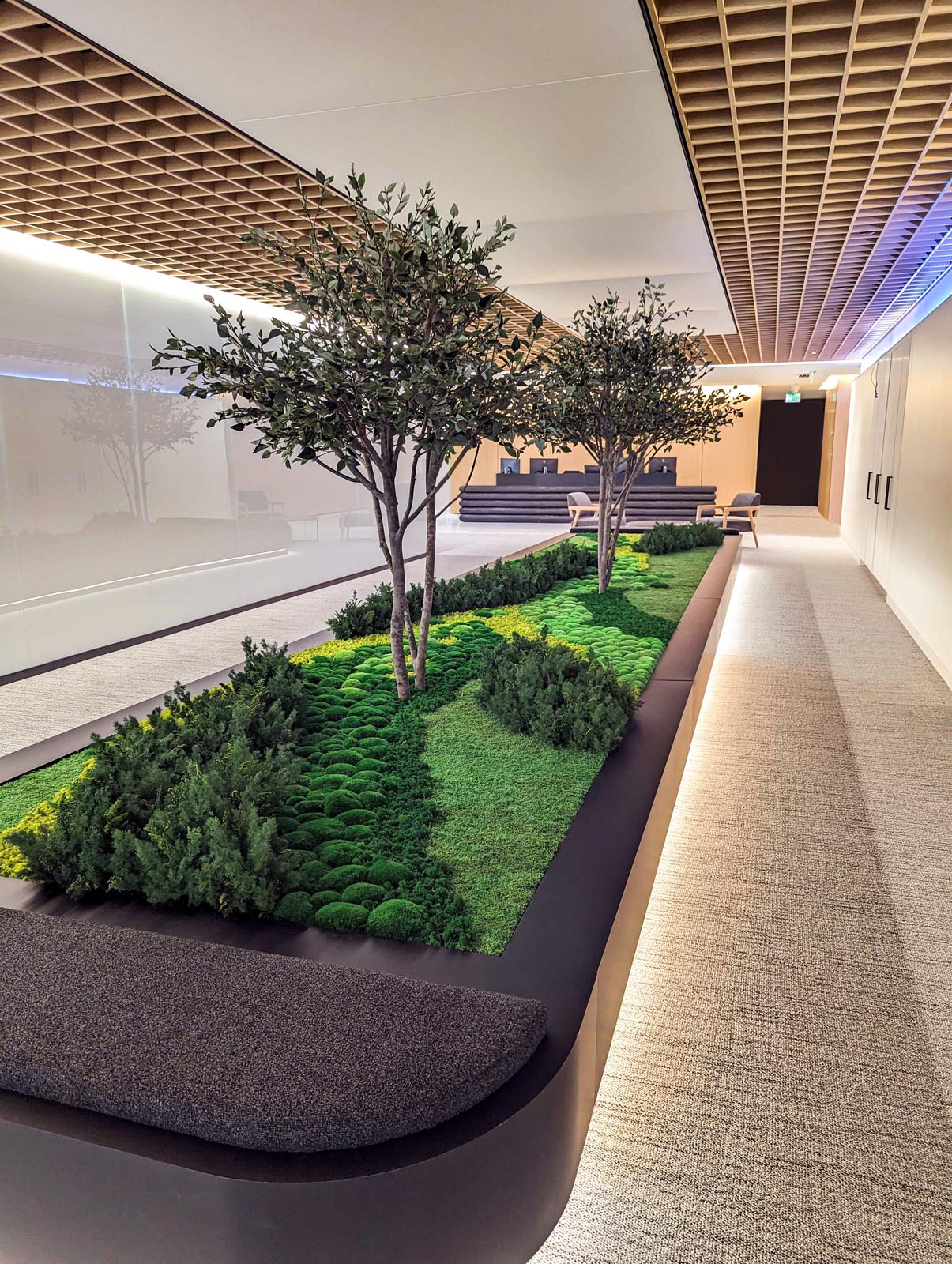
At a veterans’ healthcare organization, one of the largest one-piece planter inserts created by GOTW greets visitors with a lush landscape of forest and moss species. This horizontal design showcases the versatility of preserved gardens, proving they can be adapted to different orientations and spatial requirements.
The Future of Healing Spaces
Emerging research in neuroscience and immunology underscores how profoundly environments impact health and emotional well-being. Preserved gardens and moss walls uniquely bridge these insights, offering long-lasting, visually stunning installations that encourage healing, focus, and calm. By incorporating these natural features, architects can create interiors that are not only beautiful but scientifically proven to support human health.
Garden on the Wall®: Leading in Sustainable Biophilic Design
Garden on the Wall® leads the industry with its expertise, sustainability practices, and commitment to quality. With more than 1,850 thriving installations, each designed to last 10 to 12 years and extendable to over 20 years through their rejuvenation program, GOTW offers unmatched longevity. The company also stands out for its rigorous safety credentials, including Health Product Declaration v2.3, VOC compliance, and Red List Free certification. Their dedication to sustainability includes biobased carbon verification, composting of unused materials, and listings in mindful MATERIALS and Sustainable Minds catalogs. Award-winning for both quality and design, GOTW gardens feature seamless, carpet-like moss panels that have earned recognition from Interior Design’s Best of Year Awards and Architizer A+ Awards.
Conclusion
The fusion of neuroarchitecture, neuroimmunology, and biophilic design offers extraordinary potential to transform spaces into environments that actively promote healing and wellness. Preserved gardens and moss walls make these innovations practical, long-lasting, and visually captivating, allowing designers to create interiors that inspire and nurture all who enter.
For more information on this subject, read this article:Designing for the Mind: Neuroarchitecture's Role in Creating Serene Spaces and other related information, please visit our website: www.gardenonthewall.com


_1.jpg)