Nature Inspired Workplaces: Future of Workplace

Key Takeaways Before You Read the Full Article:
30 Second Executive Summary
This article explores how nature-inspired workplace design is redefining modern offices through preserved gardens, moss walls, and sustainable materials. It highlights how these biophilic elements enhance creativity, focus, and well-being while aligning with sustainability and adaptability goals for the future of work.
🏗️ Design Evolution: Workplaces are shifting from purely functional spaces to restorative environments featuring preserved nature that delivers long-term beauty without maintenance.
💧 Operational Efficiency: Unlike living installations, preserved greenery requires no water, light, or soil systems simplifying design implementation and facility upkeep.
🧠 Well-being and Focus: Natural textures and colors in preserved materials promote calm, reduce stress, and support cognitive performance throughout the workday.
🤝 Collaboration and Culture: Nature-inspired spaces foster open communication, creativity, and a sense of connection among hybrid and in-office teams.
♻️ Sustainability and Longevity: Preserved installations meet sustainability goals by minimizing waste, conserving resources, and maintaining their visual appeal for years.
✨ Future of Workplace Design: As biophilic design evolves, preserved gardens and moss walls set a new benchmark for sustainable, flexible, and wellness-driven interiors.
Ready to see how nature-inspired design can transform workplace environments into thriving, human-centered spaces?
The full article reveals how preserved biophilic installations create offices that perform beautifully supporting people, productivity, and planet alike.
The Evolution of Workplace Design
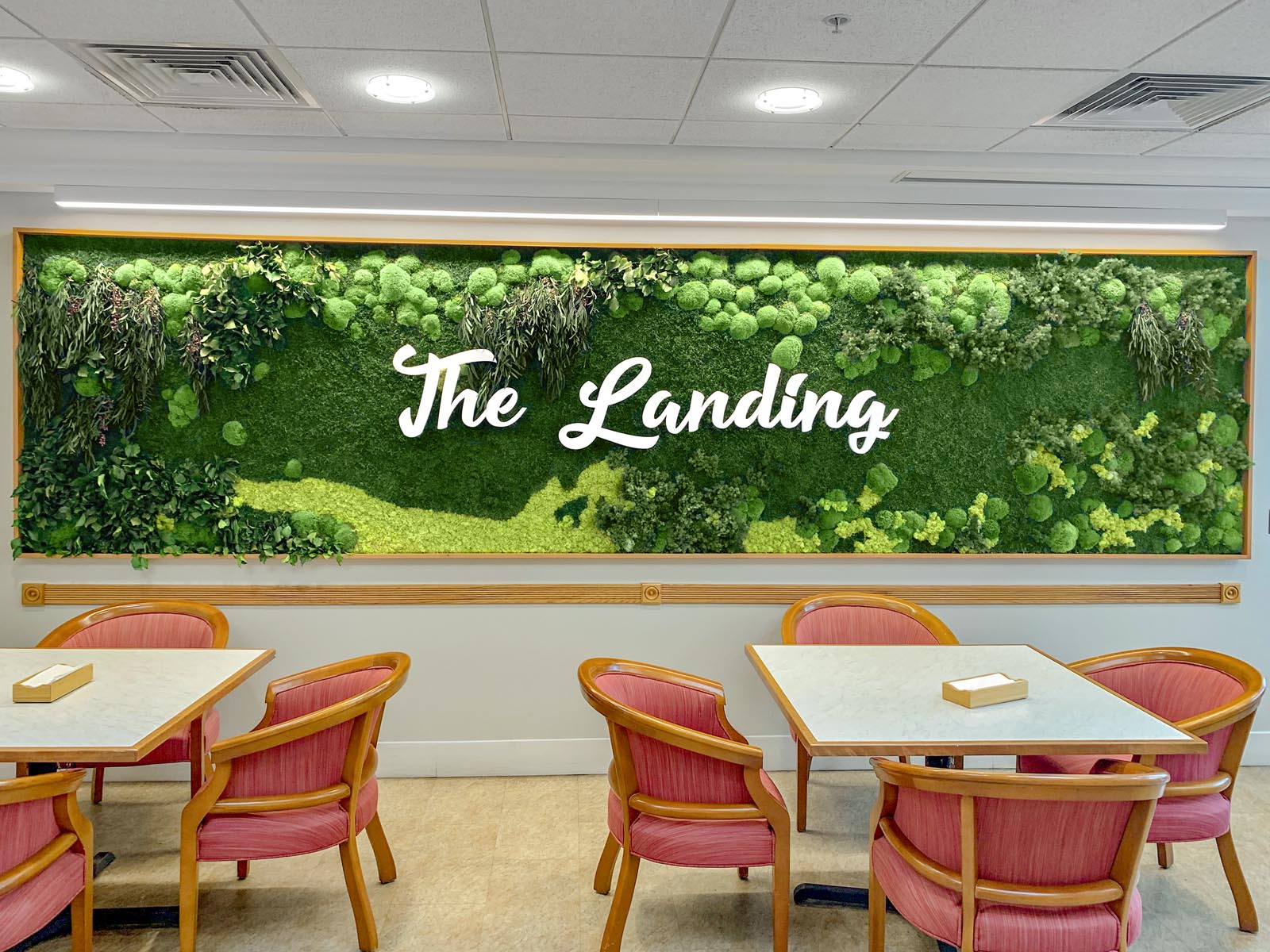
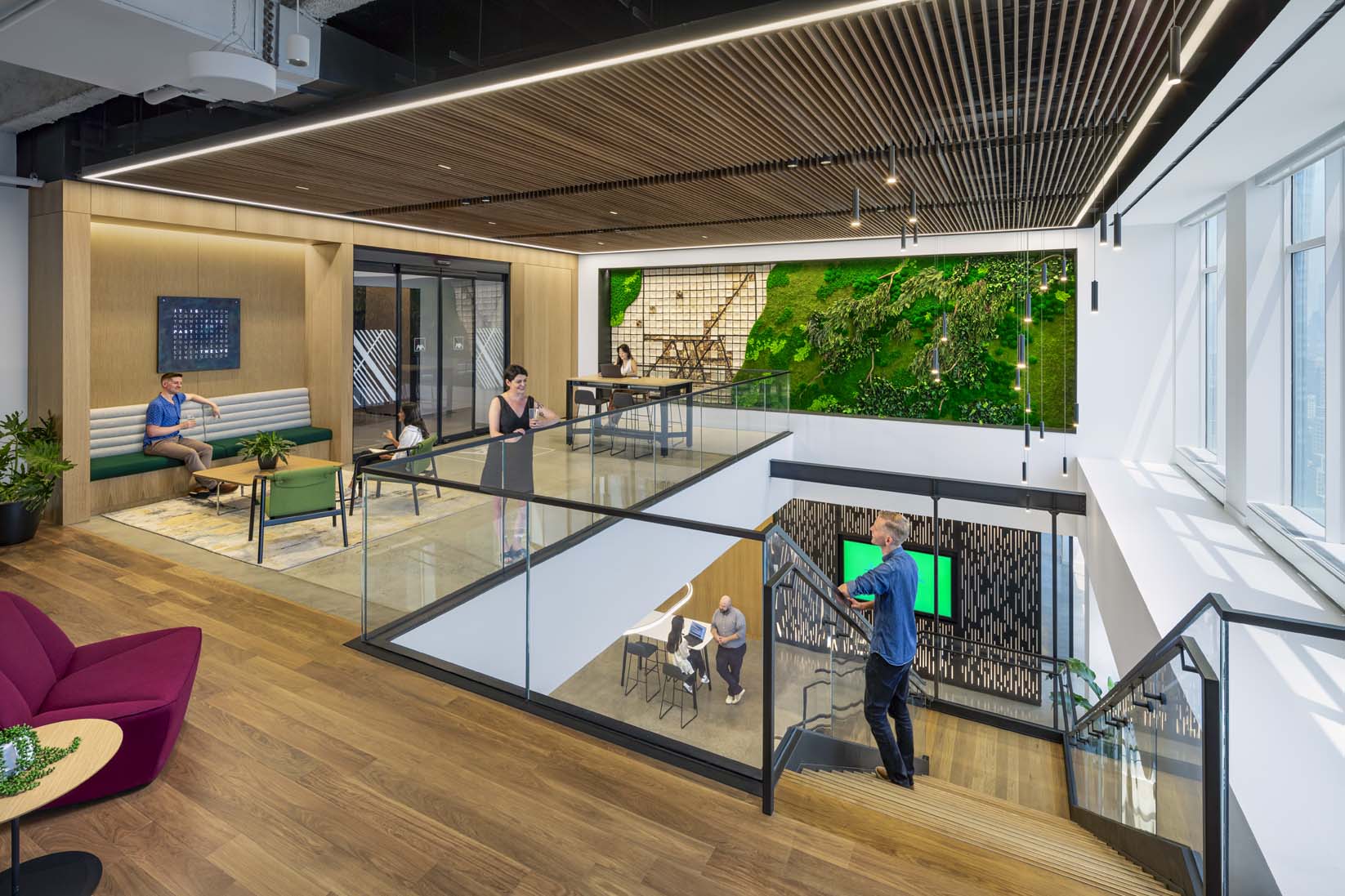
As we look to the future of workplace design, nature-inspired elements are taking center stage. This shift recognizes the profound impact that our environment has on productivity, creativity, and well-being. Preserved gardens, moss walls, and planter inserts with preserved foliage offer innovative solutions for bringing nature into the workplace without the maintenance challenges of living plants.
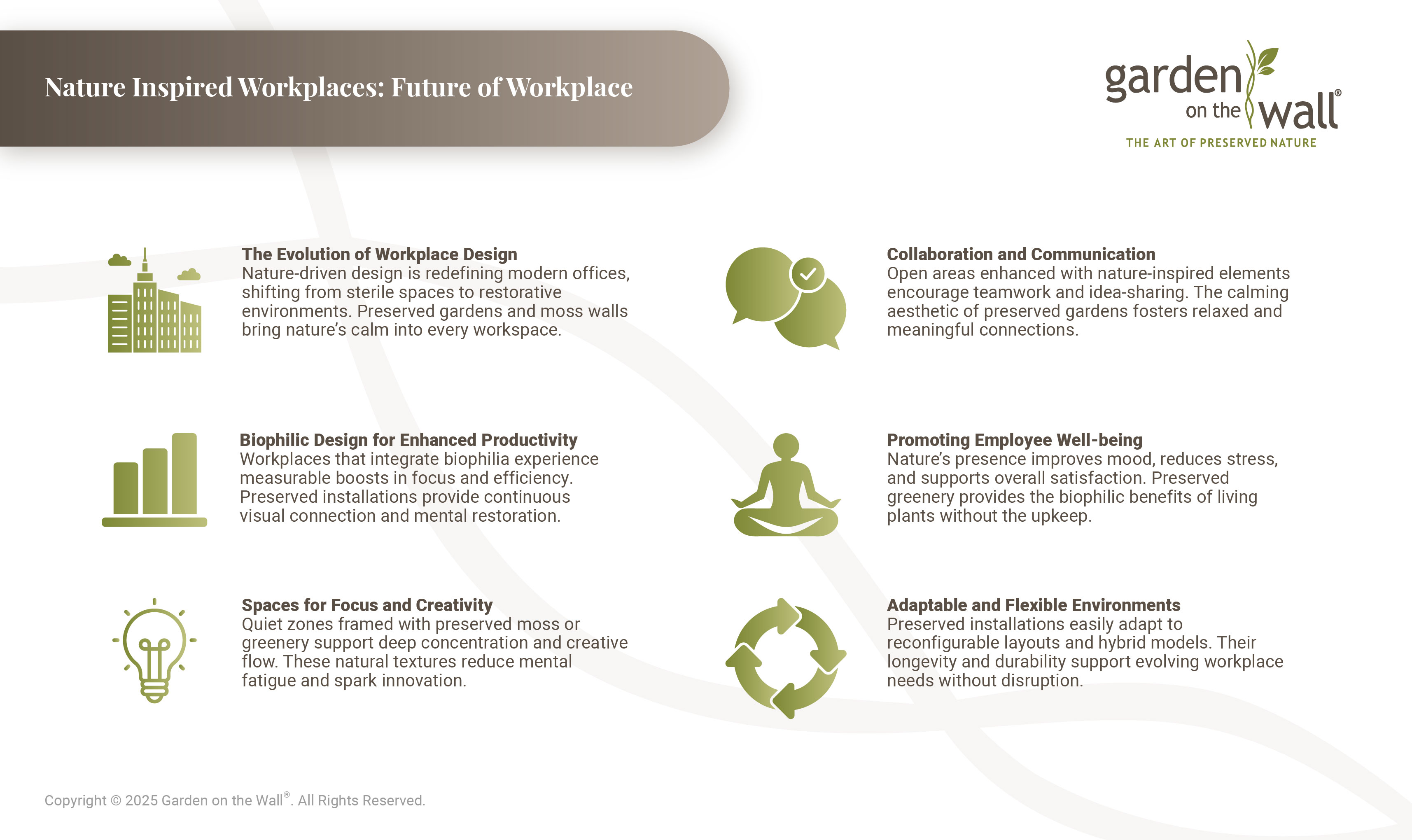
Incorporating preserved natural materials also reflects an evolution in how we define “modern” offices moving away from sterile, purely functional environments to spaces that feel alive, restorative, and human-centered. The aesthetic appeal of preserved installations blends with practical advantages, making them a cornerstone of thoughtful design. Designers are embracing these features to craft workplaces that balance comfort, performance, and sustainability, ensuring that every element contributes to a healthier and more inspiring atmosphere.
Biophilic Design for Enhanced Productivity
Research consistently shows that biophilic design elements in the workplace can significantly boost productivity. Preserved nature installations provide the visual connection to nature that stimulates this effect, offering a practical way to incorporate biophilia into various workplace settings.
Studies reveal that even subtle exposure to natural patterns such as the texture of moss or the flow of greenery can improve concentration and reduce cognitive fatigue. Unlike traditional office décor, preserved gardens maintain their beauty year-round, ensuring that employees are consistently surrounded by a sense of calm and rejuvenation. These installations serve as both functional design features and psychological tools that enhance focus, engagement, and overall output. The result is a workplace that not only looks exceptional but also performs at a higher level.
Creating Spaces for Focus and Creativity
Nature-inspired workplaces often feature areas designed for focused work and creative thinking. Preserved moss walls can be used to create quiet, visually calming spaces that support concentration and innovation. These elements help to reduce stress and mental fatigue, fostering an environment conducive to high-quality work.
By integrating organic textures and soft visual cues, designers can shape zones that promote mindfulness and ideation. Employees often report a greater sense of clarity and inspiration when surrounded by nature’s subtle cues, even in preserved form. Whether used in brainstorming nooks, individual offices, or open collaborative zones, these installations subtly influence mood and behavior. They transform ordinary walls into living art pieces that fuel imagination and provide visual rest an essential counterbalance to digital fatigue in today’s technology-driven workplaces.
Fostering Collaboration and Communication
Open, nature-inspired spaces can encourage collaboration and improve communication among team members. Preserved gardens can serve as focal points for informal meeting areas, creating inviting spaces that facilitate spontaneous interactions and idea-sharing.
When employees feel comfortable and relaxed within their surroundings, they’re more likely to engage in meaningful dialogue and creative problem-solving. The natural ambiance of preserved greenery softens the tone of professional exchanges and promotes inclusivity. From breakout lounges to shared work pods, these green-infused settings create a sense of connection that extends beyond aesthetics encouraging trust, transparency, and teamwork. The presence of nature becomes an unspoken catalyst for collaboration, helping teams align more effectively and think more expansively.
Promoting Employee Well-being
The future workplace prioritizes employee well-being as a key factor in organizational success. Preserved nature elements contribute to this by providing a constant connection to the natural world, which has been shown to reduce stress, improve mood, and enhance overall job satisfaction.
Well-being-centered design not only benefits employees but also has measurable outcomes for companies, including lower absenteeism and higher retention rates. Employees are more engaged and fulfilled when their environment supports both physical and emotional health. Preserved installations promote tranquility without the allergens or upkeep concerns of living plants, making them ideal for all types of work environments. As organizations recognize the link between happiness and performance, incorporating biophilic features becomes less of a luxury and more of a strategic necessity.
Adaptable and Flexible Environments
Modern workplaces need to be adaptable to changing needs. Preserved nature installations offer flexibility in design, allowing spaces to be easily reconfigured without the complications associated with relocating living plants. This adaptability is crucial for the dynamic workplaces of the future.
As companies transition between hybrid models, scale teams, or evolve their office layouts, preserved installations provide long-term versatility. They maintain their form and vibrancy regardless of lighting, temperature, or seasonal shifts. Designers can move or reorient them to align with new spatial goals or aesthetic themes without disrupting workflow. This combination of durability and design agility supports businesses that value both creative freedom and operational efficiency. Adaptable biophilic design ensures that spaces can evolve as quickly as the teams who inhabit them.
Sustainable Workplace Solutions
Sustainability is a key consideration in future workplace design. Preserved moss and plants offer a sustainable alternative to both living plants (which require ongoing resources) and artificial plants (which contribute to plastic waste). This aligns with corporate sustainability goals and demonstrates a commitment to environmental responsibility.
The preservation process itself supports eco-conscious design by repurposing natural materials without the carbon footprint of maintenance systems or replacement cycles. These installations reduce water consumption, eliminate fertilizers and pesticides, and minimize energy use all while providing a natural aesthetic that artificial décor cannot replicate. For companies striving for LEED or WELL certifications, integrating preserved greenery offers measurable contributions to green building objectives. Sustainability becomes visible and tangible, reinforcing a brand’s authenticity in its commitment to the planet.
Enhancing Brand Identity
Nature-inspired workplaces can play a significant role in expressing brand identity and values. Customized preserved garden installations can be designed to reflect a company's ethos, creating a unique and memorable environment for both employees and visitors.
Through thoughtful design choices such as color tones, plant types, and layout geometry companies can communicate their story visually. A creative agency might favor vibrant preserved foliage to express innovation, while a wellness brand might choose soft moss textures to convey calm and balance. Every installation becomes a living representation of brand personality, transforming physical space into an extension of brand storytelling. When clients or partners step into such an environment, they experience a space that embodies purpose, professionalism, and creativity all at once.
Supporting Remote and Hybrid Work Models
As workplaces evolve to support remote and hybrid work models, creating inviting and inspiring office environments becomes crucial. Nature-inspired elements like preserved gardens can help make the office a destination, encouraging employees to view it as a desirable place to work and collaborate.
In a world where flexibility is expected, physical offices must offer something virtual workspaces cannot a sensory and emotional connection. Preserved greenery adds depth, warmth, and texture that make the workplace feel welcoming and rejuvenating. These elements help re-establish the value of in-person collaboration by transforming office visits into restorative experiences rather than obligations. Whether employees visit weekly or monthly, a biophilic workspace ensures that each return feels meaningful and refreshing, supporting long-term engagement in hybrid models.
Conclusion: A Natural Evolution in Workplace Design
The future of workplace design is clearly aligned with nature-inspired principles. By incorporating preserved gardens and moss walls, we can create workplaces that not only meet the functional needs of modern businesses but also support the well-being, creativity, and productivity of employees. This natural evolution in workplace design promises to create environments that people genuinely look forward to working in.
What once began as a design trend has matured into a holistic approach that integrates sustainability, psychology, and aesthetics. Nature-inspired workplaces redefine what it means to thrive at work bridging innovation with wellness and beauty with purpose. As the lines between home, office, and community spaces continue to blur, preserved nature installations stand as timeless solutions that elevate design and human experience alike. The workplaces of tomorrow are not just where we work they’re where we grow, connect, and feel inspired every day.
Want to learn more? Read Nature Inspired Healthcare Projects: Future of Healthcare for additional research and insights. Then explore Evidence-Based Design: Restorative Nature for Clinical Outcomes for workplace design strategies, specification resources, and a portfolio of award-winning commercial installations.