Hidden Cost Analysis: The True Financial Impact of Low-Quality Moss Wall Installations
Key Takeaways Before You Read the Full Article:
30 Second Executive Summary
Low-quality moss walls can turn initial savings into substantial long-term costs through premature deterioration, replacement cycles, operational disruption, and compliance risks. Evaluating preserved gardens through total cost of ownership reveals why longevity, testing, warranty protection, and documented performance are critical to protecting commercial interior investments.
💰 Hidden Costs: Initial Price Does Not Equal Long-Term Value
Lower upfront pricing can obscure replacement, remediation, and operational expenses that emerge when installations deteriorate prematurely. Lifecycle analysis provides a more accurate measure of the true financial commitment.
⚠️ Operational Risk: Premature Failure Creates Unplanned Expenses
Failing moss walls can require removal and replacement on schedules dictated by product failure rather than capital planning. These disruptions can affect budgets, occupied spaces, facility teams, and the intended design experience.
🛡️ Compliance Protection: Documentation Reduces Exposure
Fire testing, VOC documentation, material transparency, and other third-party credentials provide critical assurance for commercial specification. Inadequately documented products can introduce avoidable compliance and liability risks.
📊 Lifecycle Economics: Longevity Changes the ROI Equation
High-quality preserved installations can remain in service for a decade or longer, dramatically reducing replacement frequency compared with short-lived alternatives. Evaluating annualized cost rather than purchase price reveals the financial importance of durability.
📋 Specification Strategy: Quality Is a Form of Risk Management
Supplier track record, warranty coverage, testing, craftsmanship, and documented longevity should be evaluated alongside price. A comprehensive specification strategy protects the client's investment, the project's design integrity, and the design professional's reputation.
Ready to understand what a moss wall really costs over its lifecycle? The full article examines how premature failure, replacement, compliance risks, and operational disruption can turn a low-cost installation into a significantly more expensive long-term investment.
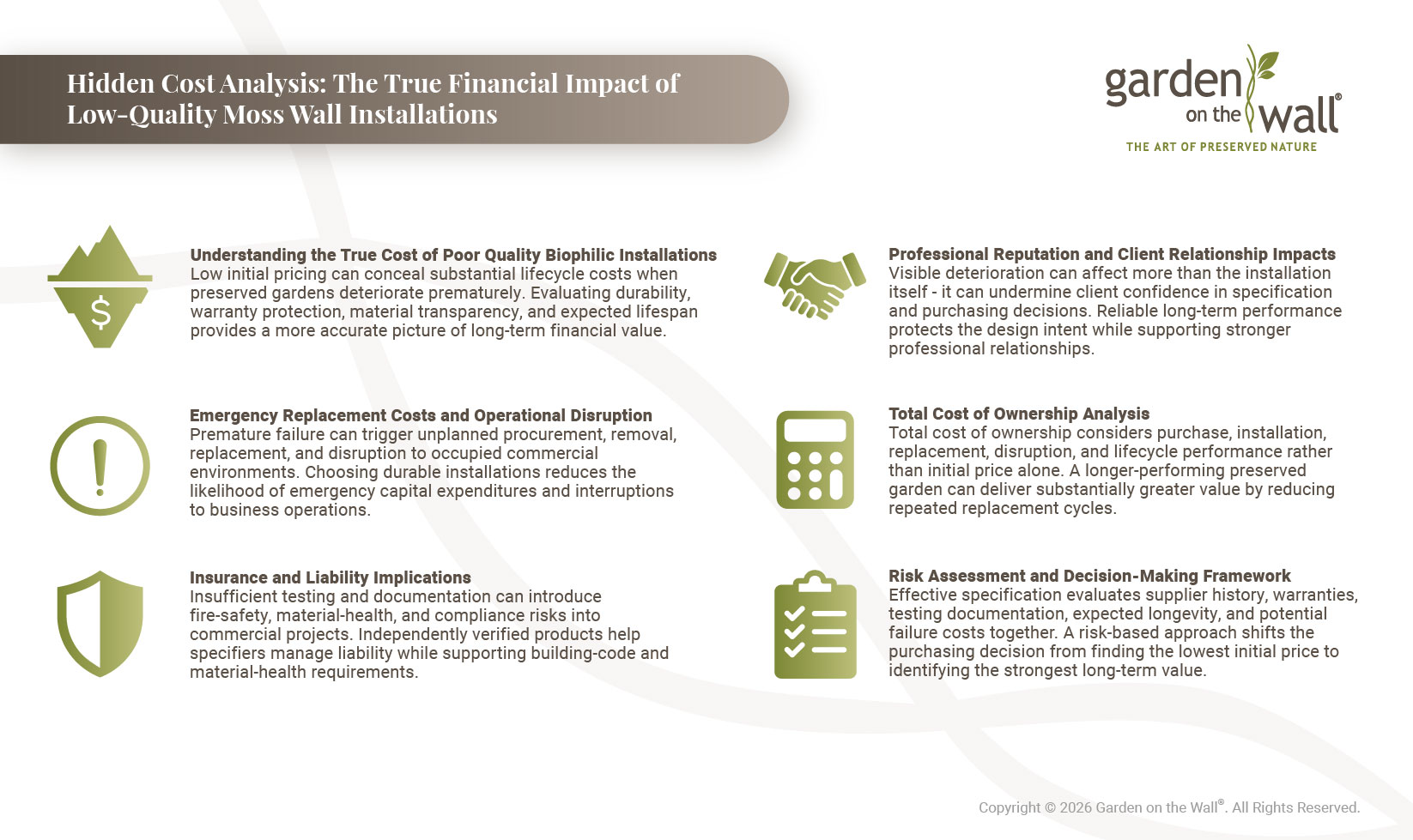
Understanding the True Cost of Poor Quality Biophilic Installations
Low-quality moss wall installations create substantial hidden costs that extend far beyond initial purchase price savings, generating unexpected expenses through premature failure, emergency replacements, and operational disruptions that compromise both aesthetic goals and financial planning. Organizations focusing solely on initial cost often discover that inferior preserved garden products require replacement within 1-3 years rather than achieving the 10-12 year lifecycles that quality installations provide. This shortened lifespan creates recurring capital expenses and operational disruptions that multiply the true cost of ownership significantly.
The hidden cost analysis reveals that substandard preserved gardens generate expenses through multiple failure modes including color degradation, texture deterioration, installation problems, and safety compliance issues that require costly remediation. These quality failures often occur unpredictably, creating emergency situations that demand immediate attention regardless of budget cycles or operational convenience. Professional facilities management requires reliable environmental elements that maintain consistent appearance and performance without creating ongoing maintenance burdens or unexpected replacement needs.
Quality differences in preserved moss wall installations become apparent through material transparency, installation methods, warranty coverage, and long-term performance documentation that separate professional-grade products from cost-focused alternatives. Organizations investing in superior preserved gardens avoid hidden costs through predictable performance, comprehensive warranty protection, and proven durability that eliminates financial surprises and operational complications throughout extended lifecycles.
Emergency Replacement Costs and Operational Disruption
Emergency replacement situations create the most significant hidden costs associated with low-quality moss wall installations, as failing installations must be addressed immediately regardless of budget timing or operational convenience. Emergency replacements typically cost 200-300% more than planned installations due to expedited procurement, rushed installation schedules, and operational disruptions that affect business activities. The urgency of replacement situations eliminates negotiating power and forces acceptance of premium pricing and limited vendor options.
Operational disruption costs extend beyond direct replacement expenses to encompass business interruption, employee productivity loss, and client impression damage that affects organizational reputation and revenue. Failed moss wall installations in high-visibility areas create negative impressions for clients, visitors, and employees while requiring immediate attention that diverts resources from productive activities. The cumulative cost of operational disruption often exceeds the direct replacement costs while creating stress and management burden that affects organizational efficiency.
Planning disruption represents another hidden cost as emergency replacements force unscheduled capital expenditure that affects budget allocation for other priorities and creates financial strain on organizational planning processes. Quality installations provide predictable lifecycle costs that support effective budget planning and resource allocation without emergency intervention requirements that compromise financial stability and operational effectiveness.
Insurance and Liability Implications
Substandard preserved garden installations create potential insurance and liability issues through safety compliance failures, material health concerns, and fire safety violations that expose organizations to regulatory penalties and increased insurance costs. Low-quality preservation processes may utilize materials that fail to meet commercial building standards or create indoor air quality issues that affect occupant health and organizational liability. These compliance failures generate hidden costs through regulatory remediation requirements and potential legal exposure.
Fire safety compliance represents a critical area where low-quality installations create substantial liability exposure through inadequate flame spread ratings and smoke development characteristics that violate building codes. Emergency compliance remediation requires immediate installation removal and replacement regardless of cost or operational impact, creating expensive emergency situations that quality installations avoid through proper initial certification and testing documentation.
Material health transparency becomes increasingly important as organizations face growing regulatory requirements and occupant health concerns that demand comprehensive documentation of building materials and their potential health impacts. Quality preserved garden providers offer complete material transparency through Health Product Declarations and third-party testing that eliminates compliance concerns and potential liability exposure.
Professional Reputation and Client Relationship Impacts
Failed moss wall installations damage professional reputations and client relationships through visible evidence of poor decision-making and inadequate quality control that affects organizational credibility and market positioning. Commercial interior designers and facility managers who specify low-quality preserved gardens risk professional reputation damage when installations fail prematurely or create ongoing maintenance problems that reflect poorly on their expertise and judgment.
Client satisfaction deterioration from failing biophilic installations creates long-term relationship damage that extends far beyond direct replacement costs to encompass lost business opportunities, reduced referrals, and damaged professional credibility that affects future project success. The visual deterioration of substandard moss walls creates constant reminders of quality failures that undermine confidence in professional expertise and decision-making capabilities.
Recovery from quality failure situations requires not only financial investment in replacement installations but also significant effort to rebuild client confidence and professional credibility that may take years to restore fully. Prevention through initial quality investment proves far more cost-effective than attempting to recover from quality failure situations that damage professional relationships and market reputation.
Total Cost of Ownership Analysis
Comprehensive total cost of ownership analysis reveals that quality preserved garden installations provide superior financial value through extended lifecycles, eliminated maintenance costs, predictable performance, and comprehensive warranty protection that reduces financial risk and operational uncertainty. The initial cost differential between quality and substandard installations becomes negligible when distributed across extended operational periods and compared to total lifecycle expenses including replacement costs and operational disruptions.
Quality installations typically provide 10-12 year lifecycles with potential extension to 20+ years through professional rejuvenation programs, while substandard alternatives often require replacement within 1-3 years due to premature degradation and performance failure. This lifecycle differential creates dramatic differences in annualized costs and total financial impact that favor quality investment decisions despite higher initial expenditure.
Warranty protection represents a crucial factor in total cost analysis as quality providers offer comprehensive coverage that protects against premature failure and performance issues, while low-quality alternatives typically provide minimal warranty coverage that leaves organizations exposed to replacement costs and operational disruptions. Garden on the Wall's comprehensive warranty coverage eliminates financial risk and provides confidence in long-term performance that supports informed investment decisions.
Risk Assessment and Decision-Making Framework
Effective risk assessment requires evaluation of potential failure costs, warranty coverage, supplier reliability, and performance documentation that enables informed decision-making about preserved garden investments. Organizations should consider not only initial cost but also failure probability, replacement costs, operational disruption potential, and warranty protection when evaluating preserved garden options. This comprehensive analysis typically favors quality investment decisions that minimize total risk and provide predictable outcomes.
Supplier evaluation should encompass track record, installation portfolio, warranty terms, and performance documentation that indicate reliability and quality commitment. Established providers with extensive installation experience and comprehensive warranty coverage provide greater confidence and lower risk than newer companies or those offering minimal warranty protection. The industry leadership demonstrated through 2,000+ successful installations provides exceptional confidence in quality and reliability.
Decision-making frameworks should prioritize long-term value and risk mitigation over short-term cost savings that create potential for substantial hidden costs and operational complications. Quality preserved garden investments provide superior risk-adjusted returns through predictable performance, comprehensive warranty protection, and eliminated operational burden that supports organizational success and professional reputation protection.
For more information on this subject, read this article: The Economics of High-Quality Moss Walls and Preserved Gardens: Total Cost of Ownership and other related information, please visit our website: www.gardenonthewall.com.