Healthcare Revolution: How Preserved Greenery Accelerates Patient Recovery Through Evidence-Based Design
.jpg)
Key Takeaways Before You Read the Full Article:
30 Second Executive Summary
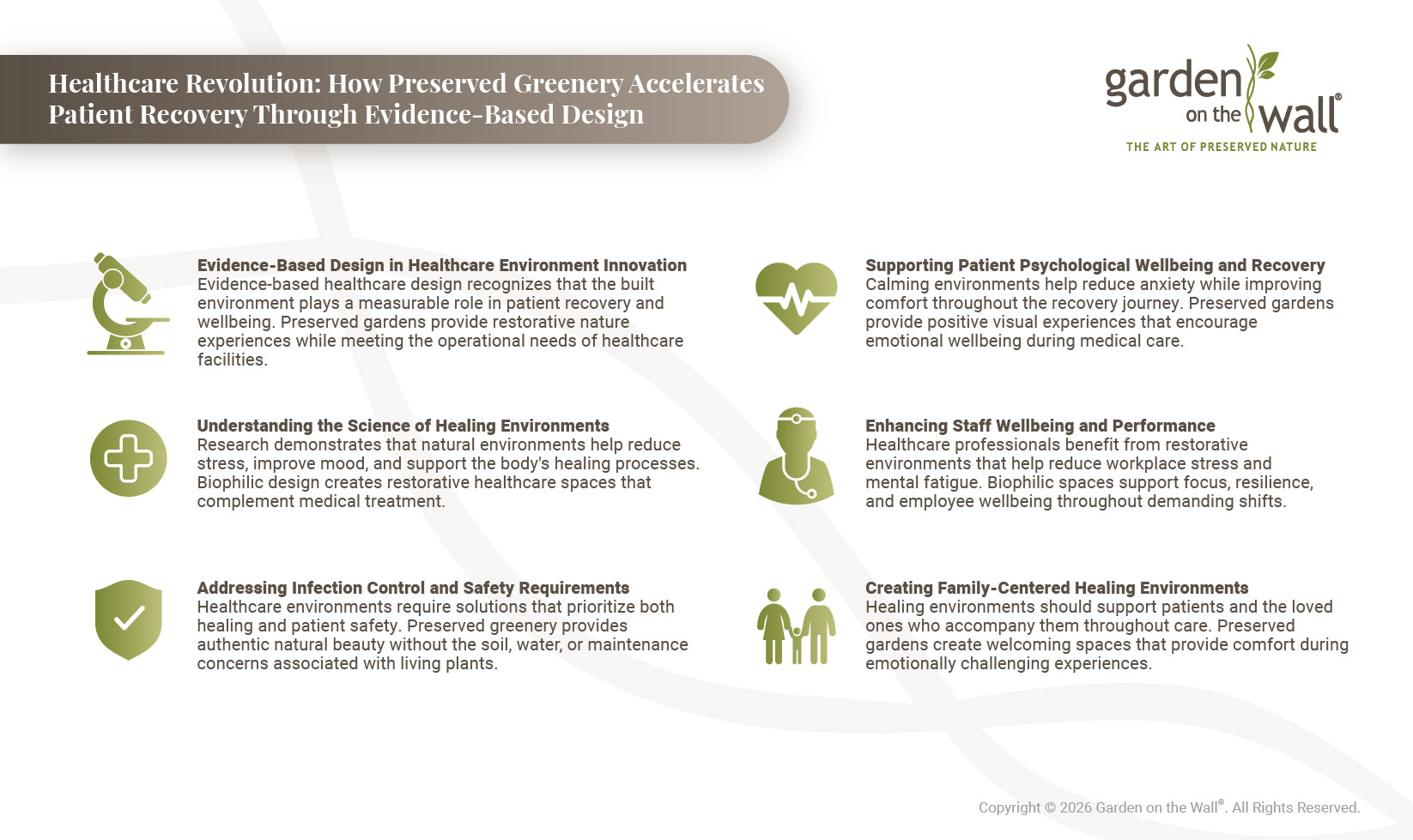
Evidence-based healthcare design demonstrates that thoughtfully designed environments can positively influence patient recovery, emotional wellbeing, and overall healthcare experiences. Preserved gardens and moss walls provide biophilic benefits while meeting infection control, safety, and operational requirements unique to modern healthcare facilities.
🏥 Healing Environments: Designing for Better Patient Outcomes
Research shows that environmental design influences stress, recovery, and patient satisfaction. Biophilic healthcare environments support healing alongside clinical care.
🧪 Evidence-Based Care: Science Supports Nature Integration
Natural environments help regulate stress responses, improve mood, and encourage restorative experiences. Preserved gardens deliver these benefits while remaining appropriate for healthcare settings.
🛡️ Safety First: Meeting Healthcare Standards
Preserved greenery eliminates many of the infection control challenges associated with living plants while maintaining authentic biophilic experiences. This balance supports both patient safety and environmental wellness.
❤️ Supporting Patients, Families, and Care Teams
Healing environments benefit everyone within healthcare facilities, including patients, loved ones, and medical professionals. Restorative spaces strengthen emotional wellbeing while improving the overall healthcare experience.
📈 The Future of Healthcare: Wellness Through Evidence-Based Design
Healthcare organizations increasingly recognize environmental design as an essential component of patient-centered care. Biophilic strategies create healthier facilities while supporting long-term organizational performance.
Ready to discover how evidence-based biophilic design is transforming healthcare environments? The full article explores how preserved gardens help create safer, more restorative facilities that support recovery, wellbeing, and clinical excellence.
Evidence-Based Design in Healthcare Environment Innovation
Healthcare environments significantly influence patient recovery outcomes, yet many medical facilities continue to rely on institutional designs that prioritize operational efficiency over healing-supportive environmental factors. Evidence-based design research demonstrates that environmental elements including natural light, nature views, and biophilic elements can accelerate patient recovery, reduce pain medication requirements, and improve overall health outcomes. However, implementing nature elements in healthcare settings presents unique challenges related to infection control, maintenance, and regulatory compliance.
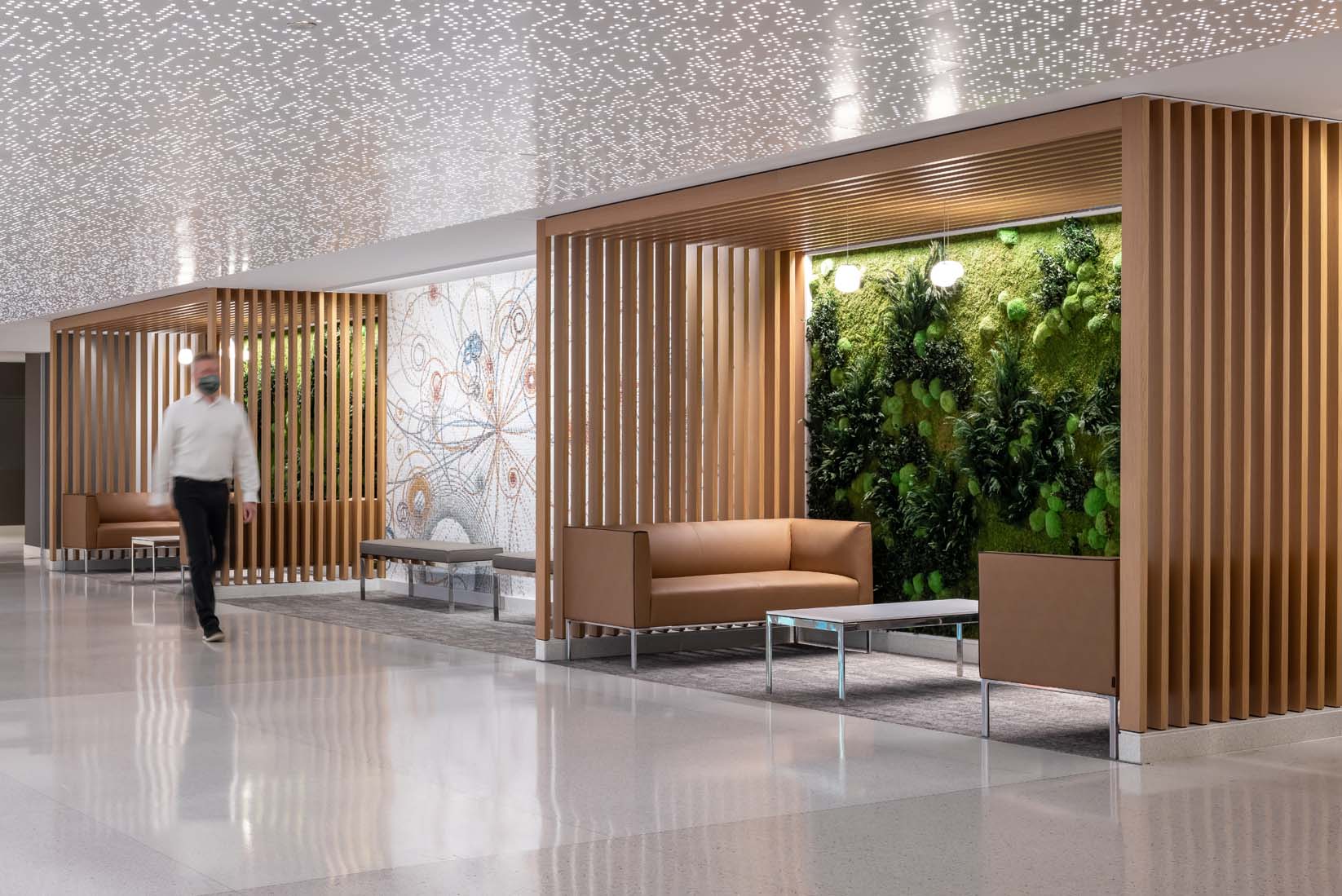
Preserved greenery offers revolutionary solutions for healthcare biophilic design that address infection control concerns while delivering proven therapeutic benefits. Unlike living plants that can harbor pathogens or require soil and water that create contamination risks, preserved gardens, moss walls, and planter inserts provide authentic nature experiences without biological risks. These installations meet healthcare facility requirements while providing the visual restoration, stress reduction, and psychological benefits that support patient healing and staff wellbeing in demanding medical environments.
Understanding the Science of Healing Environments
Medical research consistently demonstrates that environmental factors significantly influence patient recovery rates, pain perception, medication requirements, and overall health outcomes. The pioneering work of Roger Ulrich showed that patients with nature views recovered faster from surgery, required less pain medication, and experienced fewer complications than patients with views of built environments. Subsequent research has validated and expanded these findings across diverse healthcare settings and patient populations.
The physiological mechanisms underlying healing environment effects include stress hormone reduction, improved immune function, better sleep quality, and enhanced mood regulation that collectively support the body's natural healing processes. Preserved nature installations trigger these same physiological responses while eliminating the infection control and maintenance concerns that limit living plant implementation in medical settings. The visual restoration provided by preserved gardens supports healing processes without compromising healthcare safety requirements.
Addressing Infection Control and Safety Requirements
Healthcare environments require stringent infection control measures that eliminate potential pathogen sources while maintaining environments that support patient healing and staff wellbeing. Traditional living plants present infection control challenges through soil pathogens, standing water, and organic materials that can harbor bacteria, fungi, or other microorganisms dangerous to immunocompromised patients. These safety concerns often prevent biophilic implementation despite proven healing benefits.
Preserved greenery eliminates infection control concerns by removing biological growth potential while maintaining the visual and psychological benefits that support healing. These installations require no soil, water, or organic materials that could harbor pathogens, making them appropriate for sensitive healthcare environments including intensive care units, surgical areas, and immunocompromised patient settings. The preservation process creates inert materials that provide biophilic benefits without biological risks.
Supporting Patient Psychological Wellbeing and Recovery
Patient psychological wellbeing significantly influences recovery outcomes through its effects on immune function, pain perception, medication compliance, and healing motivation. Healthcare environments often create psychological stress through institutional aesthetics, lack of privacy, noise pollution, and disconnection from natural elements that patients rely on for psychological restoration. Environmental design becomes crucial for supporting patient mental health throughout recovery processes.
Preserved gardens provide consistent psychological benefits through their calming visual characteristics, connection to nature, and ability to create restorative environments within medical settings. These installations help reduce anxiety, improve mood, and provide positive focal points that support patient psychological wellbeing during challenging recovery periods. The maintenance-free characteristics ensure that psychological benefits remain consistently available without disruption from maintenance activities.
Enhancing Staff Wellbeing and Performance
Healthcare staff experience high levels of occupational stress that can impact job performance, patient care quality, and personal wellbeing. Environmental factors that support staff restoration and stress management become crucial for maintaining healthcare quality while supporting staff retention and satisfaction. Biophilic elements provide staff restoration opportunities that can improve performance while reducing burnout and turnover.
Preserved moss walls and garden installations provide staff restoration resources that support wellbeing during demanding work shifts. These installations offer brief visual restoration opportunities that help staff manage stress while providing environmental beauty that enhances workplace satisfaction. The acoustic benefits also contribute to creating more comfortable work environments that support communication and concentration essential for healthcare delivery.
Creating Family-Centered Healing Environments
Healthcare experiences often involve family members who spend extended periods in medical facilities while supporting patients through recovery processes. Family wellbeing influences patient outcomes while family members deserve environmental support during stressful periods of medical care. Biophilic design can create environments that support entire families rather than focusing solely on patient needs.
Preserved nature installations provide environmental benefits that support family members spending time in healthcare settings while creating beautiful, calming environments that enhance the overall healthcare experience. These installations help create welcoming environments that demonstrate organizational commitment to comprehensive care while providing psychological restoration resources for families dealing with medical stress.
Evidence-Based Measurement and Validation
Healthcare biophilic design effectiveness can be measured through clinical outcome metrics including recovery rates, medication requirements, length of stay, patient satisfaction scores, and staff wellbeing indicators. These measurements provide objective validation of environmental investments while identifying which biophilic elements most effectively support healthcare goals. Evidence-based measurement ensures that environmental design decisions support rather than compromise healthcare quality.
Advanced healthcare measurement might include physiological monitoring, stress hormone assessment, sleep quality evaluation, or pain level tracking that provides detailed insights into biophilic design effectiveness. These measurements guide optimization of healthcare environmental design while demonstrating return on investment for wellness-focused facility improvements.
Regulatory Compliance and Healthcare Standards
Healthcare facilities must comply with complex regulatory requirements including infection control standards, safety regulations, accessibility requirements, and environmental health guidelines that influence biophilic design implementation. Successful healthcare biophilic design must meet these regulatory requirements while providing therapeutic environmental benefits that support healthcare goals.
Preserved greenery installations can be designed to meet healthcare regulatory requirements through their inert characteristics, flame retardant properties, and easy cleaning protocols that support healthcare facility standards. These installations provide biophilic benefits while maintaining compliance with healthcare regulations that ensure patient safety and facility accreditation.
Future Directions in Healthcare Environmental Design
The future of healthcare design increasingly recognizes environmental factors as essential components of comprehensive healthcare delivery that influence patient outcomes alongside medical interventions. Evidence-based environmental design provides measurable benefits that justify investment while supporting healthcare quality goals. Advanced healthcare environments will integrate biophilic design as standard practice rather than optional enhancement.
Future healthcare biophilic design may incorporate personalized environmental controls, therapeutic lighting systems, or integrated wellness programming that optimizes healing environments for individual patient needs. However, the foundation remains consistent access to restorative natural elements that support healing processes through authentic biophilic connections.
Implementing Comprehensive Healthcare Biophilic Strategies
Successful healthcare biophilic implementation requires coordination between medical staff, facility managers, infection control specialists, and regulatory compliance teams to ensure that environmental enhancements support healthcare goals while meeting safety requirements. This coordination ensures that biophilic elements enhance rather than complicate healthcare delivery.
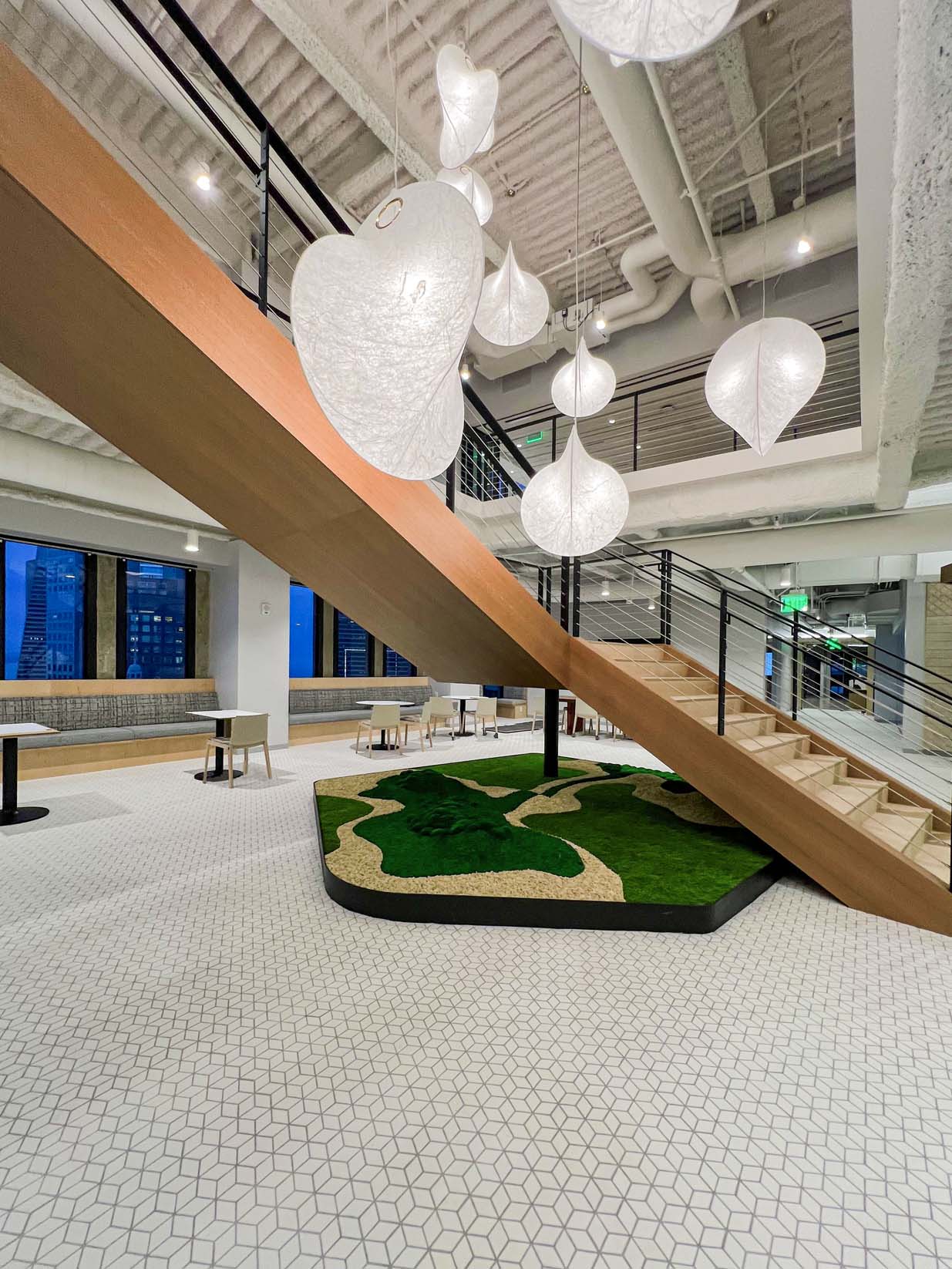
Preserved gardens, moss walls, planter inserts, and draping preserved foliage provide comprehensive healthcare biophilic solutions that support patient healing, staff wellbeing, and family experience while meeting healthcare facility requirements. These installations create healing environments that accelerate recovery while maintaining the safety and operational standards essential for healthcare excellence. The future of healthcare lies in environments that actively support healing through evidence-based biophilic design.
For more information on this subject, read this article: Healing Spaces: Applying the Biophilic Interior Design Matrix in Healthcare Design in Healthcare and other related information, please visit our website: www.gardenonthewall.com.