Beyond Compliance: Creating Fully Accessible Nature Experiences Through Thoughtful Design
Key Takeaways Before You Read the Full Article:
30 Second Executive Summary
Accessible biophilic design goes beyond compliance to create meaningful nature experiences for people with diverse physical, cognitive, neurological, and sensory abilities. Preserved gardens and moss walls help deliver consistent, inclusive environments that support wellbeing, independence, and equitable access.
♿ Universal Access: Designing Beyond Compliance
Inclusive environments prioritize equitable experiences rather than minimum accessibility requirements. Preserved gardens help make restorative nature experiences available to a broader range of users.
🧠 Sensory & Cognitive Support: Environments That Reduce Barriers
Predictable visual patterns, acoustic comfort, and stable environmental conditions help support individuals with diverse neurological and sensory needs. Biophilic design creates environments that encourage comfort, focus, and confidence.
🤲 Multi-Sensory Engagement: Nature for Everyone
Accessible biophilic environments engage multiple senses beyond vision alone. Preserved gardens provide tactile, acoustic, and visual experiences that strengthen inclusion for all occupants.
🏢 Universal Design: Flexible Solutions for Diverse Users
Thoughtful placement and adaptable preserved installations help accommodate a wide range of mobility and accessibility needs. Universal design creates environments that serve everyone without sacrificing aesthetics.
🌎 Long-Term Inclusion: Expanding Access Through Sustainable Design
Maintenance-free preserved gardens reduce operational costs while making nature-based environments more achievable across schools, healthcare facilities, workplaces, and community spaces. Inclusive biophilic design benefits organizations and the communities they serve.
Ready to discover how thoughtful biophilic design creates more accessible and inclusive environments? The full article explores how preserved gardens help expand meaningful nature experiences for people of all abilities.
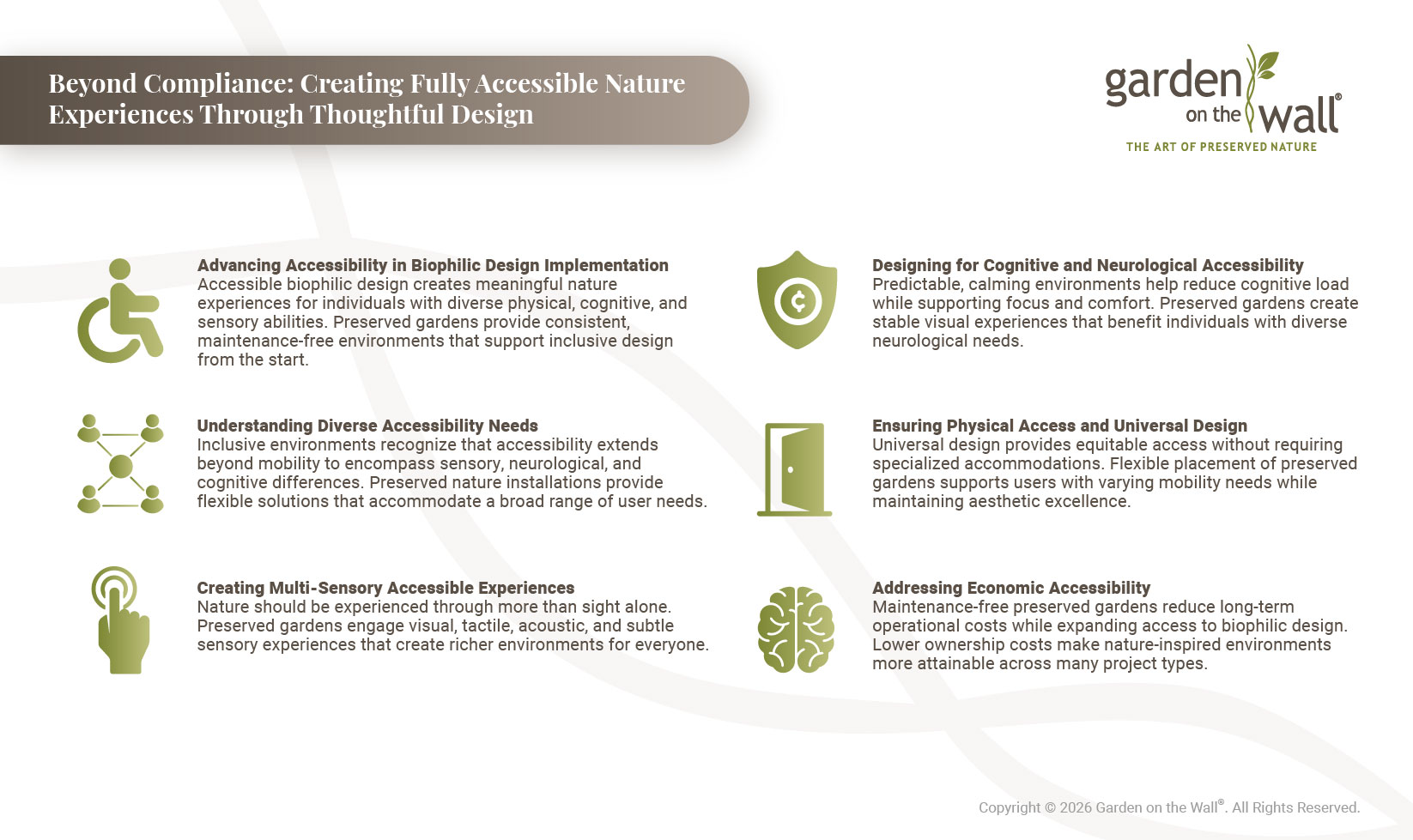
Advancing Accessibility in Biophilic Design Implementation
Accessibility in biophilic design extends far beyond legal compliance to encompass creation of nature experiences that genuinely serve individuals with diverse physical, cognitive, and sensory abilities. Traditional approaches to accessible design often treat accommodation as afterthought, resulting in nature installations meeting minimum standards while failing to provide equitable experiences for all users. This limited perspective overlooks opportunities to create biophilic environments celebrating human diversity while providing meaningful nature connections for everyone.
Thoughtful accessibility design in biophilic environments requires understanding intersection of disability, environmental psychology, and inclusive design principles. Preserved gardens, moss walls, and planter inserts offer unique advantages for creating accessible nature experiences because they eliminate variables like plant growth, maintenance activities, and seasonal changes that create accessibility barriers. These installations provide consistent, predictable nature interactions while supporting diverse sensory experiences including visual, tactile, and olfactory engagement suitable for individuals with varying accessibility needs and preferences, creating inclusive environments where all users can thrive.
Understanding Diverse Accessibility Needs
Accessibility encompasses broad spectrum of physical, cognitive, sensory, and neurological differences requiring thoughtful environmental consideration beyond basic physical access requirements. Visual impairments may require tactile or auditory nature experiences, while mobility limitations might necessitate accessible placement and interaction design. Cognitive and neurological differences often benefit from predictable, low-stimulation environments providing nature benefits without overwhelming sensory input that could compromise user experience.
Preserved nature installations support diverse accessibility needs through consistent characteristics and flexible design possibilities. Unlike living plants that may trigger allergies, require maintenance creating temporary access barriers, or change unpredictably, preserved gardens provide stable nature experiences accommodating diverse access requirements. These installations can be positioned at various heights, incorporated into tactile experiences, and designed to support different sensory preferences and capabilities. Wall plant art and moss art installations create accessible focal points that serve multiple user needs simultaneously.
Creating Multi-Sensory Accessible Experiences
Truly accessible biophilic design engages multiple senses to provide rich nature experiences that don't rely solely on visual perception. Many individuals with visual impairments can fully appreciate nature through tactile, auditory, and olfactory experiences that traditional visual-focused biophilic design often overlooks. Multi-sensory design creates more inclusive and engaging nature experiences for all users while specifically supporting those with sensory differences through comprehensive environmental consideration.
Preserved moss walls and garden installations offer excellent multi-sensory accessibility through varied textures, subtle natural scents, and sound-absorbing properties creating acoustic environments suitable for individuals with hearing differences. The tactile qualities of preserved materials provide safe, consistent touch experiences that don't change seasonally or require maintenance that could interrupt accessibility. These multi-sensory qualities create inclusive nature experiences serving diverse accessibility needs simultaneously. Garden on the Wall® leads industry transparency through comprehensive third-party testing ensuring safety for all users, including HPD v2.3 material disclosure and Red List Free certification protecting individuals with chemical sensitivities.
Designing for Cognitive and Neurological Accessibility
Cognitive and neurological accessibility requires environments supporting different information processing styles, attention patterns, and sensory sensitivities often overlooked in traditional accessibility approaches. Individuals with autism, ADHD, dementia, or traumatic brain injuries may benefit from specific environmental characteristics including predictable layouts, reduced sensory overwhelm, clear navigation, and calming visual elements supporting cognitive function. These considerations create environments where neurodivergent individuals can access nature benefits without environmental barriers.
Preserved gardens excel in cognitive accessibility applications because they provide consistent, predictable visual environments that don't change unexpectedly or require navigation around maintenance activities. Organic patterns and natural colors offer visually calming influences supporting cognitive processing while providing sufficient visual interest to maintain engagement. These installations can be designed to support wayfinding, provide rest areas, and create calming spaces serving diverse cognitive accessibility needs. No-upkeep green walls ensure environmental stability crucial for individuals requiring predictable sensory experiences throughout their facility use.
Ensuring Physical Access and Universal Design
Physical accessibility in biophilic design requires careful attention to placement, height, reach requirements, and navigation paths accommodating wheelchairs, mobility devices, and various physical capabilities. Universal design principles suggest creating environments serving the widest possible range of users without requiring specialized accommodations, making nature experiences accessible to everyone through thoughtful initial design rather than retrofitted solutions that may compromise functionality.
Preserved nature installations support universal design through flexible placement options accommodating various physical access requirements without compromising biophilic benefits. Wall-mounted preserved gardens can be positioned at appropriate heights for wheelchair users while remaining accessible to standing users. Preserved planter inserts create accessible nature experiences at table height or in floor configurations supporting diverse mobility needs while maintaining aesthetic and therapeutic benefits. Vertical green walls provide accessibility advantages by eliminating ground-level maintenance that could create temporary barriers during facility operations.
Addressing Economic Accessibility
Economic accessibility represents often-overlooked dimension of inclusive design, as high-maintenance nature installations may create ongoing costs limiting implementation in community spaces, public facilities, and organizations serving diverse populations. Truly accessible biophilic design should be economically sustainable to ensure nature benefits remain available to all communities rather than becoming luxury amenities available only in premium environments with extensive maintenance budgets.
Preserved gardens address economic accessibility concerns through minimal maintenance requirements eliminating ongoing costs associated with plant care, replacement, irrigation, and specialized maintenance staff. This economic sustainability makes biophilic design accessible to schools, community centers, healthcare facilities, and other organizations serving diverse populations that may not have resources for high-maintenance living installations. The longevity of preserved installations further supports economic accessibility by providing lasting nature benefits without recurring investment requirements.
Building Inclusive Design Communities
Creating truly accessible biophilic environments requires collaboration with disability communities, accessibility advocates, and individuals with diverse accessibility needs throughout design process rather than designing for assumed needs without direct input. This collaborative approach ensures accessibility solutions address actual user needs while avoiding assumptions that may not reflect lived experiences of individuals with diverse abilities, creating authentic inclusive design outcomes.
Community engagement in biophilic design processes helps identify accessibility opportunities and challenges that design professionals might overlook while building support for inclusive environmental approaches. Preserved nature installations serve as focal points for community accessibility discussions, providing tangible examples of inclusive design while creating environments where diverse accessibility needs can be accommodated and celebrated. Draping preserved foliage creates natural transitions supporting accessibility while maintaining visual continuity that serves all users effectively through thoughtful environmental design that honors human diversity.
For more information on this subject, read this article: Transforming Healing Environments with Nature-Inspired Interiors and other related information, please visit our website: www.gardenonthewall.com.