
The Restorative Mandate: The Clinical and Financial Case for Biophilic Healthcare Design
Healthcare environments influence more than the patient experience. They shape the daily conditions in which clinical professionals work, patients recover, and families navigate some of life's most demanding moments.
Evidence-based biophilic design offers an approach to integrating restorative natural elements into healthcare facilities. For architects, interior designers, hospital administrators, and healthcare developers, the opportunity is to address patient well-being, caregiver experience, and long-term operational priorities through more intentional environmental design.
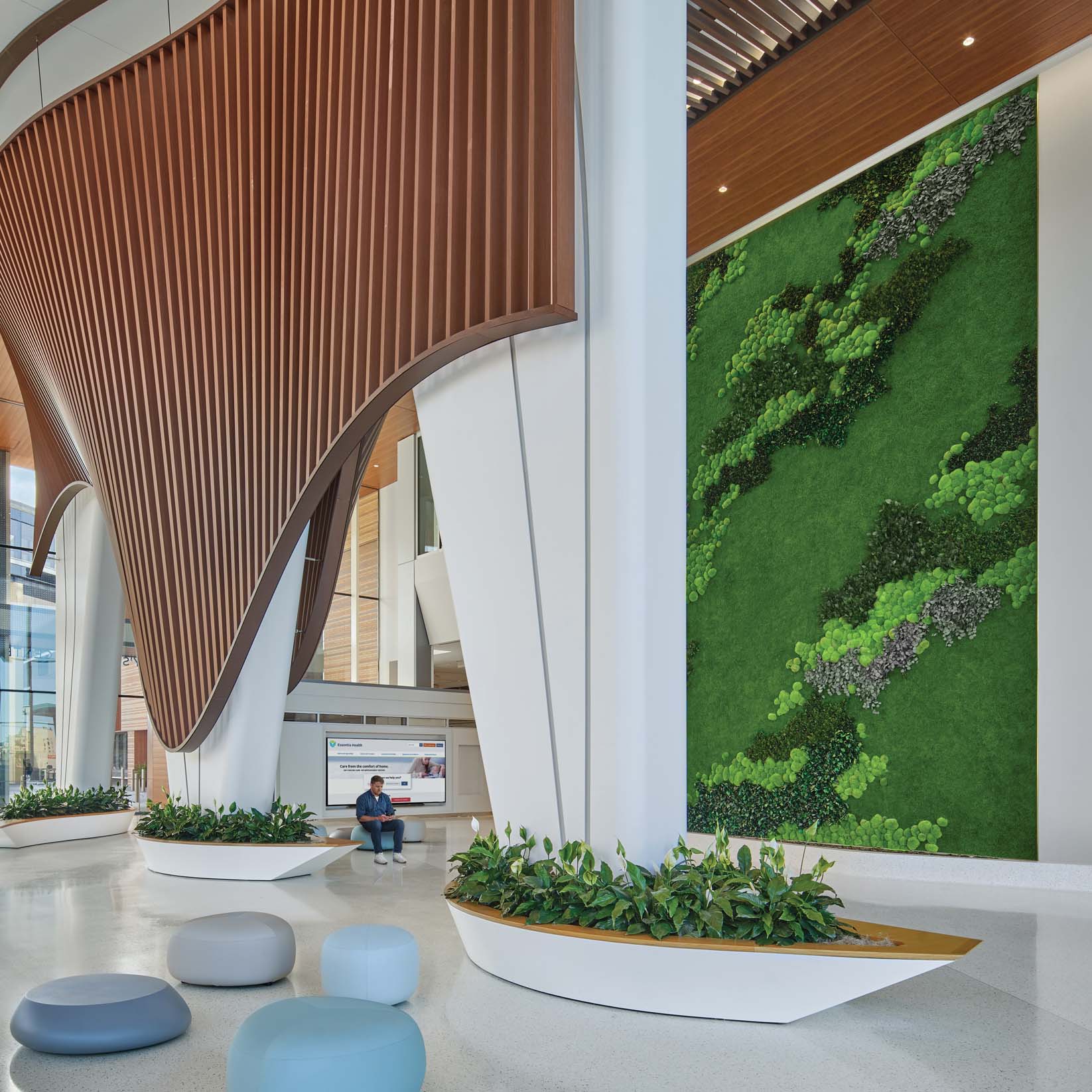
The Business Case: When the Environment Becomes a Healthcare Priority
Healthcare organizations face significant financial and workforce pressures. Annual registered nurse turnover has reached 18.4%, while physician burnout remains at 43.2%, creating substantial recruitment, replacement, and operational costs. The patient experience is also an increasingly important performance consideration. Healthcare reimbursement frameworks incorporate patient-reported experience measures, reinforcing the importance of environmental comfort and restfulness. Biophilic design offers an evidence-informed strategy for addressing the quality of clinical environments. The white paper presents a modeled financial framework examining potential value through staff retention, patient experience, and recovery-related outcomes; these estimates are scenarios rather than guaranteed returns.


The Science of Healing, Stress, and Restoration
Research spanning several decades connects nature exposure with physiological stress reduction, cognitive restoration, and aspects of patient recovery. Roger Ulrich's foundational 1984 study found that surgical patients with views of trees experienced shorter postoperative stays and required less pain medication than patients with brick-wall views. More recent research involving hospital nurses has documented improvements in fatigue, anxiety, and neurophysiological measures following brief exposure to a biophilic environment. A 2025 systematic review of 124 studies further examined the health effects of natural elements in confined environments, reinforcing the relevance of restorative design strategies in healthcare settings.
Designing Clinical Environments for Patients and Caregivers
Effective biophilic healthcare design prioritizes the spaces where restorative experiences may be most valuable. Staff break rooms, nursing stations, clinical corridors, waiting areas, family consultation rooms, and rehabilitation environments provide opportunities to integrate natural visual elements into daily care experiences. Garden on the Wall® preserved gardens, moss walls, and botanical installations introduce authentic natural materials without irrigation, soil, or grow lighting. In sensitive clinical areas, enclosed configurations can provide visual access while limiting direct contact. Final suitability should be coordinated with each facility's infection prevention and environmental services teams.
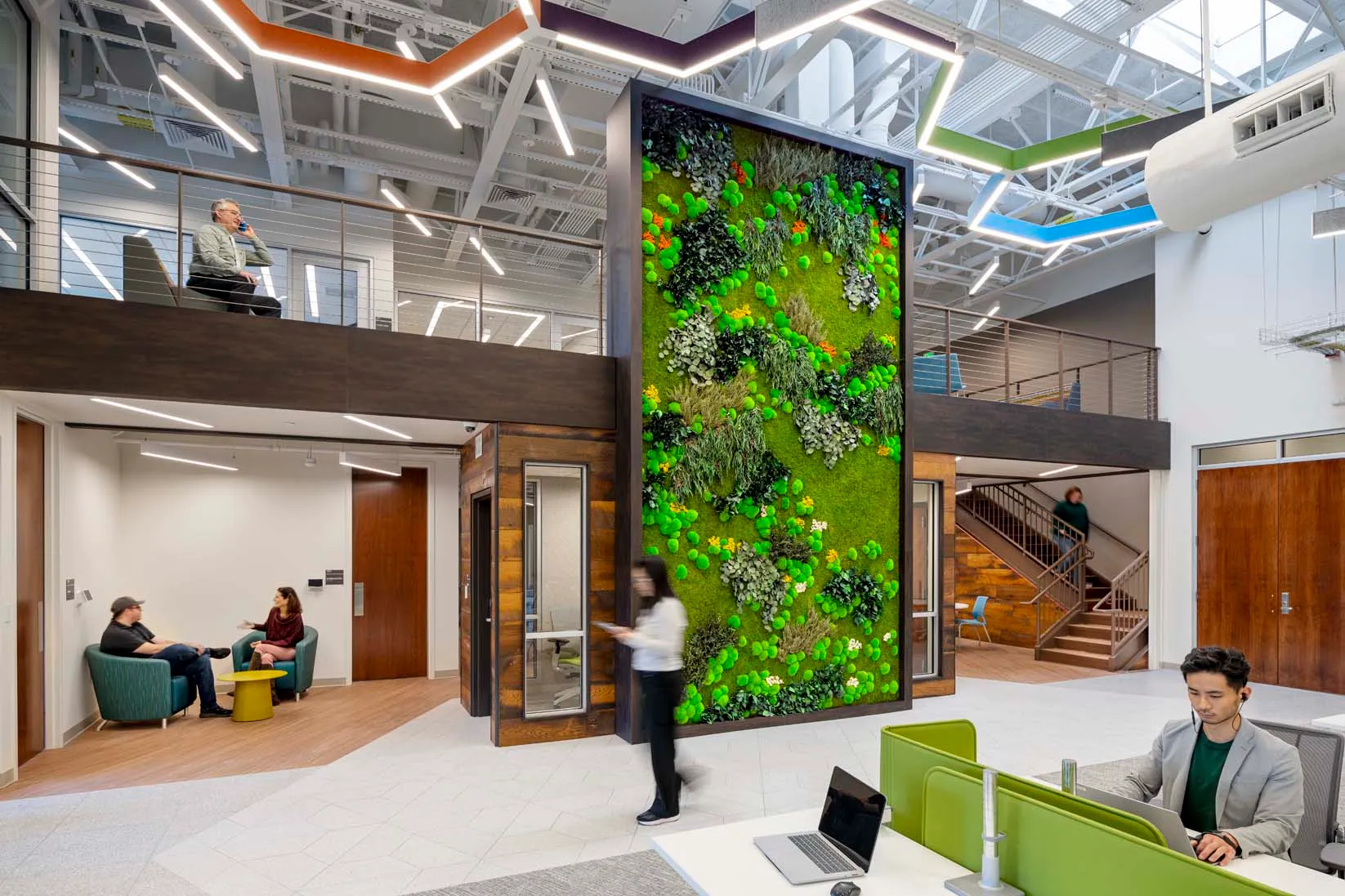

Authentic Nature. Verified for Care.
Healthcare specification requires materials that meet demanding standards for indoor air quality, fire performance, material transparency, and long-term operational reliability. Garden on the Wall® preserved botanical systems are supported by third-party verified documentation, including Health Product Declarations, Declare Red List Free status, CDPH Section 01350 emissions testing, ASTM E84 Class A whole-system fire performance, and a published Environmental Product Declaration. With a 7-year warranty and a lifecycle extendable to 20+ years through the Rejuvenation Program, these installations provide an operationally practical approach to integrating authentic nature into appropriate healthcare environments.
Access the Full White Paper
The Restorative Mandate examines the clinical evidence and financial considerations connecting biophilic design with patient recovery, caregiver well-being, and healthcare environmental performance. Explore the research, clinical implementation strategies, and material specification requirements shaping restorative healthcare environments.