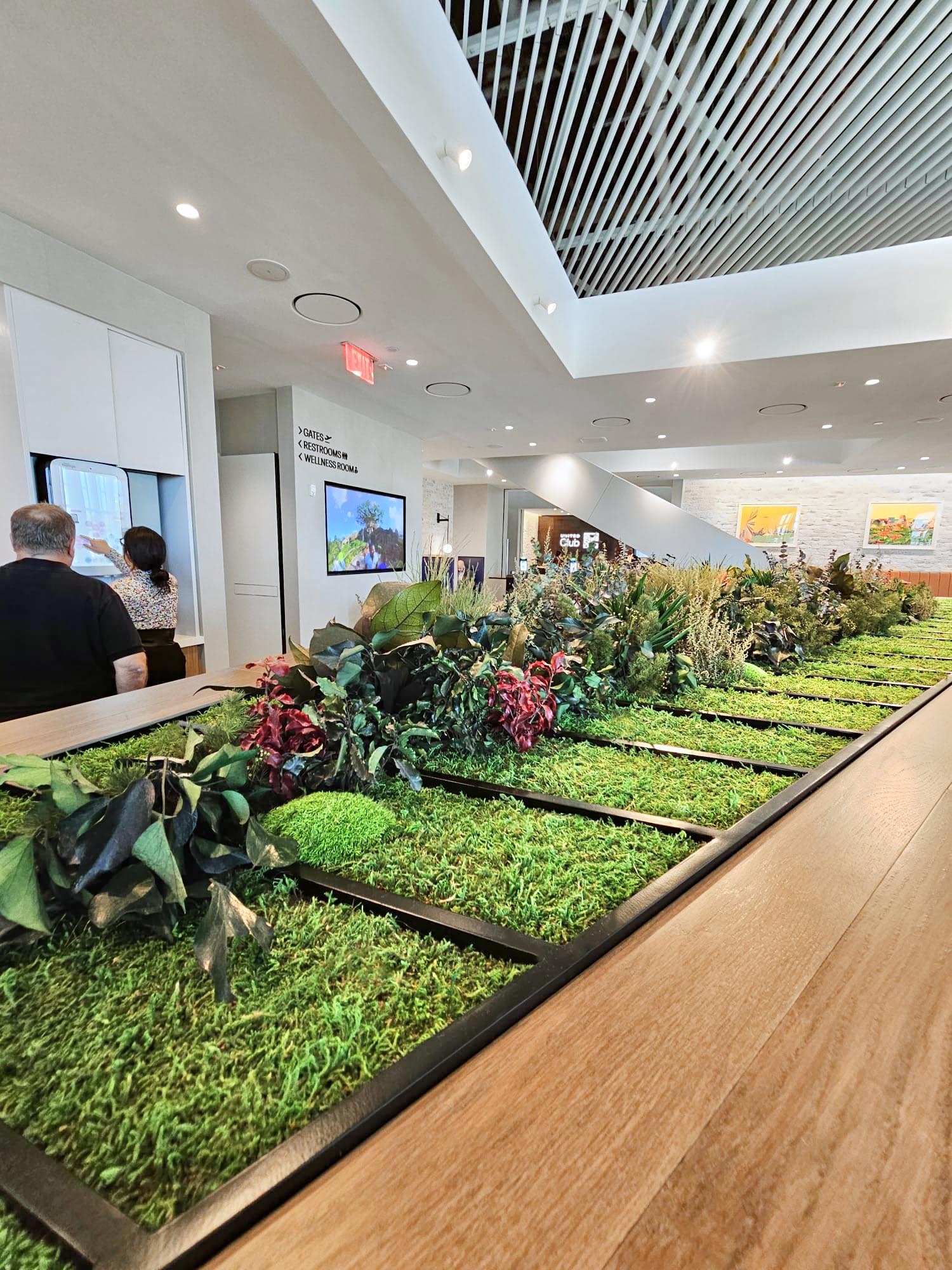
Evidence-Based Design: Restorative Nature for the Journey
More than 4.5 billion passengers traveled through the world’s airports in 2023, navigating environments defined by crowds, security, time pressure, noise, waiting, and sustained cognitive demand. At the same time, passenger comfort influences dwell, commercial engagement, and the overall travel experience. The terminal environment is no longer simply a backdrop to travel. It is a passenger-experience and commercial performance variable.
Biophilic design offers an evidence-based strategy for creating calmer, more restorative aviation environments. For architects, interior designers, airport operators, and aviation stakeholders, authentic nature can support passenger well-being throughout the journey while meeting the operational demands of terminals, concourses, gate areas, and lounges.
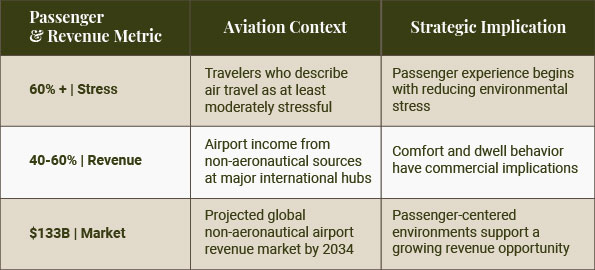
The Transportation Choice: Why Specification Matters Here
In airports, airline lounges, rail stations, transit hubs, and other high-traffic passenger environments, biophilic design is more than an aesthetic decision. The specification must perform within spaces characterized by continuous occupancy, intensive circulation, demanding fire and material requirements, limited maintenance windows, and the need for long-term operational reliability.
Living plant systems introduce irrigation, drainage, specialized lighting, pruning, plant replacement, and ongoing maintenance requirements. In large-scale transportation environments, these requirements can increase operational complexity and lifecycle costs while limiting where biophilic elements can practically be integrated.
Faux greenery addresses some maintenance concerns but substitutes synthetic representations for authentic natural material and may provide limited material-health transparency.
Preserved biophilic installations offer another approach: authentic botanical material transformed into a stable interior design medium that requires no water, soil, sunlight, or irrigation while retaining the texture, complexity, and visual connection associated with nature.
For transportation environments, that combination of authenticity and operational simplicity creates a distinct specification advantage.

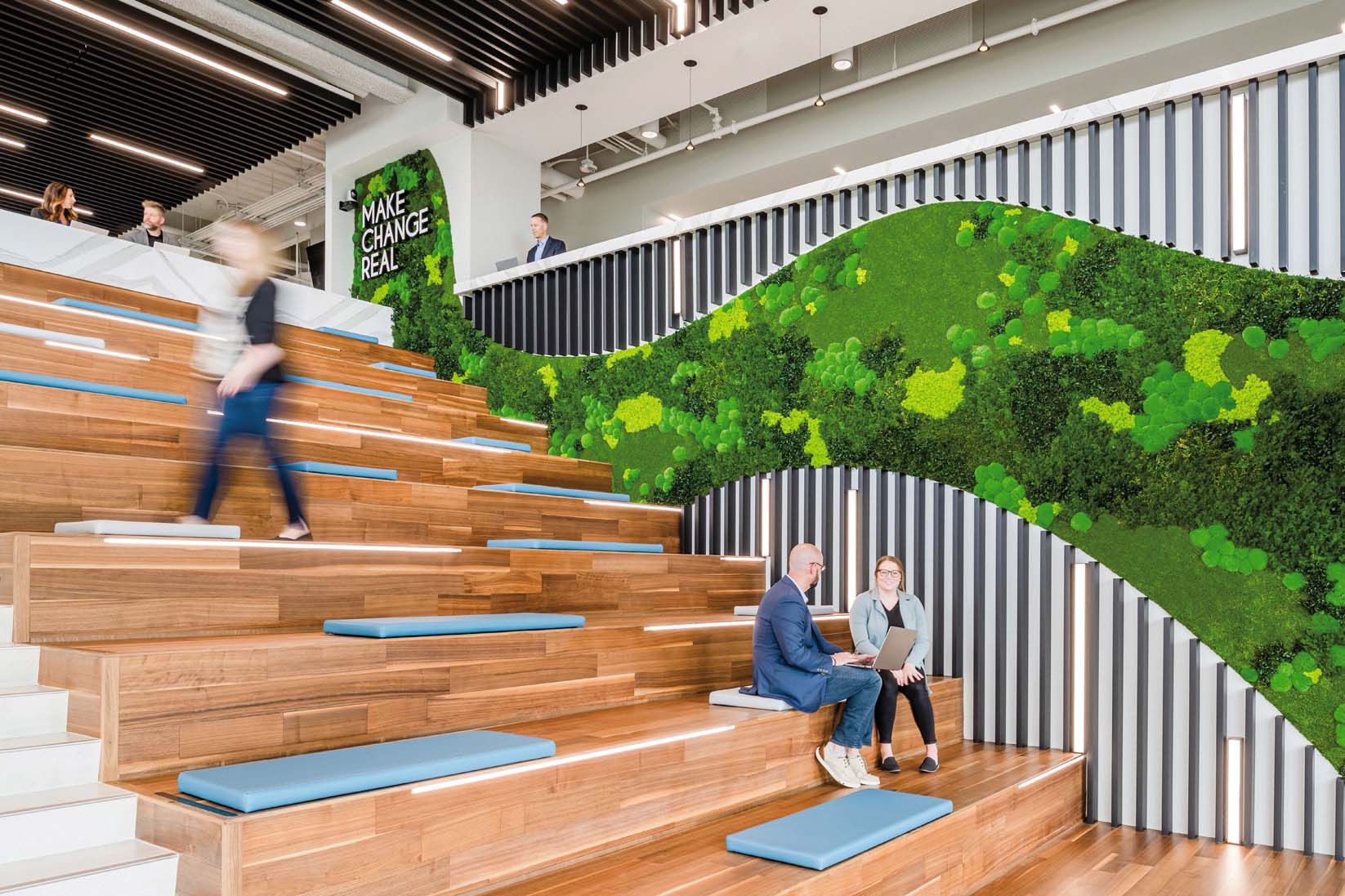
The Specification Moat
Garden on the Wall® combines authentic botanical material with documented material performance and long-term operational practicality:
• Zero water, soil, or irrigation - eliminates plumbing infrastructure and ongoing watering requirements.
• ASTM E84 Class 1/A Fire Rating - supports specification within demanding commercial and public interiors.
• Red List Free Declare Label - provides transparency around materials of concern.
• HPD v3.0 at 100 ppm - supports detailed ingredient disclosure and material-health evaluation.
• CDPH Section 01350 VOC Compliance - verifies low emissions for occupied interior environments.
• Published EPD - provides third-party environmental impact documentation.
• NRC 0.45 standard acoustic performance, with options reaching NRC 0.80 - contributes to broader acoustic strategies in noise-intensive environments.
• 7-Year Warranty - supports long-term specification confidence.
• 10–12 year typical lifespan, with rejuvenation opportunities extending installations beyond 20 years - reduces recurring replacement and maintenance demands.
The result is a biophilic system suited to airport terminals, airline lounges, arrivals and departures halls, security and waiting areas, rail stations, transit hubs, circulation spaces, and other transportation interiors where design impact must coexist with operational performance.
The Passenger Mandate
Transportation environments have traditionally been optimized around movement: process passengers efficiently, communicate information clearly, maintain safety and security, and minimize disruption.
The next generation of aviation and transportation design must address another dimension of performance:How do people experience the journey?
Travel places passengers under a distinctive combination of psychological, sensory, and cognitive pressures. Time constraints, crowds, security procedures, noise, visual complexity, unfamiliar environments, disrupted routines, prolonged waiting, and uncertainty continuously compete for attention.
Biophilic design introduces restorative environmental cues into that experience. Natural patterns, textures, materials, and authentic connections to nature can provide visual relief from highly engineered surroundings while contributing to environments that feel calmer, more welcoming, and more human.
The opportunity extends beyond passenger well-being. Environmental quality can influence how people perceive waiting, navigate and engage with a space, experience lounges and concessions, and form impressions of an airport, station, transit system, or destination.
Transportation infrastructure should do more than move people from one point to another.It should support people throughout the journey.
Explore the research and learn how evidence-based biophilic design can support passenger well-being, cognitive restoration, experience, and operational performance in Beyond the Gate: The Case for Biophilic Design in Aviation & Transportation Environments.