Creating Neuroinclusive Environments with Biophilic Design
The Biophilic Case for Sensory-Inclusive Design
Between 15 and 20 percent of the population is estimated to be neurodivergent, encompassing autism, ADHD, dyslexia, dyspraxia, and related cognitive profiles. In workplaces, schools, healthcare facilities, and public environments, roughly one in five occupants may process sensory information in ways the standard environment was not designed to accommodate. For many, the built environment is not neutral—it can become a source of sensory strain.
Biophilic design offers a distinctive response: passive, continuously available support that does not require disclosure, request, or activation. For architects and interior designers, nature-integrated design can become one component of a broader neuroinclusive strategy—supporting calmer, more restorative environments while recognizing that individual sensory needs and preferences vary.
The Neuroinclusive Choice: Why Design Matters Here
Neuroinclusive environments require designers to consider more than aesthetics and conventional measures of comfort. Sensory quality, intelligibility, predictability, lighting, acoustics, materiality, spatial choice, and opportunities for retreat can all influence how occupants experience a space.The evidence is specific. In a survey of 202 neurodivergent employees, 77 percent reported hypersensitivity to noise and sound, while 62 percent reported hypersensitivity to visual distractions including movement, color, and light. A 2026 controlled living-laboratory study reinforced these findings, with the largest reported differences between autistic and non-autistic participants occurring in the acoustic domain.Biophilic design introduces a complementary layer. Natural materials, organic patterns, calmer visual fields, and restorative connections to nature can help address some of the environmental conditions associated with cognitive overload and sensory strain.Preserved botanical installations offer a particularly relevant form of natural materiality: authentic botanical material with stable visual characteristics and no seasonal growth, wilting, or routine watering. Within a comprehensive strategy that also addresses acoustics, lighting, spatial planning, wayfinding, and occupant choice, preserved nature can contribute consistency, material authenticity, and restorative visual cues.“Nature-integrated design is not a targeted intervention for a subset of occupants; it is a universal design strategy.”
Authentic Nature. Predictable Performance.
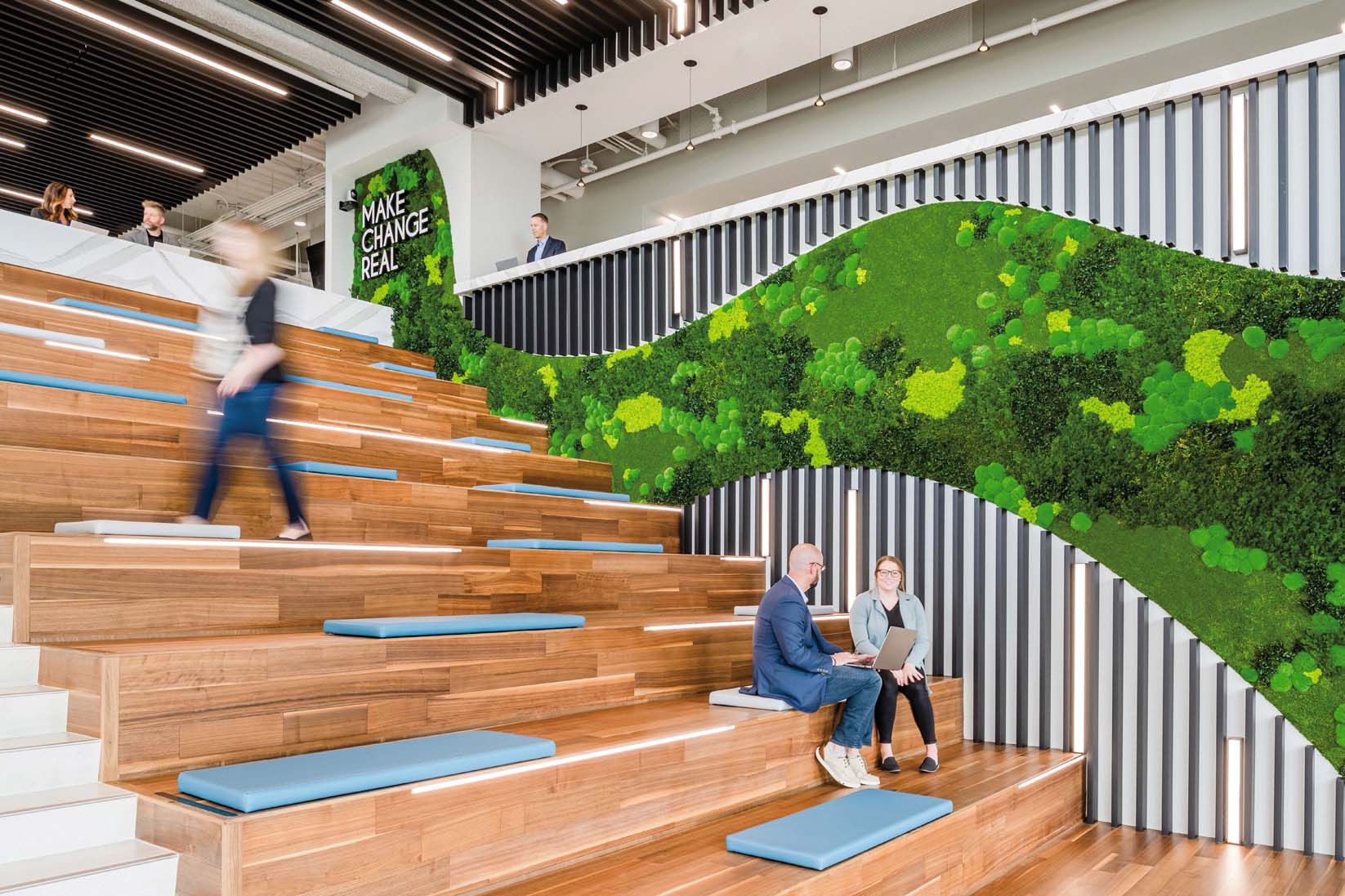
In sensory-conscious environments, material specification extends beyond appearance. Visual consistency, predictable performance, indoor air quality, maintenance activity, material transparency, and fire performance all contribute to how a product functions within the broader environment.Preserved botanical installations provide authentic natural materiality while maintaining a consistent appearance without seasonal growth, wilting, or routine watering. This stability is particularly relevant where predictability is a design objective. Unlike living systems, preserved botanicals do not introduce ongoing growth, seasonal change, irrigation, or routine horticultural activity into occupied environments.Garden on the Wall® further supports specification through third-party material-health, emissions, environmental, and fire-performance documentation—allowing design teams to evaluate the system on documented characteristics rather than assumed neurological outcomes.MATERIAL + PERFORMANCE CREDENTIALSHPD v3.0 — Detailed material-health and ingredient disclosure.
CDPH SECTION 01350 — Whole-system VOC emissions compliance.
DECLARE LABEL — Red List Free material transparency.
ENVIRONMENTAL PRODUCT DECLARATION — Published environmental impact documentation.
ASTM E84 CLASS A — Complete-system fire-performance documentation.
NO IRRIGATION — No routine watering, soil, or horticultural care.
Designing for How People Experience Space
Transportation environments have traditionally been optimized around movement: process passengers efficiently, communicate information clearly, maintain safety and security, and minimize disruption.
The next generation of aviation and transportation design must address another dimension of performance:How do people experience the journey?
Travel places passengers under a distinctive combination of psychological, sensory, and cognitive pressures. Time constraints, crowds, security procedures, noise, visual complexity, unfamiliar environments, disrupted routines, prolonged waiting, and uncertainty continuously compete for attention.
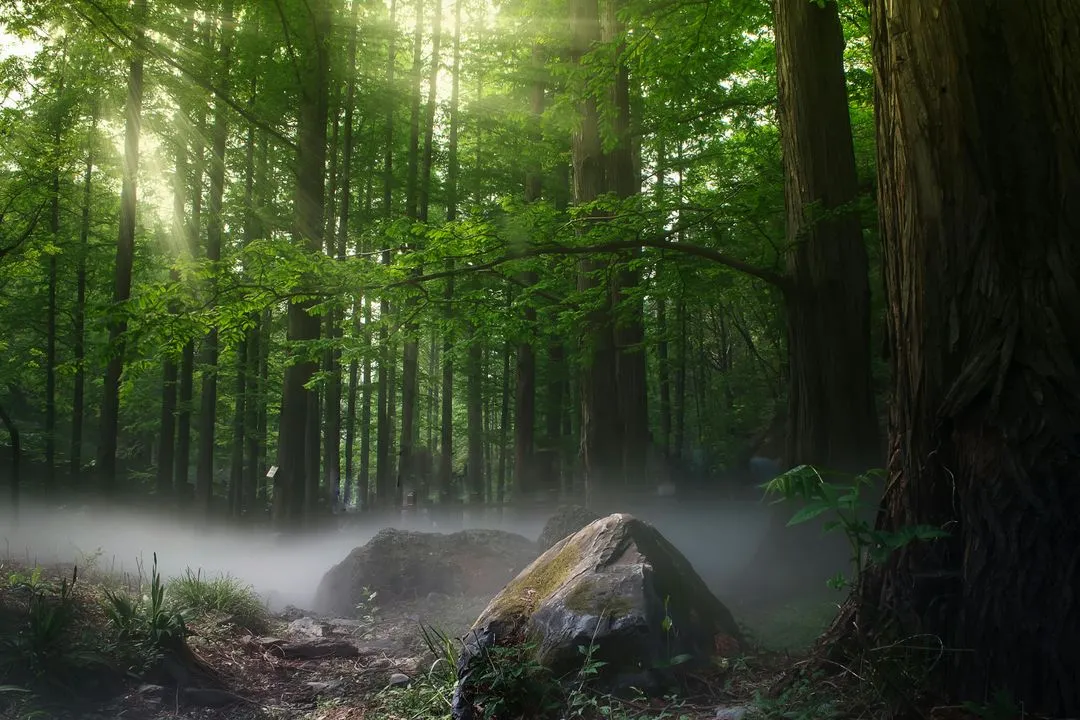
Biophilic design introduces restorative environmental cues into that experience. Natural patterns, textureCommercial interiors have traditionally been designed around efficiency, density, aesthetics, and standardized assumptions about occupant comfort. Neuroinclusive design introduces another dimension: How does the environment feel to someone who processes sensory information differently?For neurodivergent occupants, noise, visual movement, artificial lighting, busy patterns, unpredictable stimuli, and limited opportunities for retreat can create cumulative sensory strain.Research identifies sensory quality, intelligibility, and predictability as central factors in designing built environments for autistic people. Additional research indicates that neurodivergent and neurotypical occupants alike can prefer private, sensory-friendly spaces with access to natural light.Biophilic design is particularly relevant because it can operate as passive support. Unlike an accommodation that must be requested, approved, or activated, a thoughtfully designed nature-integrated environment is continuously available. It does not require occupants to disclose a diagnosis or identify themselves as needing support.That does not mean biophilia replaces acoustic control, appropriate lighting, sensory zoning, refuge spaces, clear wayfinding, or occupant choice. The strongest neuroinclusive environments combine these strategies.Preserved botanical installations contribute one specific dimension: stable, authentic natural materiality within a broader sensory-conscious environment.THE SENSORY DATA
15–20% NEURODIVERGENT — Neuroinclusive design addresses a substantial occupant population.
77% SOUND — Acoustic conditions should be a primary design consideration.
62% VISUAL — Reduce visual overload and provide calmer visual fields.
3 CORE NEEDS — Prioritize sensory quality, intelligibility, and predictability.A DIFFERENT APPROACH TO INCLUSION
Support That Doesn't Have to Be RequestedA thoughtfully designed nature-integrated environment can provide restorative opportunities continuously. This is passive support: an environmental baseline that is continuously available, requires no disclosure, and singles no one out.FROM PRINCIPLE TO PLACE
A Broader Neuroinclusive StrategyPreserved botanical installations work most credibly as one component within an environment that also considers acoustics, lighting, spatial choice, refuge, wayfinding, occupant control, and biophilic design.s, materials, and authentic connections to nature can provide visual relief from highly engineered surroundings while contributing to environments that feel calmer, more welcoming, and more human.
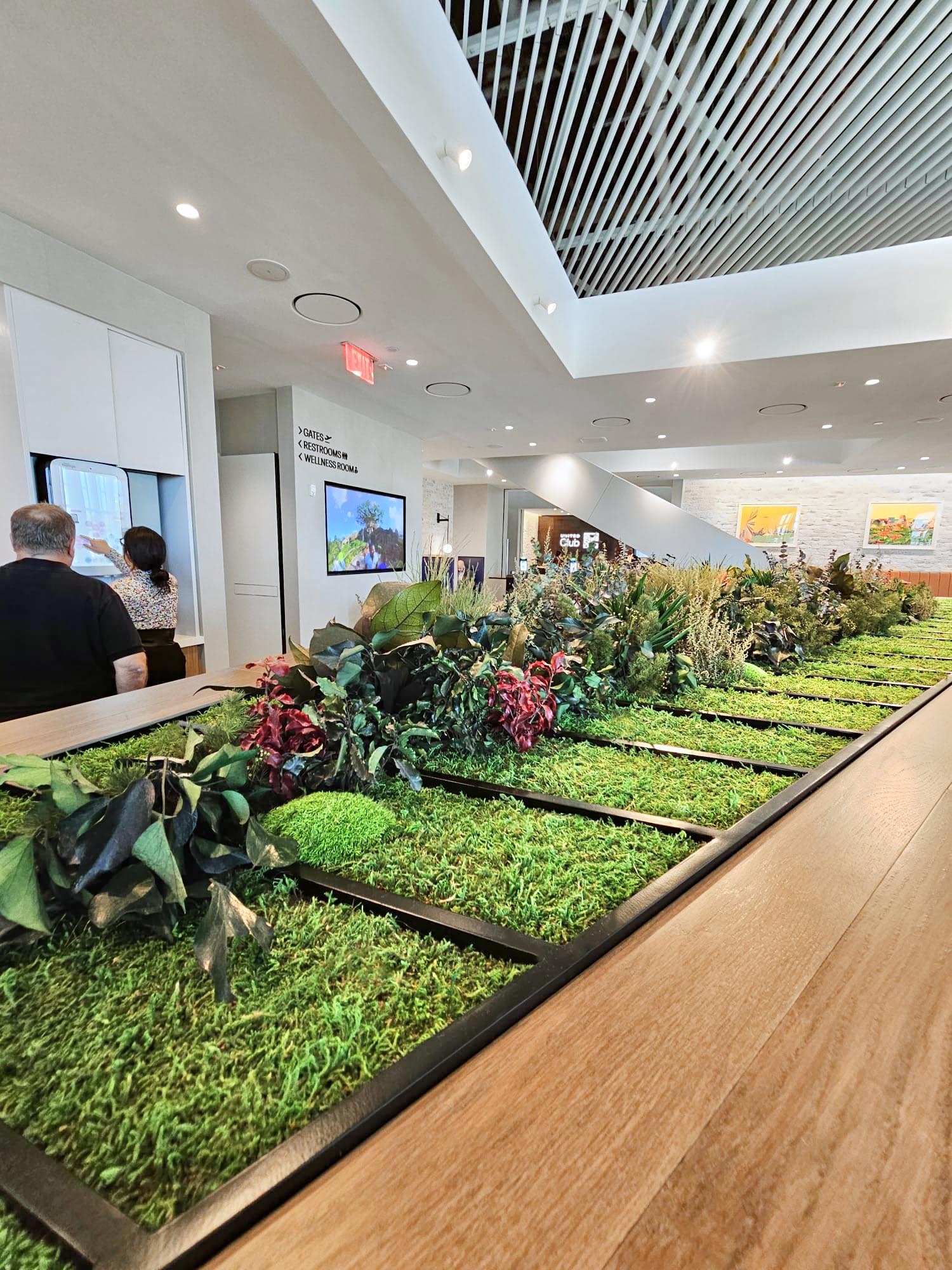
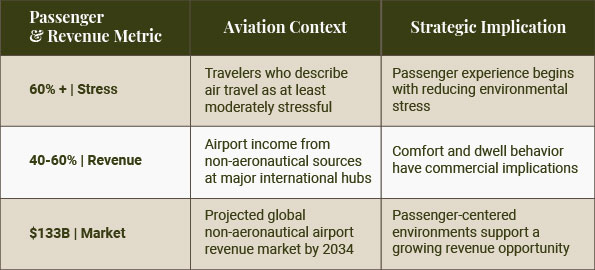
The opportunity extends beyond passenger well-being. Environmental quality can influence how people perceive waiting, navigate and engage with a space, experience lounges and concessions, and form impressions of an airport, station, transit system, or destination.
Transportation infrastructure should do more than move people from one point to another.It should support people throughout the journey.
Explore the research and learn how evidence-based biophilic design can support passenger well-being, cognitive restoration, experience, and operational performance in Beyond the Gate: The Case for Biophilic Design in Aviation & Transportation Environments.