
The Cost of Trust: Biophilic Design as Fiduciary and Public Trust Infrastructure
Government buildings carry a responsibility that extends beyond functionality. They must serve diverse populations, support public employees, maintain safe and accessible environments, and demonstrate responsible use of public resources.
From civic offices and administrative facilities to public service centers and government workplaces, the physical environment influences how people experience public institutions. Evidence-informed biophilic design offers an approach to creating more welcoming spaces while addressing long-term maintenance, material safety, and procurement accountability.
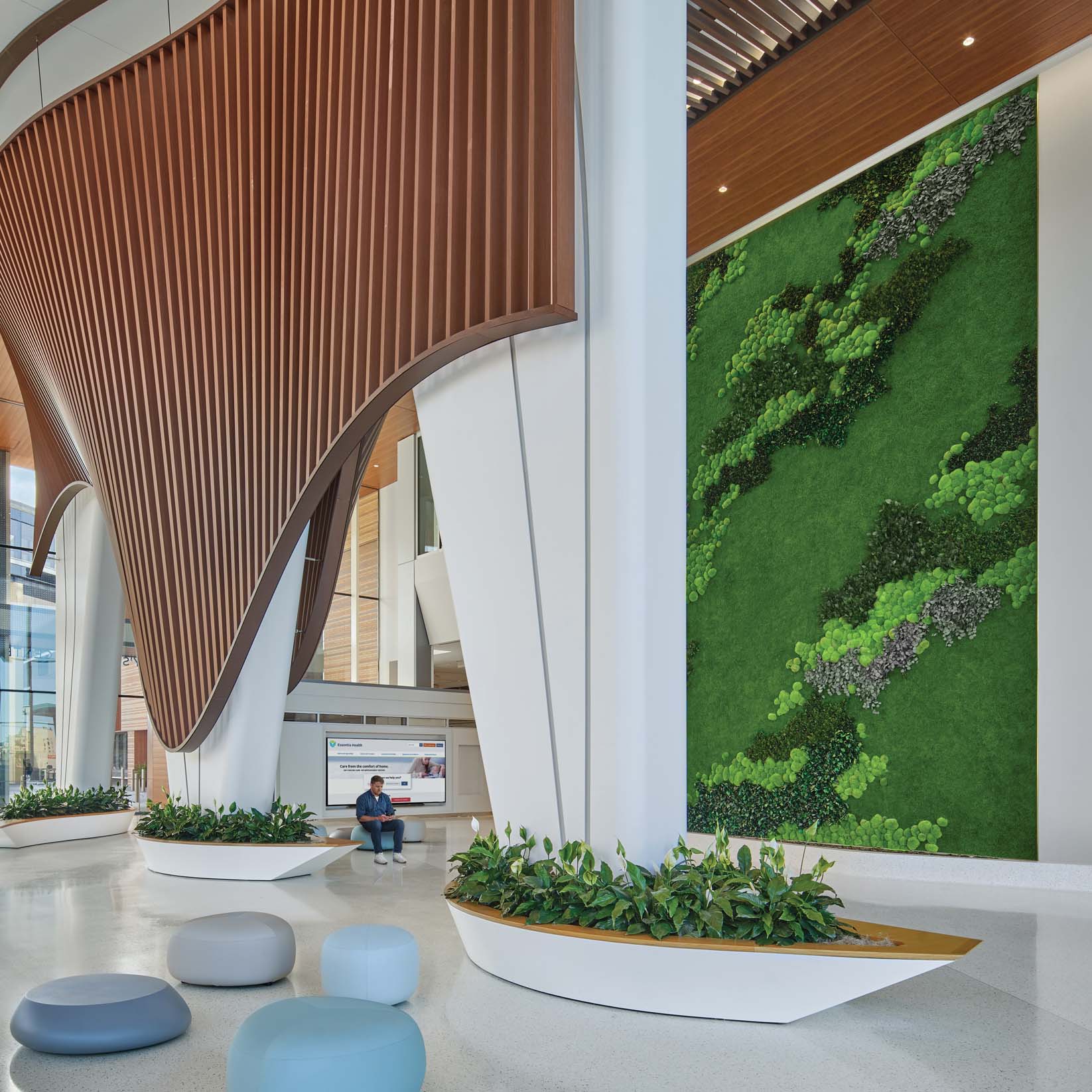
The Public Value: Where Environment Meets Institutional Trust
For many citizens, their most direct experience with government occurs inside a public building. Waiting areas, service counters, corridors, and administrative offices shape perceptions of professionalism, care, and institutional competence. Research on procedural justice identifies respectful treatment and perceived fairness as important influences on trust in public institutions. Environmental research also connects natural surroundings with stress reduction and more positive interpersonal perceptions. For government agencies, investing in the quality of public-facing environments offers an opportunity to support more dignified experiences while reinforcing the responsibility to serve every visitor.


The Science of Stress, Trust, and Public Experience
Public service environments often accommodate people experiencing uncertainty, frustration, or emotional stress. The design of these spaces can influence comfort and the conditions in which interactions occur. A 2024 series of six studies involving 1,622 participants found that contact with nature increased perceptions of warmth and humanness in others. Additional research involving 2,440 U.S. residents identified an association between neighborhood greenery, civic engagement, and trust across social groups. These findings provide relevant evidence for designing calmer, more welcoming public environments, although they do not directly measure the effect of preserved gardens on trust in government agencies.
Designing Public Environments for People and Accountability
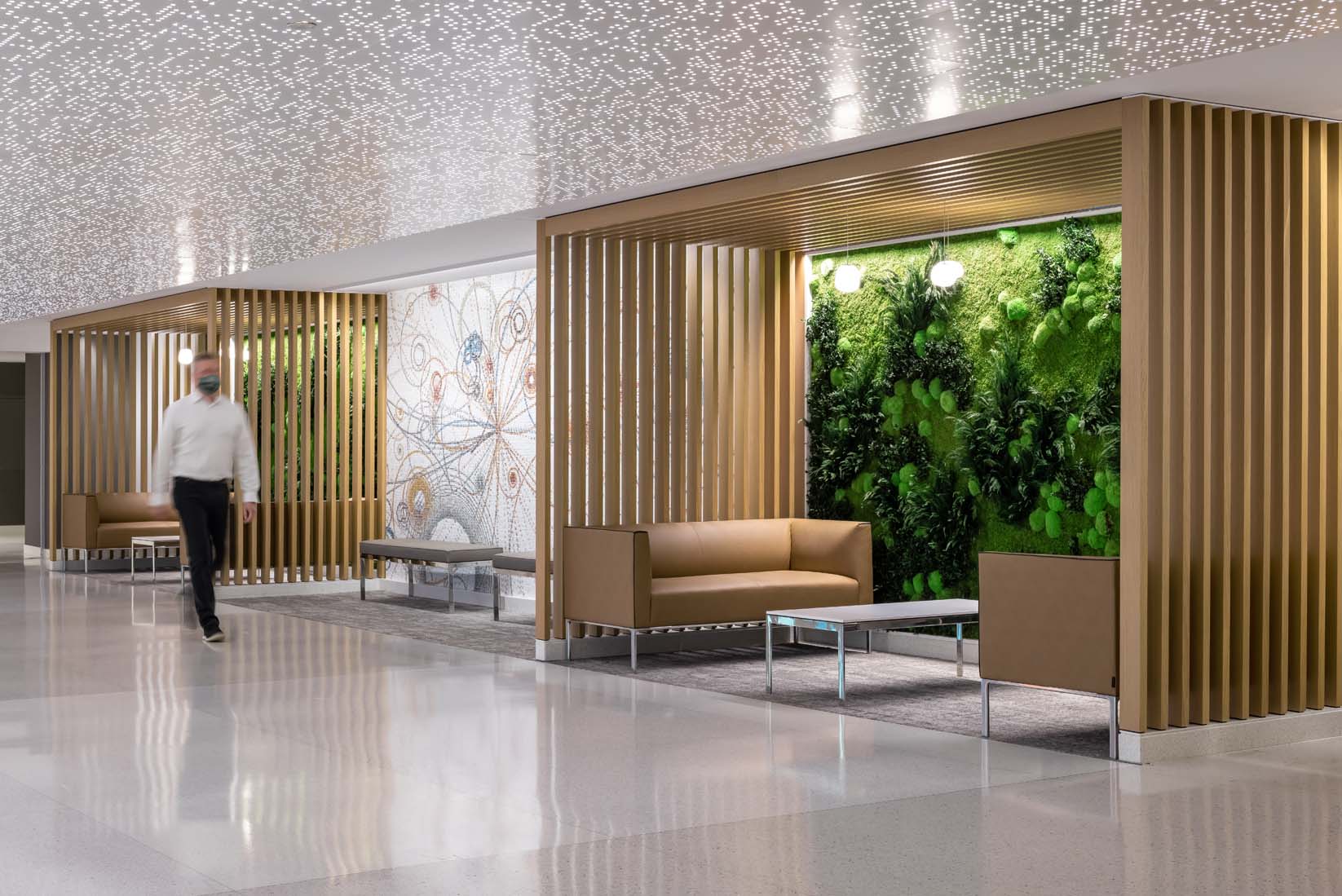
Government facilities must accommodate high visitor volumes, diverse accessibility requirements, security considerations, and constrained maintenance resources. Biophilic design can be integrated into reception areas, waiting rooms, civic gathering spaces, administrative corridors, and employee environments. Thoughtful placement can create restorative visual focal points while preserving circulation, accessibility, and operational requirements. Garden on the Wall® preserved botanical installations introduce authentic natural materials without irrigation, soil, or routine horticultural maintenance. Material selection, installation height, and protection from direct contact should be coordinated with the facility's security, accessibility, and maintenance requirements.
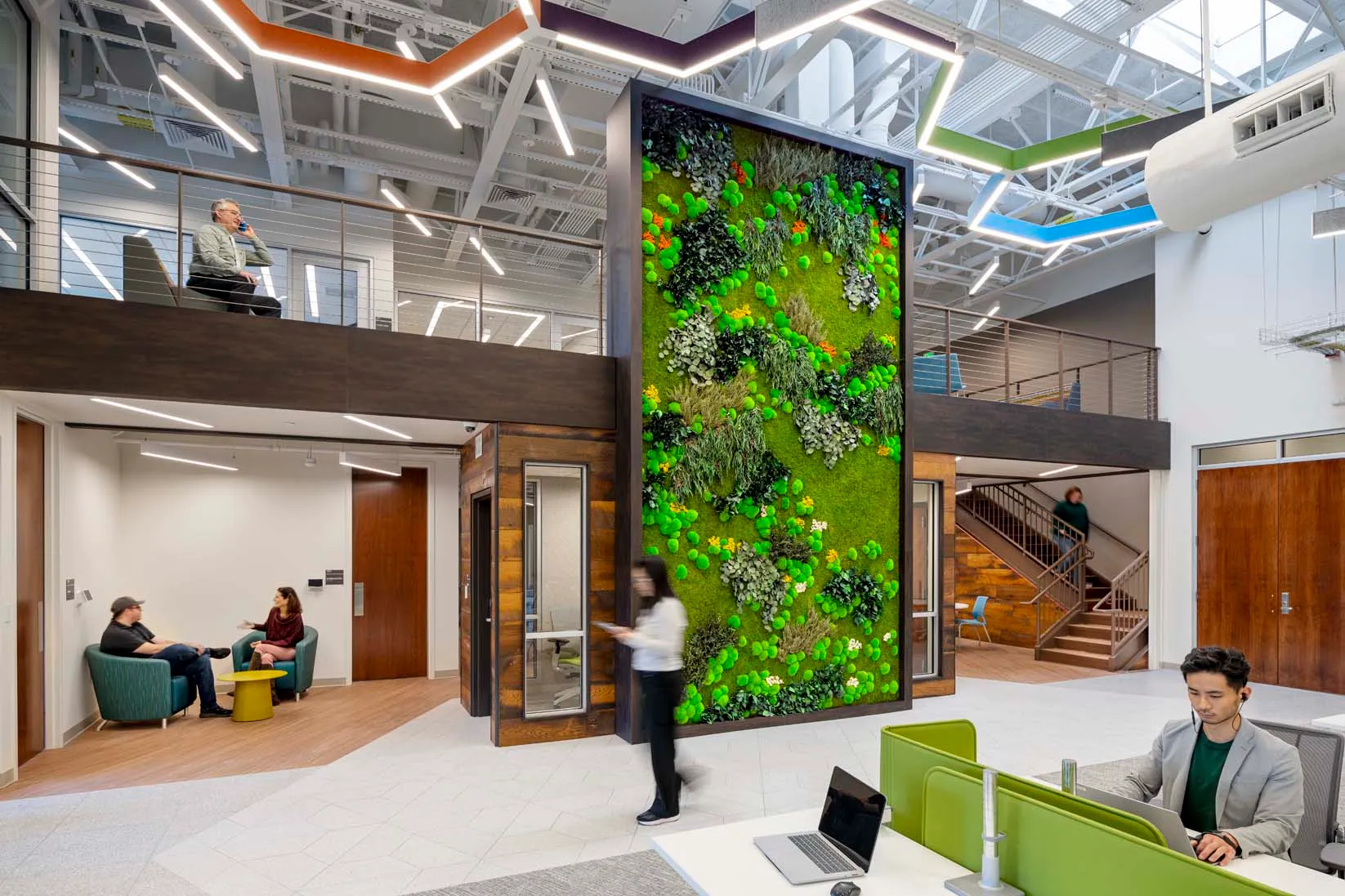
Responsible Design. Defensible Investment.
Public-sector specification requires more than an attractive finished environment. Materials must demonstrate compliance, long-term performance, and responsible use of public funds. Garden on the Wall® provides third-party verified material-health, environmental, and fire-performance documentation, including whole-system testing and published environmental declarations. With a 7-year warranty and an expected lifecycle of 20+ years under appropriate conditions, preserved botanical installations offer a capital investment with limited ongoing horticultural maintenance requirements. For procurement teams and facility managers, this supports evaluation based on total cost of ownership rather than initial acquisition cost alone.
Access the Full White Paper
The Cost of Trust examines the relationship between public environments, institutional trust, fiscal stewardship, and responsible material specification. Explore the research connecting environmental quality with human behavior, perceptions of fairness, and the long-term operational considerations shaping government facilities.