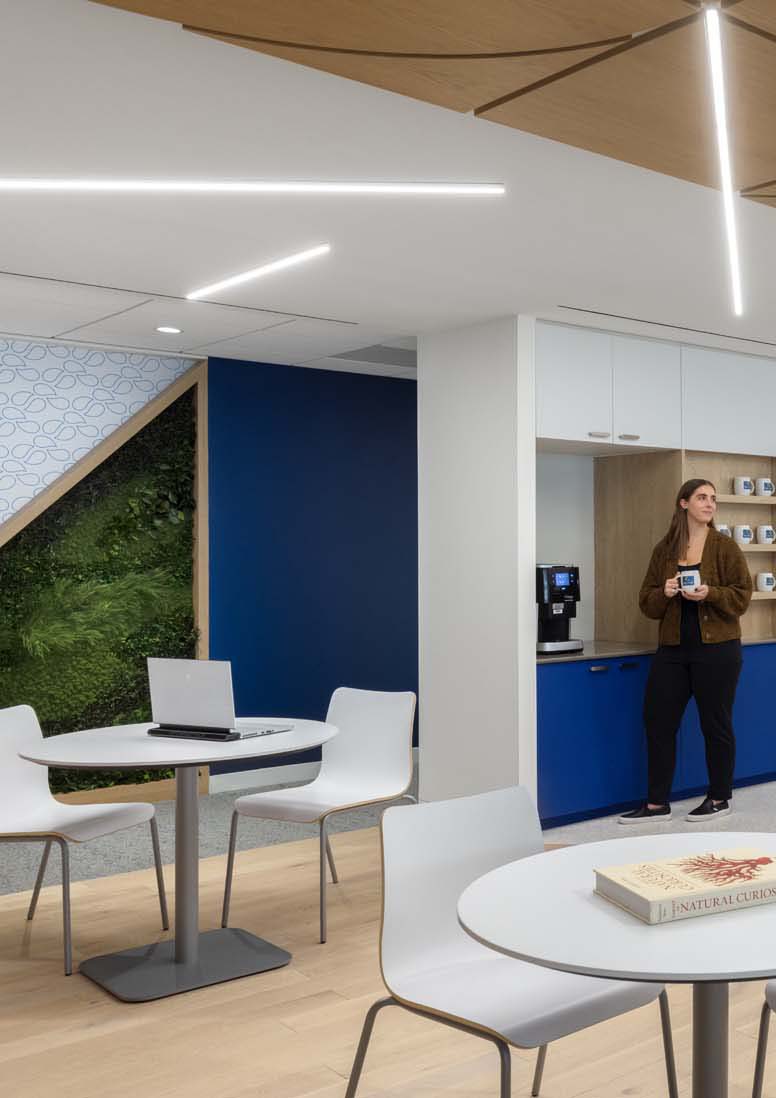
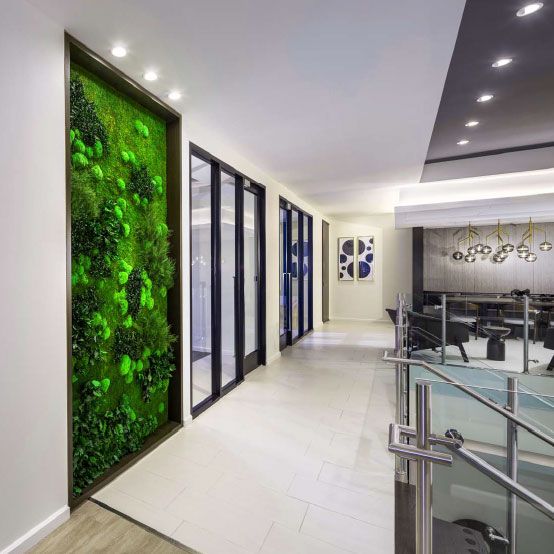
The Hidden Risks of Faux Plants, Artificial Greenery and Artificial Plant Walls
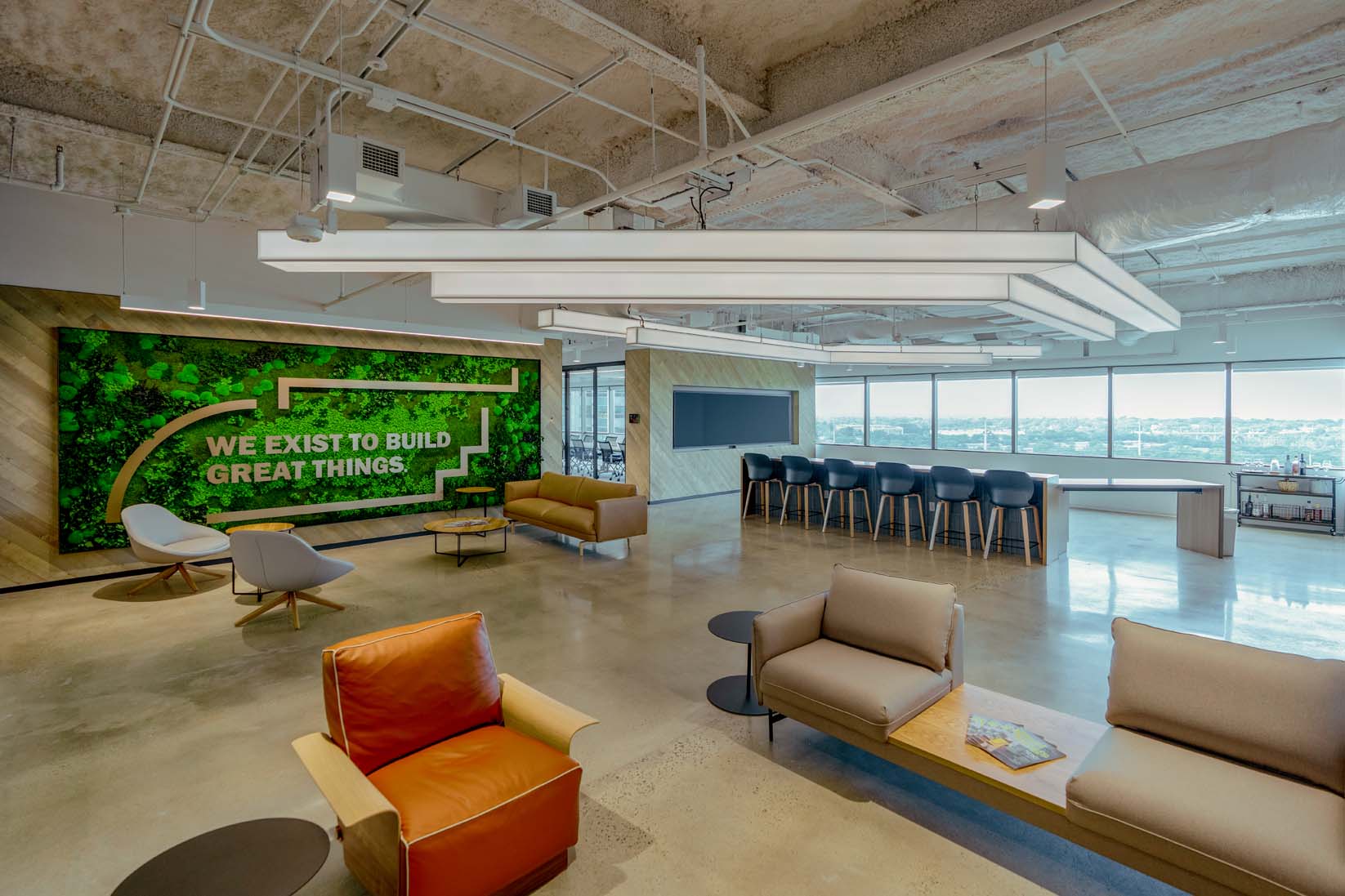
Key Takeaways Before You Read the Full Article
30 Second Executive Summary
This article reveals the overlooked health and environmental risks behind faux plants and artificial green walls that are often misrepresented as “biophilic design.” It exposes how synthetic greenery releases toxins, traps dust, and delivers none of the psychological or physiological benefits that authentic nature provides—while presenting preserved gardens as the safe, sustainable alternative for true Biophilic Design.
⚠️ When Biophilia Is Misused:
Artificial greenery only mimics nature’s appearance, not its restorative impact. Genuine Biophilic Design requires real or preserved natural elements to promote well-being.
🏥 Health Risks in Sensitive Environments:
In workplaces, healthcare, and senior living settings, faux plants collect dust, off-gas VOCs, and compromise Indoor Environmental Quality posing risks to respiratory and immune health.
☣️ Chemical Off-Gassing:
PVC, PE, PFAS, and flame retardants in artificial greenery release harmful compounds that degrade air quality and accumulate in occupants’ systems over time.
⚡ Electrostatic Dust Buildup:
Plastic-based greenery attracts airborne dust and particulates through static charge, leading to persistent contamination and diminished air cleanliness.
🚫 The Greenwashing Trap:
Marketing phrases like “eco-friendly” or “biophilic décor” disguise petrochemical products as sustainable. Faux greenery made from plastics and PFAS cannot align with wellness or environmental goals.
🧠 A False Sense of Nature:
Neuroscientific research shows our brains detect when materials are fake reducing comfort, mood, and perceived quality. Faux plants fail to evoke the calming response real nature provides.
🌿 Authenticity and Safety Through Preserved Nature:
Preserved gardens and moss walls crafted from real botanical materials offer genuine sensory engagement, material transparency, and zero-maintenance longevity without chemical hazards.
✨ Designing with Integrity:
True Biophilic Design honors human health and environmental responsibility. Reject plastic imitations and specify preserved natural installations for authentic, sustainable, and health-driven spaces.
Ready to uncover why authentic nature not synthetic imitation is the foundation of true Biophilic Design?
The full article reveals the science, material transparency, and design integrity behind choosing preserved nature over plastic imitation.
When "Biophilic Design" Is Used the Wrong Way
With Biophilia becoming a defining concept in contemporary architecture and interior design, many vendors are rushing to align their products with the trend. Faux plant and artificial greenery providers now market faux plants and artificial green walls as biophilic design elements, promising a "natural" look with zero maintenance. Unfortunately, these claims mislead designers and clients alike, conflating synthetic imitation with authentic nature connection.
True Biophilic Design isn't about appearances - it's about physiological and psychological responses to genuine natural materials and patterns. Artificial greenery, no matter how realistic, cannot replicate the multisensory and neuroaesthetics benefits of authentic nature (living or preserved botanical elements). In fact, introducing faux plants or artificial greenery into interior environments undermines the core goal of Biophilic Design: to foster health, restoration, and connection through authentic interaction with nature.
Why Faux Plant Walls or Artificial Greenery Have No Place in Workplaces, Healthcare, or Senior Living
One of the most concerning trends today is the installation of faux greenery in workplaces, healthcare facilities, airport terminals, and senior living environments - spaces where Indoor Environmental Quality directly impacts occupant health and recovery. Artificial plants are promoted as "low-maintenance, cost-effective" alternatives, yet they introduce chemical emissions, particulate buildup, and aesthetic degradation that harm these sensitive environments.
In healthcare and senior living settings, where occupants may have compromised immune systems or respiratory conditions, faux plants are a definitive "No-No." They collect dust, harbor microbial contaminants, and degrade air quality - all without offering any restorative benefit. In workplaces, they silently contradict corporate wellness initiatives by diminishing both perceived and measurable environmental quality. In airport terminals, or aviation projects, these faux plants start leaching VOC to the environment, for higher concentrations of contaminants in indoor spaces.
Toxic Compounds and Chemical Off-Gassing
Beyond visible dust accumulation, faux plants introduce chemical hazards that linger invisibly in indoor air. Plastics like PVC and PE are often softened with phthalate plasticizers and stabilized with PFAS-based additives to resist UV fading. Both chemical groups are associated with endocrine disruption, respiratory irritation, and long-term toxicity. When exposed to heat or sunlight, these materials off-gas volatile organic compounds (VOCs) and semi-volatile organic compounds (SVOCs), directly affect air quality.
Post Occupancy VOC Tests reveal that artificial greenery elements (synthetic turf being the worst) release considerable amounts of VOCs into environments. Faux plants, and artificial greenery marketed as "UV-Protected" are found to have the highest amount of PFAS accumulation, causing leaching into the environment and putting occupants under potential harm.
Many faux greenery and artificial plant walls that are marketed as "flame-retardant", contain halogenated fire suppressants, which release toxic residues or persist in dust. The combination of petrochemical origins, chemical additives, and static dust buildup turns these installations into sources of low-level indoor pollution - completely incompatible with any project prioritizing sustainability, wellness, or material health transparency.
The Electrostatic Problem: Dust Magnets in Disguise
Made from petrochemical-derived materials such as PVC, PE, and PP, faux plants are inherently electrostatic. Their surfaces generate static charges that attract airborne dust and particulates, creating a layer of grime that builds rapidly. The result is a dull, sticky sheen that ruins visual appeal and becomes unpleasant to touch or clean.
In open-plan offices or healthcare facilities with controlled ventilation, these electrostatic surfaces continually pull dust from the air - forming what facility managers call "static dust blankets." As particles bond together, they create a gray, tacky film that's nearly impossible to remove completely. This accumulation contributes to indoor pollutant reservoirs, compromising both cleanliness and occupant comfort.
The Greenwashing Trap: When "Eco-Friendly" Faux Greenery Misleads Designers
Some faux plant suppliers promote synthetic greenery as part of "sustainable biophilic design," claiming it supports wellness and suggesting its use in patient rooms, workplaces, and hospitality settings. These assertions are deeply misleading, if not manipulative.
There is nothing sustainable or safe about faux foliage derived from petroleum byproducts, stabilized with PFAS, and containing flame retardants. Studies show artificial turf contains carcinogenic PFAS materials used indoor environments cause build up in our cells and ecosystems. It's reasonable to conclude these faux plant walls, faux greenery, and artificial plant panels which have the same chemical make-up have similar effects on human health and environment.
Marketing terms like "eco-friendly" and "sustainable décor" are weaponized to sell non-biodegradable products that undermine IEQ. The idea that faux greenery creates a "calming effect" similar to natural environments ignores decades of evidence showing humans only experience restorative benefits from authentic natural stimuli.
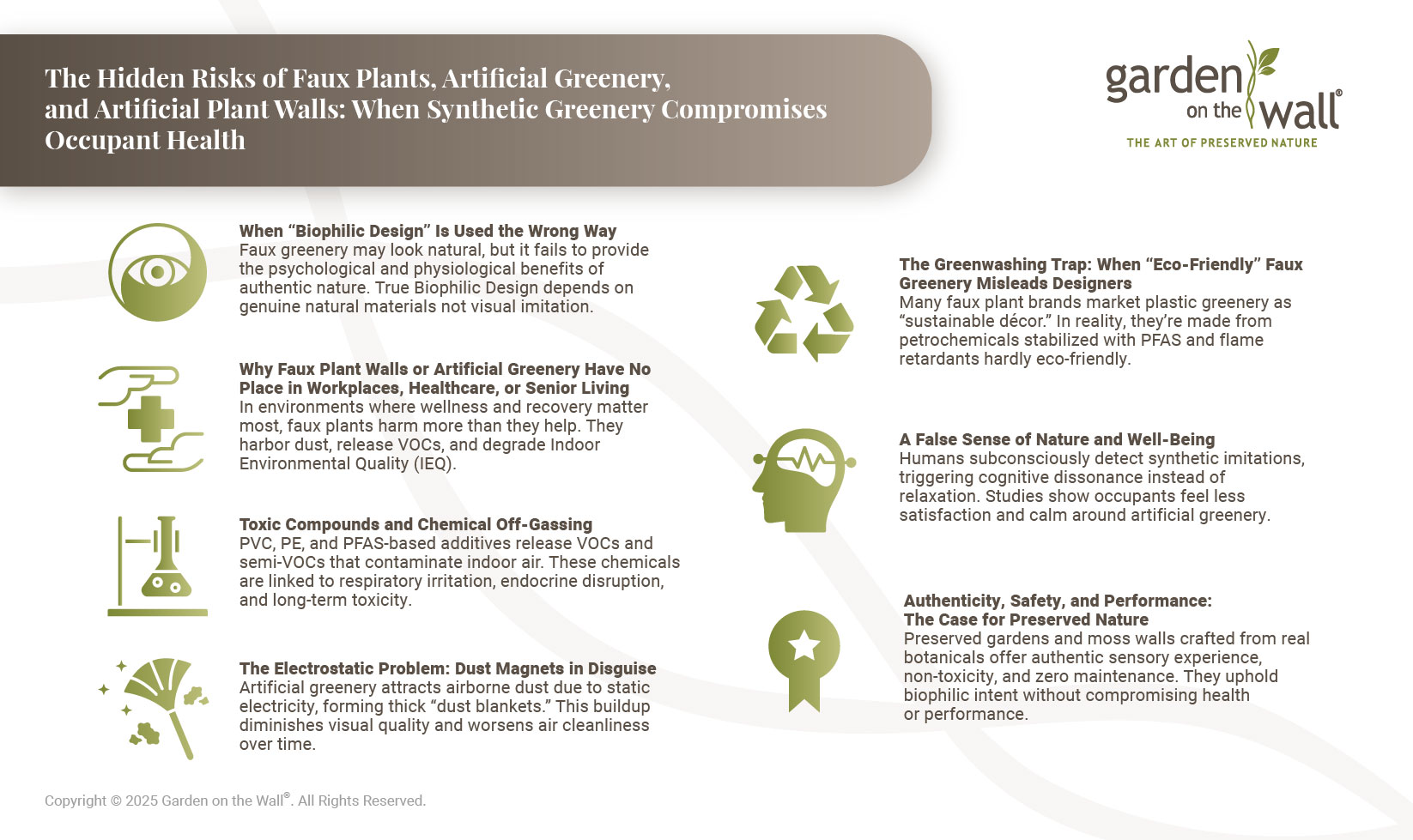
A False Sense of Nature and Well-Being
Even if faux greenery looks convincing superficially – which they generally don’t -, our brains subconsciously detect its artificiality - with psychological consequences. Studies in neuroaesthetics show our brains respond differently to authentic natural materials versus synthetic imitations. While genuine greenery (living or preserved ones) triggers relaxation, attentional restoration, and mood improvement, fake greenery, artificial plant walls, and faux plants in general often evoke cognitive dissonance.
This disconnect means faux plants fail to deliver the health-enhancing benefits biophilic design promises. In workplace and healthcare studies, occupants reported lower satisfaction levels in spaces containing artificial plants compared to those with authentic greenery or none at all.
Authenticity, Safety, and Performance: The Case for Preserved Nature
If Biophilia, Sustainability, and Occupant Health are genuine priorities, the solution lies in authentic nature elements; living plants or preserved moss & foliage - not imitation. While living nature seems to fit to the bill for Biophilia, due to its maintenance challenges, the humidity load they add to environment, and never ending cost of upkeep, they are not optimal solution either.
Preserved gardens, moss walls, and foliage created from real plants offer a maintenance-free, non-toxic alternative that perfectly aligns with biophilic design intent and offer the optimal solution. These Biophilic installations crafted with preserved botanical elements preserve the biological structure and sensory essence of natural foliage - delivering visual, tactile, and emotional authenticity synthetic replicas can never achieve.
However, it's crucial to use transparent, materiality-compliant suppliers of preserved plant & moss elements while specifying those products for an indoor space. Since this market is full of vendors with zero third-party testing and loads of greenwashing claims, design professionals must inquire about third-party testing and proven credentials from preserved garden/moss wall providers.
Garden on the Wall® has led the preserved gardens movement with unmatched expertise - over 1,880 installations spanning 181,000 sq ft across corporate, healthcare, hospitality, and senior living environments, working with over 1100 design firms. Every installation lasts 10-12 years (extendable to 20+), supported by a 7-year warranty and verified through HPD v2.3, Declare Red List Free, ASTM E-84, and 100% Bio-Based certifications. Combined with the lowest total cost of ownership and complete material transparency, GOTW remains the gold standard for sustainable, health-driven biophilic design.
Interior design professionals create long-term liability with their specifications. It's essential to scrutinize every claim from preserved garden and moss wall providers, from installation volumes to sustainability credentials. With this scope is quite open to greenwashing, it is also open to claims about materiality, transparency, or even the number of square feet of garden panels completed by the suppliers, while their actual quantities are less than half of what’s claimed.
Conclusion: A Call for Design Integrity
As design professionals shaping the environments where people work, heal, and live, it's crucial to understand that faux plants are not harmless decorative elements - they are petrochemical products that actively degrade indoor environmental quality through VOC emissions, PFAS leaching, and electrostatic dust accumulation. When artificial greenery is specified in the name of "biophilic design," we not only fail to deliver the proven neurological and physiological benefits of authentic nature, but we actively introduce health hazards into spaces meant to support human wellbeing.
The choice is clear: reject the greenwashing, question suppliers who promote plastic (and other petrochemical derivatives) as "eco-friendly," and commit to authentic solutions that honor both human health and environmental integrity. Your specifications today determine the air quality, cognitive performance, and wellness outcomes of countless occupants tomorrow - choose wisely, choose authentically, choose nature (living or preserved) over plastic imitation that would create harm and liability in long run.
For more information on this subject, read this article: Why Faux Greenery is the Opposite of Biophillia and Sustainability and other related information, please visit our website: www.gardenonthewall.com