Seven Critical Takeaways from Interior Design Magazine’s C-Suite Roundtable on “Return to Office” Strategy
Key Takeaways Before You Read the Full Article:
30 Second Executive Summary
Interior Design Magazine’s C-Suite Roundtable (Sept 2025) brought together design, development, and corporate leaders to uncover what’s driving successful “Return to Office” strategies. The discussion revealed that human connection, creativity, and environmental experience not policy are what truly bring employees back.
🚗 Earning the Commute: Offices must now justify their purpose through experiential quality. Preserved gardens and draping greenery create compelling, restorative destinations that make time spent onsite feel valuable.
☕ Amenities as Workspaces: Lounges, cafés, and collaboration areas have become central to productivity. Biophilic installations enhance these zones by improving focus, creativity, and comfort without maintenance interruptions.
💡 Productivity Redefined: The modern workplace prioritizes creativity and collaboration over repetitive tasks. Nature-inspired elements like preserved moss walls foster cognitive restoration and strategic thinking.
👥 Cross-Generational Learning: Mentorship and skill exchange thrive in person. Biophilic design supports the psychological safety and calm that encourage connection across generations.
🏗️ Hybrid Flexibility: In a world of unpredictable attendance, preserved gardens deliver consistent visual and biophilic quality ideal for spaces with fluctuating occupancy.
🏢 Landlords as Experience Providers: Property owners are shifting toward hospitality-style amenity environments. Preserved botanical installations offer turnkey, maintenance-free impact that attracts and retains tenants.
🌿 The Office as Human Connector: The modern office’s core purpose is community. Biophilic spaces serve as catalysts for collaboration, conversation, and shared identity.
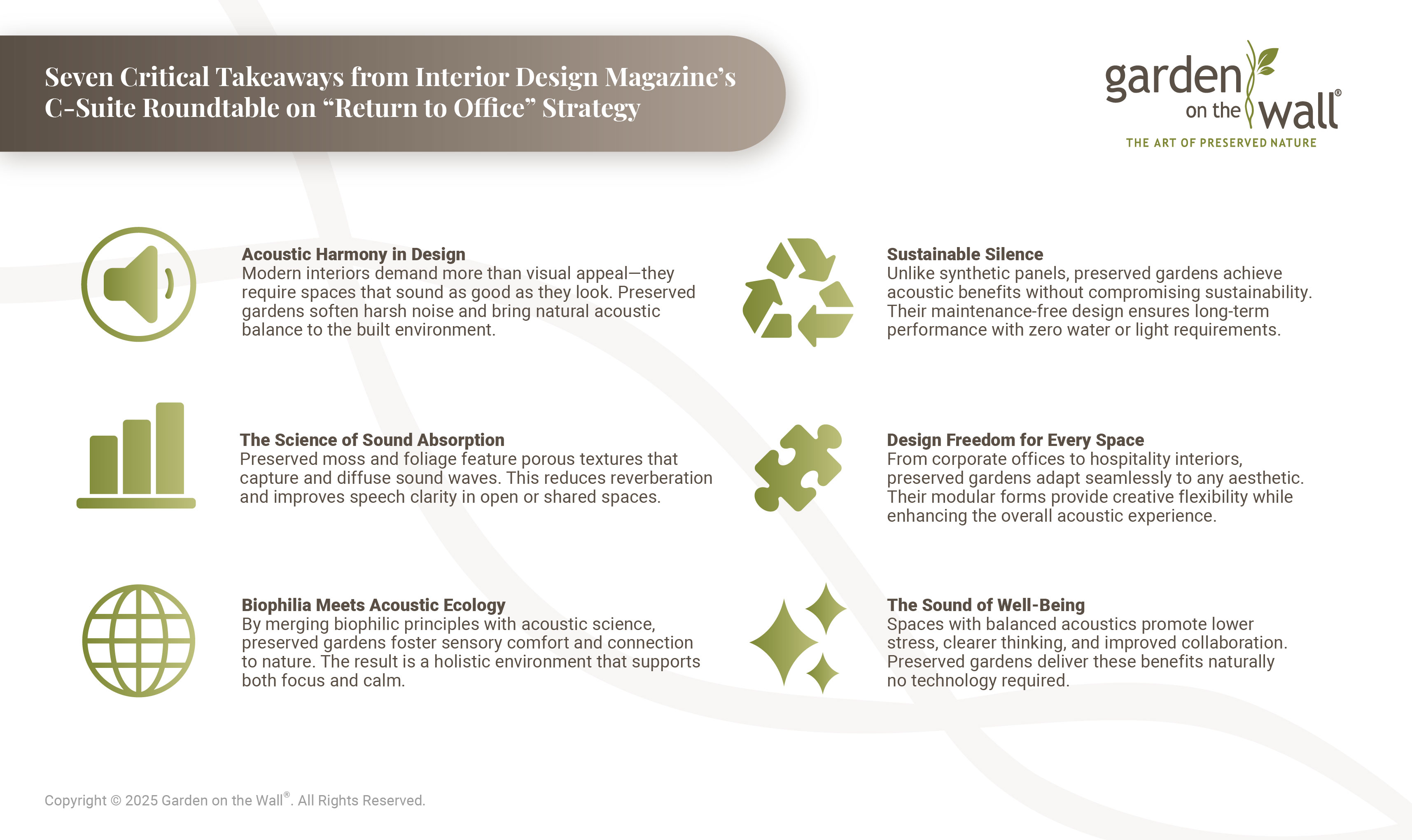
Ready to discover how nature-inspired design improves both acoustics and well-being? The complete article reveals how preserved gardens integrate sound absorption and sensory harmony.
Seven Critical Takeaways from Interior Design Magazine’s C-Suite Roundtable on “Return to Office” Strategy
A New Era for the Physical Workplace
In September 2025, Interior Design Magazine convened an influential C-Suite Roundtable bringing together top architects, designers, developers, landlords, and corporate executives to discuss one pressing question: how can workplaces evolve to meet the expectations of a hybrid, post-pandemic world? Moderated by Editor-in-Chief Cindy Allen, the discussion revealed that the “return to office” challenge is not about mandates it’s about meaning. Employees will return to environments that enrich their day, support their creativity, and nurture human connection. Here’s what the industry’s top voices identified as the new design imperatives for the workplace.
1. Workplaces Must Now “Earn the Commute”
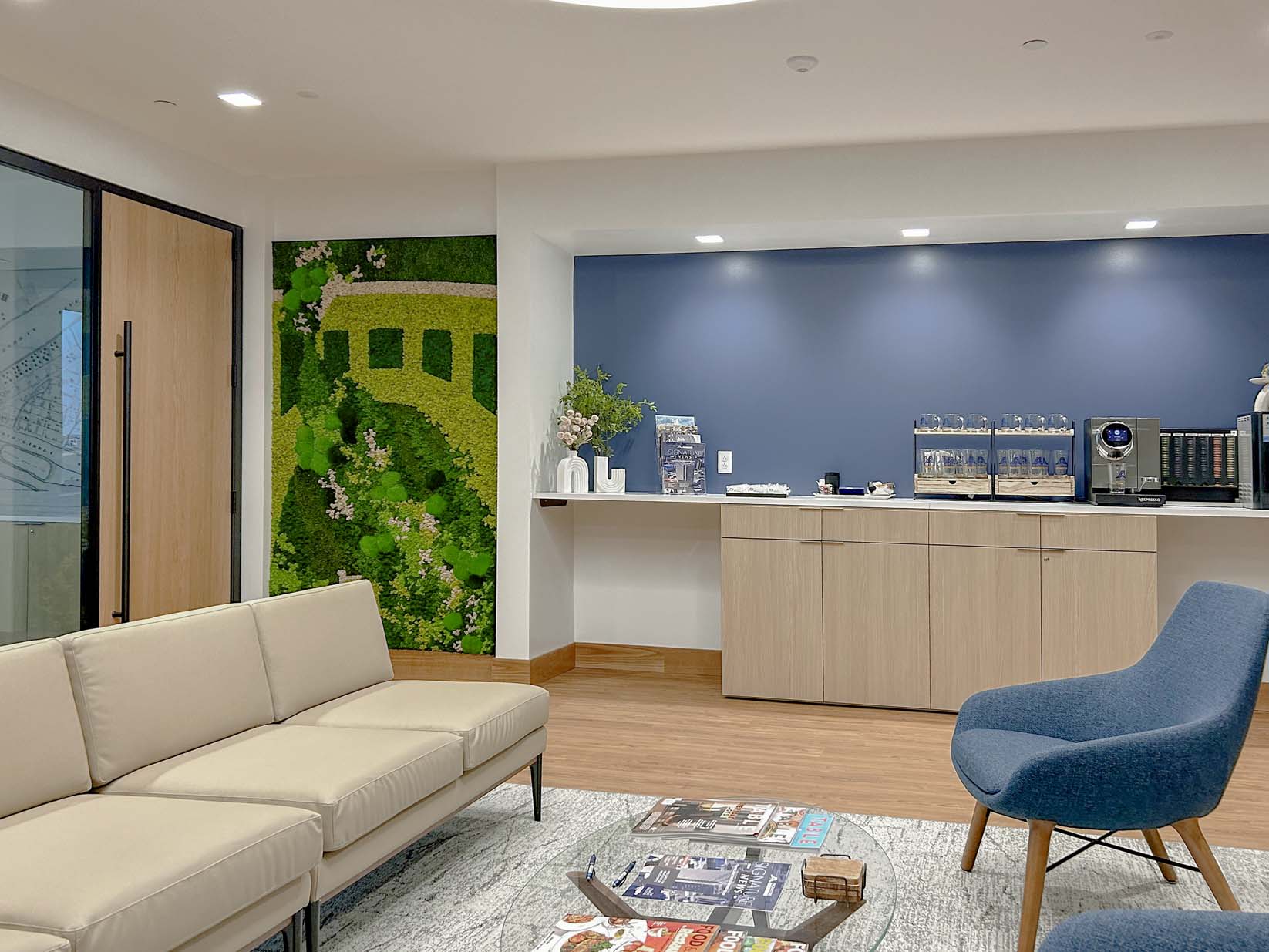
Employees no longer see commuting as a default part of work life. They weigh its financial, logistical, and personal costs against the quality of experience they’ll gain onsite. For companies, this means the office must now earn the commute through design, amenities, and atmosphere. Preserved biophilic installations help transform functional offices into destinations. Draping greenery and sculptural moss walls turn lobbies and communal zones into spaces of sensory relief and visual delight features that make employees want to be there. These natural focal points distinguish in-person work from the domestic backdrop of remote life, offering an elevated experience that justifies the trip.
2. Amenities Have Become the New Workspaces
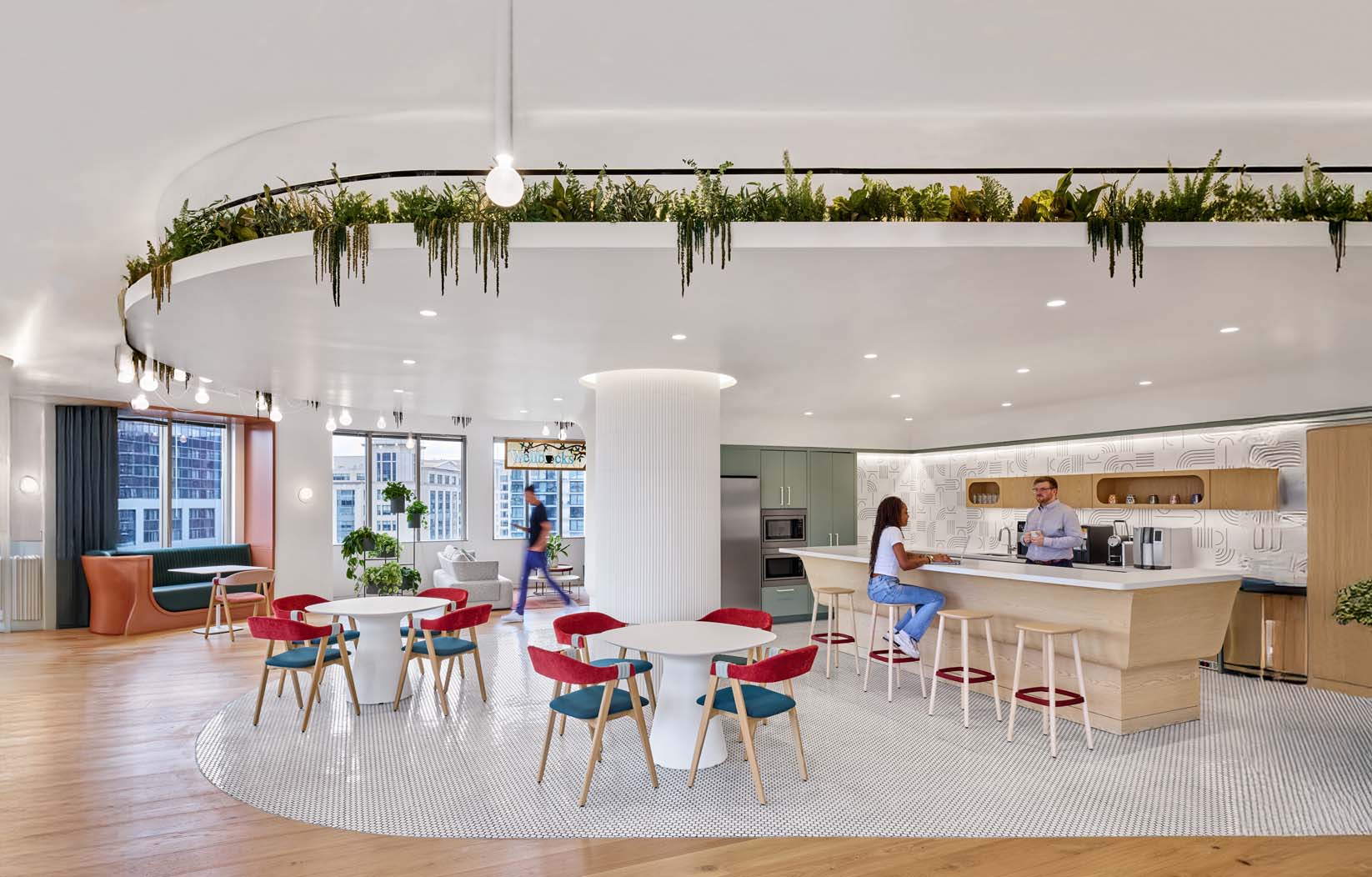
According to the roundtable, traditional amenity spaces are now the heart of the modern office. Lounges, cafés, and social hubs have evolved from occasional-use areas into the primary settings for collaboration and daily activity. However, many companies learned the hard way that trendy doesn’t always mean functional. Nap rooms sat empty, game areas gathered dust, and soft seating often discouraged productivity. The key, participants agreed, is to create amenity zones that are ergonomic, adaptable, and restorative. Preserved gardens and moss walls elevate these spaces by introducing calming natural textures that reduce cognitive fatigue. The result: multifunctional environments that support creativity and connection throughout the workday without the maintenance disruptions of live plants.
3. Productivity Now Means Creativity
In the hybrid era, productivity has been redefined. Employees no longer come to the office for repetitive or transactional work they come for collaboration, ideation, and strategic creation. This shift places new demands on workplace design. Spaces must stimulate creativity while reducing stress and digital fatigue. Research confirms that nature exposure restores attention and enhances cognitive performance. Preserved foliage installations particularly draping elements that engage peripheral vision create subtle yet powerful psychological effects. They help employees sustain focus and openness, turning the workplace into an environment for innovation rather than obligation.
4. Cross-Generational Learning Requires Physical Presence
Remote work fractured one of the most vital aspects of professional culture: informal mentorship and knowledge transfer. The roundtable emphasized that younger professionals often crave the in-person guidance and modeling that virtual tools can’t provide. At the same time, experienced team members gain fresh perspectives from digitally native peers. This reciprocal mentorship thrives in settings that feel safe, balanced, and welcoming. Preserved installations contribute to this atmosphere. Their organic textures reduce environmental stress, creating calm zones where meaningful exchanges can occur naturally. The result is a culture that values learning as much as performance a workplace that supports growth across generations.
5. Hybrid Work Demands Design Flexibility
One of the greatest logistical challenges facing organizations is attendance unpredictability. Designers now must create adaptable spaces that function equally well at full capacity or near-empty. Conference rooms, lounges, and collaborative hubs are increasingly modular and tech-integrated but they must also feel consistently alive. That’s where preserved botanical systems excel. Unlike living plants that depend on regular care or artificial greenery that fades over time, preserved foliage maintains its form and vibrancy regardless of usage fluctuations. It provides reliable beauty and biophilic benefit, creating consistency in an environment defined by change.
6. Landlords Are Becoming Experience Providers
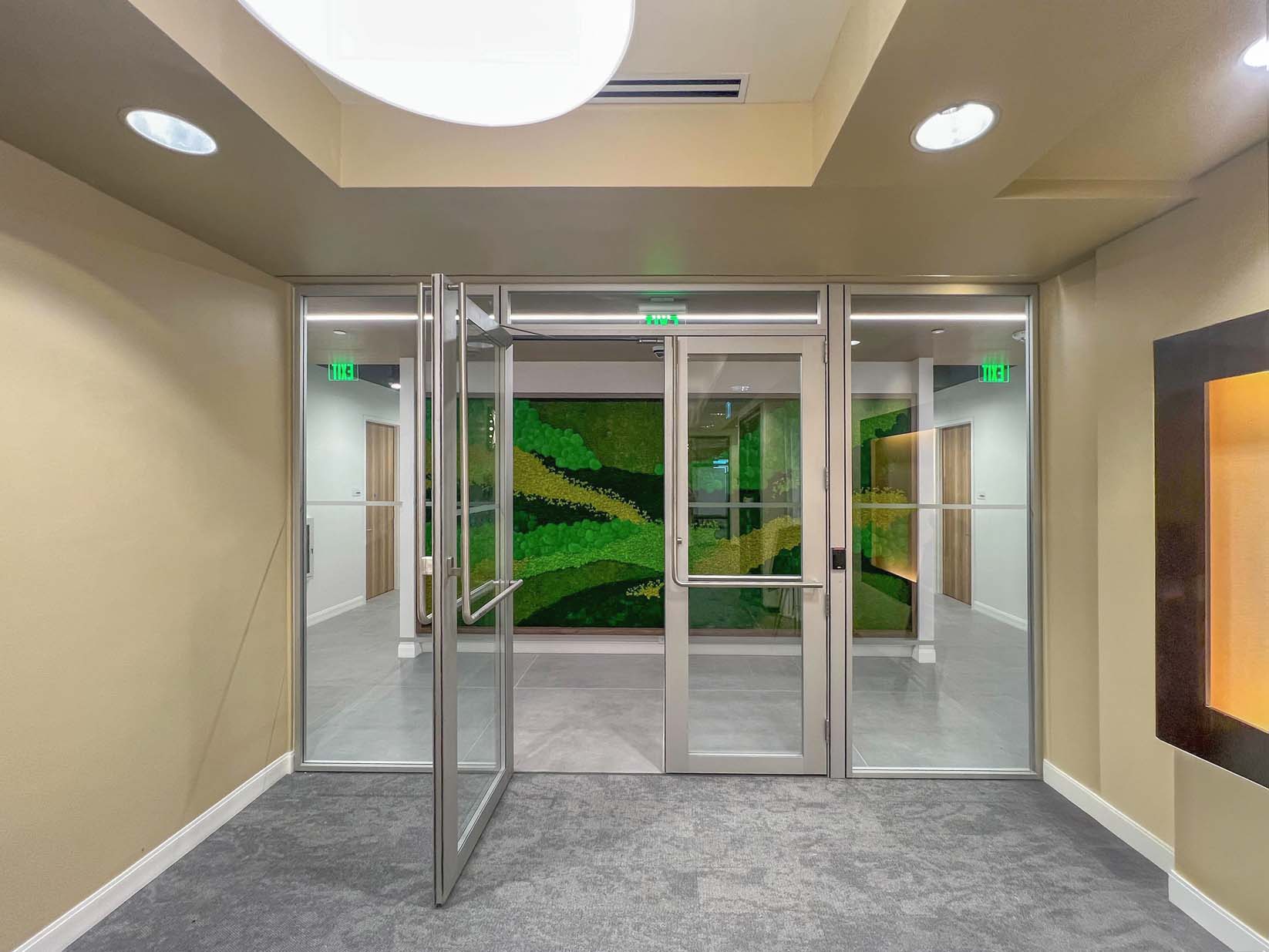
The role of landlords is evolving from space providers to experience curators. Forward-thinking property owners now deliver amenity-rich, hospitality-inspired buildings that enhance tenant well-being and retention. In this new model, preserved gardens and moss walls play a defining role. These turnkey biophilic features deliver enduring visual impact without plumbing, irrigation, or specialized maintenance making them ideal for shared lobbies and building-wide amenities. Garden on the Wall® continues to lead this transformation, with more than 1,880 installations globally, including projects for Microsoft, Amazon, and Google. Each system is backed by third-party testing, Class 1 fire ratings, and HPD v2.3 material transparency, ensuring measurable performance and specification confidence. These long-lifespan installations allow landlords to provide premium, nature-inspired experiences that differentiate properties while maintaining operational simplicity.
7. Human Connection Is the Office’s Core Function
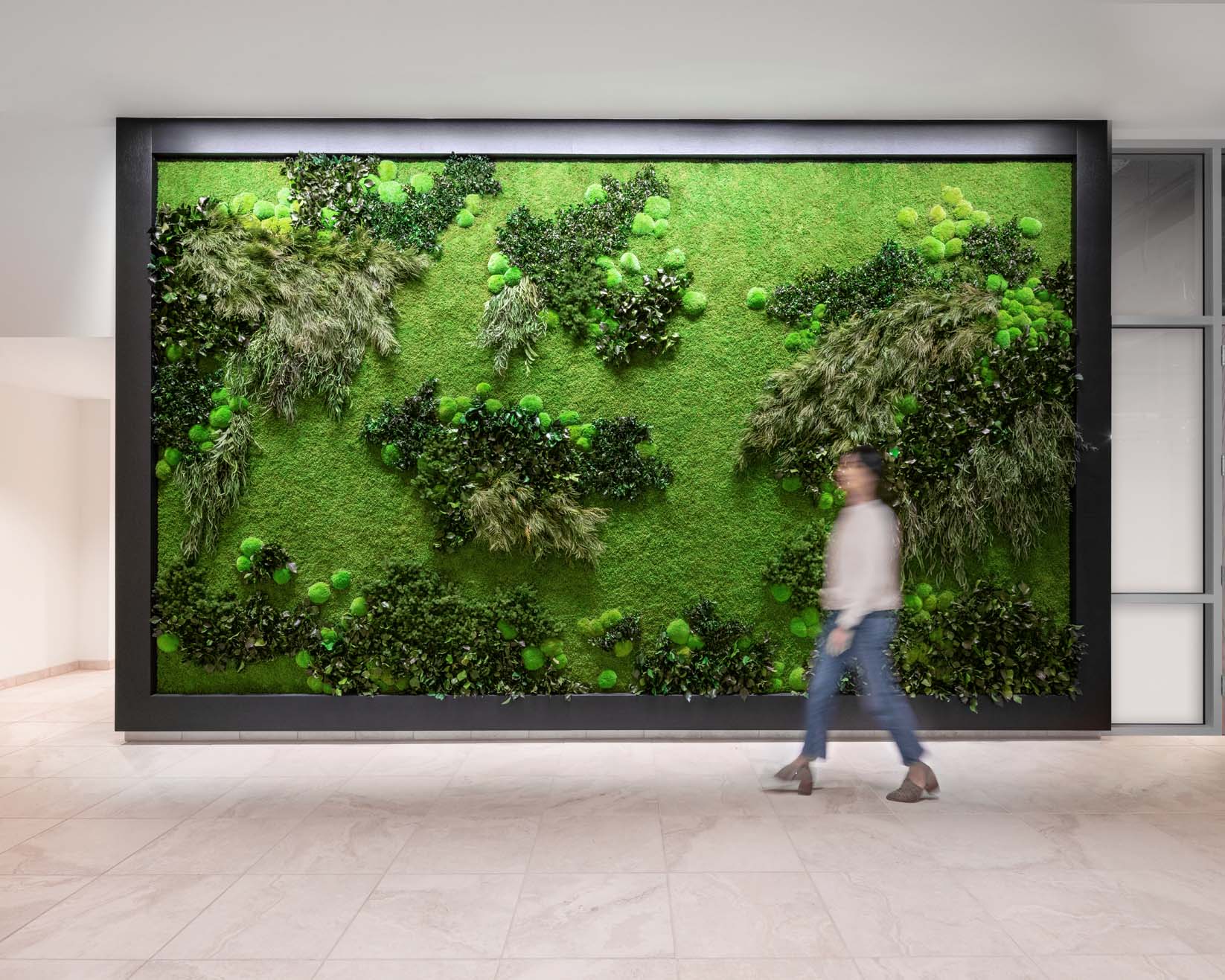
Perhaps the most profound realization from the roundtable: the office’s true purpose has changed. It’s no longer just a place for work it’s a platform for human connection. Digital meetings may facilitate communication, but they cannot replicate the spark of spontaneous hallway conversations, collaborative energy, or emotional resonance of shared space. Biophilic design strengthens this new social function. Nature provides a universal common language, bridging cultures, generations, and personalities. A preserved moss wall or hanging garden installation becomes more than décor it’s a social anchor, a gathering point that invites interaction and fosters belonging. By creating environments that engage the senses and invite community, companies can transform their offices from workstations into ecosystems of connection and creativity.
Conclusion: Designing for the Future of Work
The C-Suite Roundtable’s findings confirm that the success of return-to-office initiatives depends on environments that deliver what remote work cannot: inspiration, restoration, and community. Preserved gardens, moss walls, and draping foliage achieve these goals simultaneously. They earn the commute through experiential quality, enhance creativity through cognitive restoration, and strengthen culture through shared biophilic experiences. As the workplace continues to evolve, integrating authentic preserved nature isn’t just an aesthetic choice it’s a strategic imperative. These installations are redefining what it means to design for people, purpose, and performance in the modern world.