Nature-Inspired Organizational Systems: Biomimicry in Space Planning

Key Takeaways Before You Read the Full Article:
30 Second Executive Summary
This article explores how biomimicry design inspired by nature’s patterns, systems, and strategies can transform interior environments into sustainable, functional, and human-centered spaces. By incorporating preserved gardens and moss walls, designers create interiors that are not only visually striking but also psychologically restorative.
🌿 Nature’s Blueprint for Design: Biomimicry applies principles like fractals, modularity, and adaptability, turning nature’s evolutionary wisdom into efficient, flexible space planning.
🪴 Preserved Gardens as Functional Elements: Low-maintenance installations provide acoustic benefits, visual separation, and a calming connection to nature without the upkeep of live plants.
🧭 Wayfinding Through Nature-Inspired Landmarks: Moss walls act as intuitive navigation points, improving spatial orientation while adding depth, texture, and branding opportunities.
🌲 Multi-Layered Biomimetic Spaces: Forest canopy-inspired layouts and river-like circulation routes create microenvironments for collaboration, privacy, and focus.
🧠 Backed by Neuroscience: Neuroaesthetics research confirms that organic patterns and textures reduce stress, boost cognitive performance, and enhance occupant well-being.
♻️ Sustainable, Adaptable Interiors: Integrating biomimetic principles with preserved nature delivers design solutions that are eco-friendly, cost-effective, and timeless.
Ready to see how nature’s wisdom can guide space planning and deliver budget-friendly, restorative interiors? The full article dives deeper into strategies for creating ecosystem-inspired, future-proof environments.
Understanding Biomimicry in Design
Biomimicry revolutionizes interior design by drawing inspiration from nature's time-tested patterns and strategies. This innovative approach involves studying natural systems and organisms to inform how we layout, flow, and organize interior spaces. By tapping into nature's billions of years of evolutionary solutions, designers can create more efficient, sustainable, and human-centric environments.
Key Principles of Nature-Inspired Space Planning
Natural systems thrive through adaptive flexibility, interconnectedness, efficient resource use, and fractal patterns. In space planning, these principles translate to creating multi-functional areas that easily reconfigure for changing needs, layouts that foster collaboration and community, maximizing utility of every square foot, and incorporating repeating patterns at different scales that create intuitively navigable environments.
Biomimetic Approaches to Space Organization
Nature offers powerful organizational models that can transform interior spaces. Cellular structures inspire modular, adaptable spaces ideal for offices. Branching patterns, like those found in trees and rivers, inform intuitive circulation routes that efficiently direct movement. Honeycomb configurations provide visually appealing and space-efficient patterns perfect for clustered workstations or breakout areas.
Incorporating Preserved Nature in Biomimetic Design
While biomimicry often replicates nature's functional aspects, incorporating actual natural elements enhances the biophilic qualities of spaces. Preserved gardens and moss walls serve as perfect implementations of these principles, requiring minimal maintenance while delivering maximum impact.
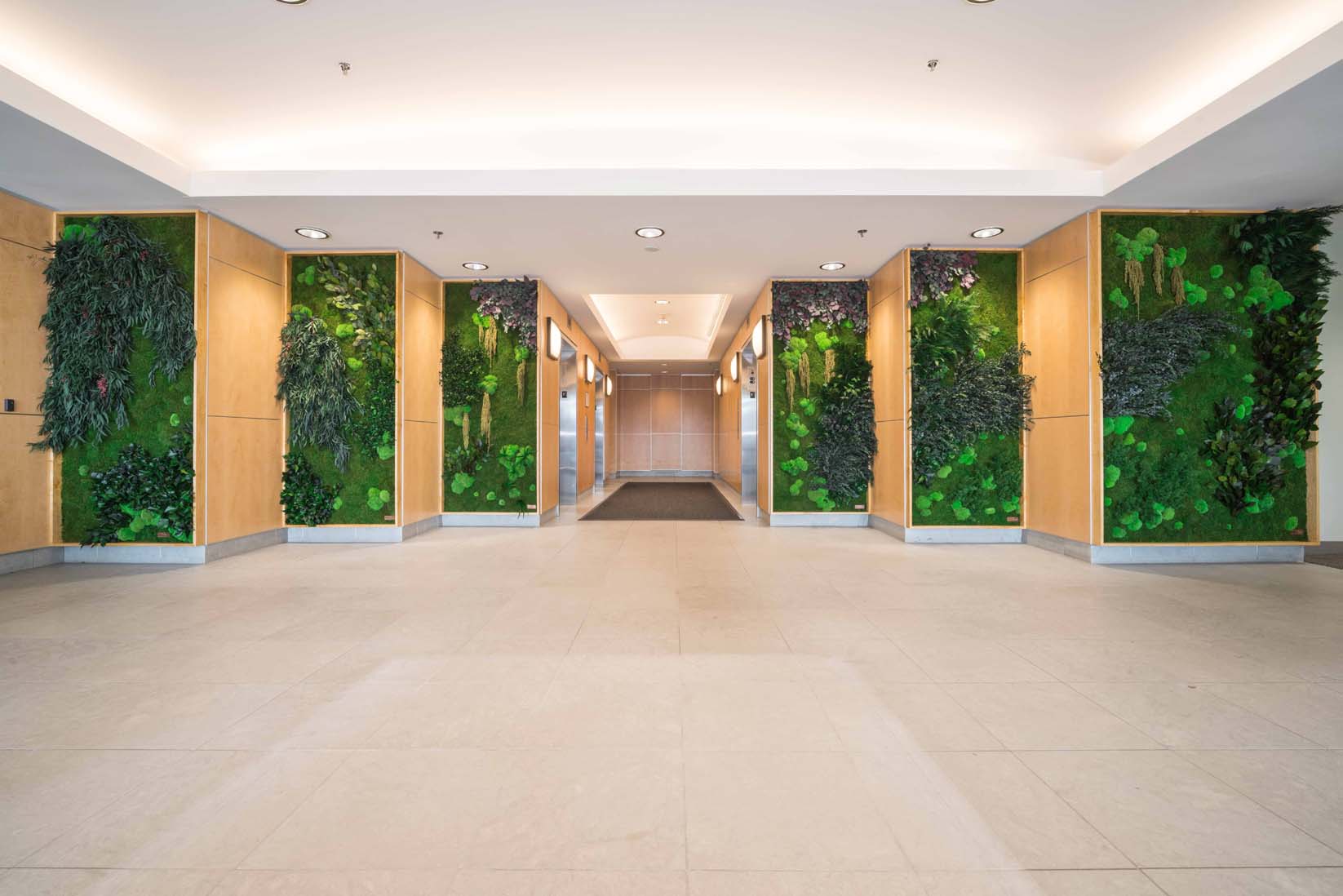
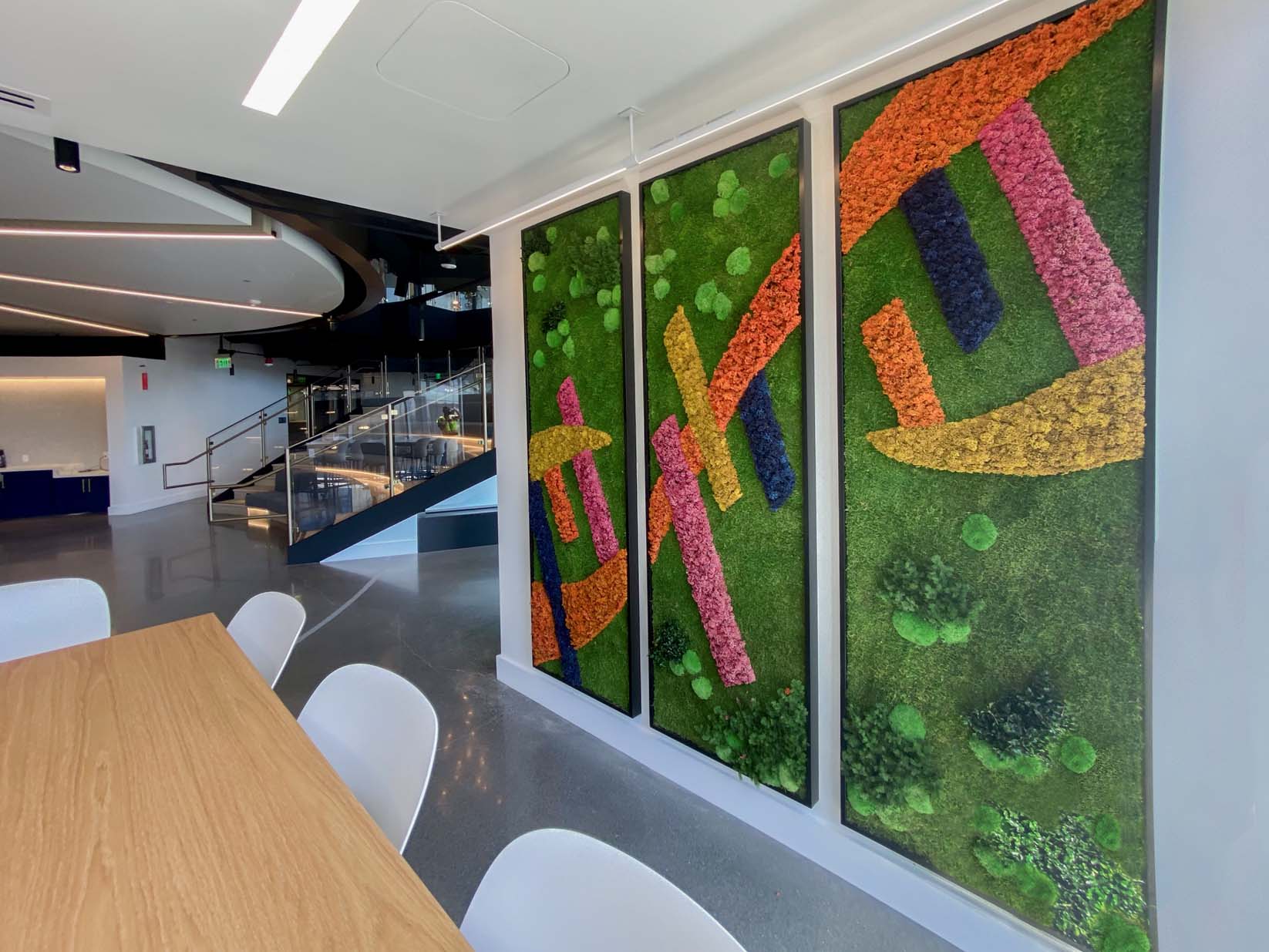
Preserved gardens function brilliantly as space dividers, creating visual separation without solid walls while maintaining an open feel. These installations also offer acoustic benefits by absorbing sound and provide psychological advantages through their connection to nature, all without demanding the ongoing maintenance of living plants.
Moss Walls as Wayfinding Elements
Strategically placed moss walls act as natural wayfinding elements, similar to how distinctive vegetation serves as landmarks in nature. These installations create compelling focal points that draw the eye and aid orientation while adding texture and depth that enhance sensory experiences. They can also be customized to incorporate company branding elements, merging nature-inspired design with organizational identity.

Biomimetic Space Planning in Action
Open-plan offices can be transformed by mimicking forest canopies, using preserved plant installations at varying heights to create a sense of enclosure without sacrificing openness. This layered approach improves privacy, enhances acoustics, and creates microenvironments suited to different work styles.
Circulation routes designed to follow the organic patterns of river systems create intuitive navigation through spaces. When enhanced with preserved moss or garden installations, these pathways improve flow efficiency while maintaining visual continuity throughout the environment.
Neuroaesthetics and Biomimetic Design
Neuroaesthetics research confirms that natural patterns and forms reduce stress, improve cognitive function, and enhance overall well-being. By incorporating these elements through preserved gardens and moss walls, designers create spaces that are not just functionally efficient but also psychologically beneficial, addressing both practical and emotional human needs.
Implementing Biomimetic Principles with Preserved Nature
Successful biomimetic implementation requires analyzing relevant ecosystems, identifying key natural patterns, and translating these into architectural and interior design elements. Integration of preserved nature reinforces these principles while creating multisensory experiences through texture, color, and subtle scents. Prioritizing adaptability ensures spaces can evolve over time, reflecting nature's inherent capacity for change.
Conclusion: Embracing Nature's Wisdom in Design
Nature-inspired organizational systems provide a powerful framework for creating spaces that are aesthetically pleasing, functionally superior, and psychologically beneficial. By embracing biomimicry in space planning and incorporating elements like preserved gardens and moss walls from trusted, transparent, and experienced providers like Garden on the Wall®, designers create environments that resonate with our innate connection to the natural world, while also being friendly to the budget with their lowest total cost of ownership aspects.
As we address challenges in creating sustainable, efficient, and human-centric spaces, looking to nature for inspiration becomes essential. The integration of biomimetic principles with preserved natural elements honors our biological heritage while meeting modern demands. Through these approaches, we're not just designing spaces—we're creating ecosystems that support, nurture, and inspire.
For more information on this subject and other related information, please visit our website: www.gardenonthewall.com