Draping Foliage Elements: The New Standard in Commercial Interior Biophilic Design
Key Takeaways Before You Read the Full Article:
30 Second Executive Summary
This article reveals how preserved draping foliage has become the preferred biophilic design solution for commercial interiors. It explains how these cascading botanical elements combine natural authenticity, sustainability, and operational efficiency to elevate visual impact and occupant well-being.
🏗️ Design Evolution: Modern interiors are shifting from live and artificial plants to preserved draping foliage that provides long-term performance without maintenance challenges.
💧 Operational Reliability: Free from irrigation systems and leak risks, preserved installations eliminate the infrastructure demands that complicate construction and facility management.
🌿 Authenticity and Neuroaesthetics: Preserved materials retain real botanical structure, triggering natural stress reduction and cognitive restoration effects artificial plants cannot achieve.
🏢 Adaptable Across Markets: Cascading greenery enhances workplace focus, healthcare recovery, senior living comfort, and hospitality aesthetics through enduring biophilic design.
♻️ Sustainability and Safety: Preserved installations meet rigorous environmental standards, offering Class 1 fire ratings, low VOC emissions, and HPD transparency documentation.
✨ Future of Biophilic Interiors: As evidence-based design advances, preserved draping foliage defines a new standard of nature integration that aligns aesthetics with environmental responsibility.
Ready to explore how preserved draping foliage can redefine the balance between performance, wellness, and design excellence in commercial interiors?
The full article provides insight into the evolution, advantages, and verified performance of these next-generation biophilic installations.
Draping Foliage Elements: The New Standard in Commercial Interior Biophilic Design
Commercial interior designers increasingly incorporate draping foliage elements into their projects as vertical greenery solutions gain prominence across workplace, healthcare, senior living, hospitality, and institutional environments. These cascading botanical installations create dynamic visual interest while delivering measurable biophilic benefits that support occupant well-being and environmental quality. The evolution from traditional potted plants and planter inserts toward sophisticated draping installations reflects growing designer sophistication in applying nature-inspired elements that address both aesthetic ambitions and operational realities of commercial spaces.
The specification landscape for draping greenery has transformed dramatically as designers recognize the limitations of conventional approaches involving living plants or artificial alternatives. Modern preserved foliage solutions now provide authentic nature connections without the infrastructure complications, maintenance burdens, or aesthetic deterioration that compromise traditional draping plant applications. This paradigm shift enables designers to confidently specify cascading botanical elements that maintain their visual impact and biophilic effectiveness throughout extended operational lifecycles.
The Evolution of Vertical Greenery in Commercial Design
Traditional approaches to incorporating cascading plants into commercial interiors relied primarily on living specimens installed in elevated planters or suspended containers. These installations required complex irrigation systems, drainage infrastructure, and regular horticultural maintenance to sustain plant health and appearance. The vertical format intensified challenges inherent in live plant care, as gravity-fed water delivery systems proved difficult to calibrate properly and drainage management became increasingly problematic in multi-story applications.
The aesthetic appeal of draping foliage drove designers to persist with living plant installations despite operational complications. Cascading forms provide unique visual softness that counterbalances the angular geometries prevalent in contemporary commercial architecture. However, the gap between design intent and long-term performance reality grew increasingly apparent as facility managers struggled with the practical implications of maintaining living draping installations in occupied commercial environments.
The Fundamental Challenges of Living Draping Plants
Living draping plant installations introduce significant infrastructure requirements that complicate construction coordination and increase project costs. Irrigation systems demand dedicated plumbing connections, water supply lines, and drainage pathways that must integrate with existing building systems. These mechanical requirements often necessitate ceiling modifications, structural reinforcements, and waterproofing measures that add complexity to design documentation and construction administration processes.
Leak potential represents the most serious operational concern with living draping plant installations. Water damage from irrigation system failures or drainage overflow can compromise ceiling finishes, damage equipment, and create costly remediation scenarios. The elevated positioning of draping plant installations amplifies leak consequences, as water damage affects multiple building levels and disrupts operations across broader areas. These risk factors make facility managers increasingly reluctant to approve living draping plant specifications, particularly in healthcare, senior living, and hospitality environments where operational continuity remains paramount.
The Faux Plant Problem in Commercial Environments
Artificial plant alternatives emerged as designers sought maintenance-free draping foliage solutions, yet these petroleum-based substitutes introduce their own performance limitations. Synthetic foliage products derive almost entirely from petrochemical manufacturing processes, creating plastic components that fundamentally lack the organic characteristics necessary for authentic biophilic connections. The environmental implications of specifying plastic greenery contradict sustainability commitments that increasingly drive commercial design decisions. Additionally, faux plants manufactured from PVC, polyethylene, and other petrochemical-derived materials raise concerns about potential chemical leaching into indoor environments, as these synthetic compounds may release substances with carcinogenic properties that compromise occupant health over extended exposure periods.
The electrostatic properties inherent in plastic materials cause artificial plants to attract and retain dust particles at accelerated rates. This phenomenon becomes particularly problematic with draping installations where vertical surfaces maximize dust accumulation potential. Within six months of installation, most artificial draping foliage displays visible dust buildup that creates unkempt appearances and undermines the design intent. The cleaning requirements for plastic plants often exceed those for alternative solutions, while the aesthetic deterioration timeline proves incompatible with commercial environments where visual quality directly impacts occupant perceptions and brand impressions.
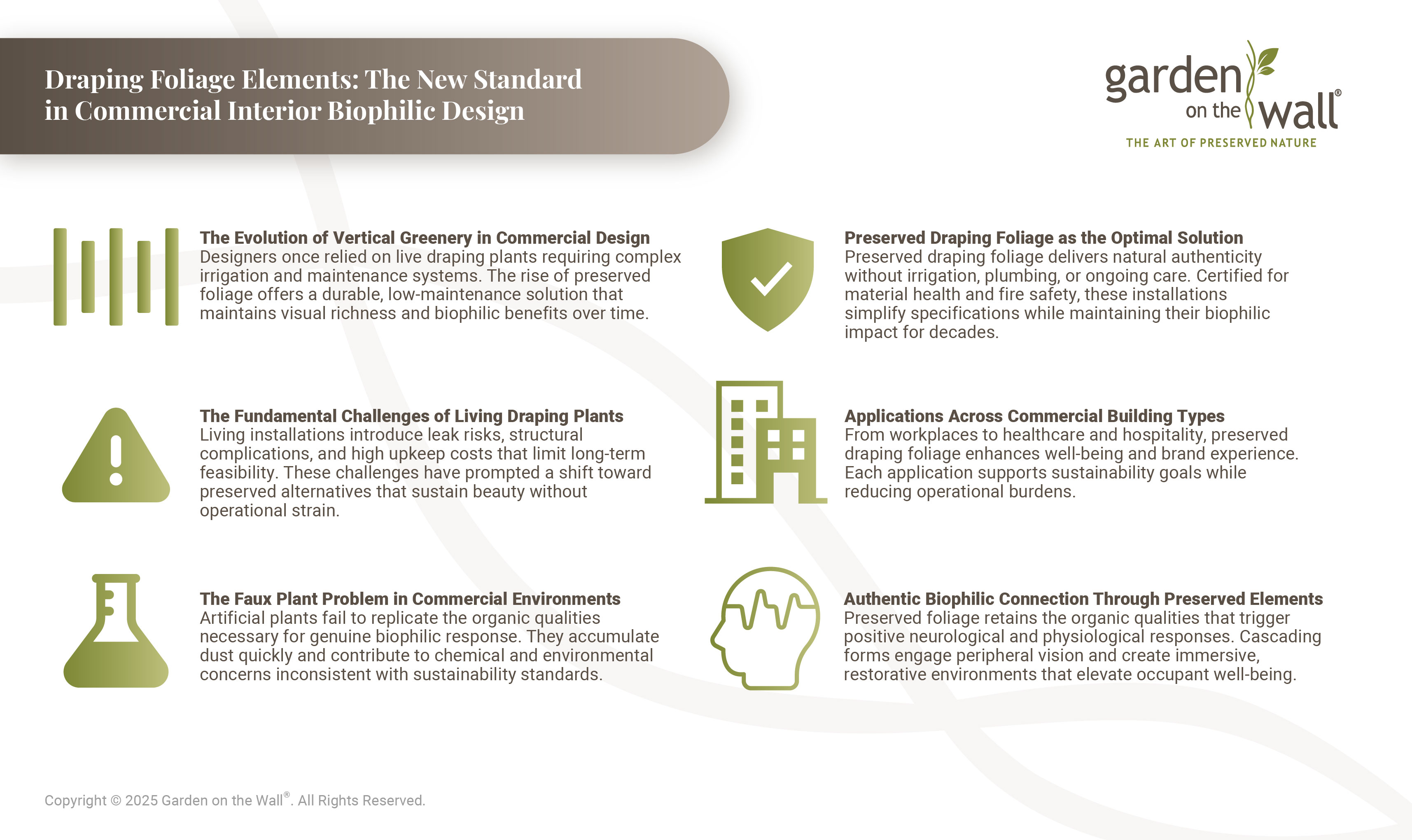
Preserved Draping Foliage as the Optimal Solution
Preserved foliage installations provide authentic botanical materials that maintain natural appearance characteristics without requiring water, soil, or ongoing horticultural maintenance. The preservation process utilizes biodegradable solutions to replace plant sap while maintaining cellular structure, organic texture, and natural color variation. This treatment approach delivers genuine plant material that human neurobiology recognizes as natural, triggering positive psychological and physiological responses associated with nature exposure.
The absence of irrigation requirements eliminates plumbing infrastructure, drainage systems, and leak potential that complicate living plant specifications. Preserved draping foliage installs directly to architectural surfaces without mechanical systems integration, simplifying construction coordination while reducing project costs. Garden on the Wall® has pioneered preserved foliage applications with comprehensive third-party testing documentation that includes Class 1 fire ratings, VOC emissions verification, and material health transparency through HPD v2.3 disclosure, providing specification confidence for demanding commercial applications.
Applications Across Commercial Building Types
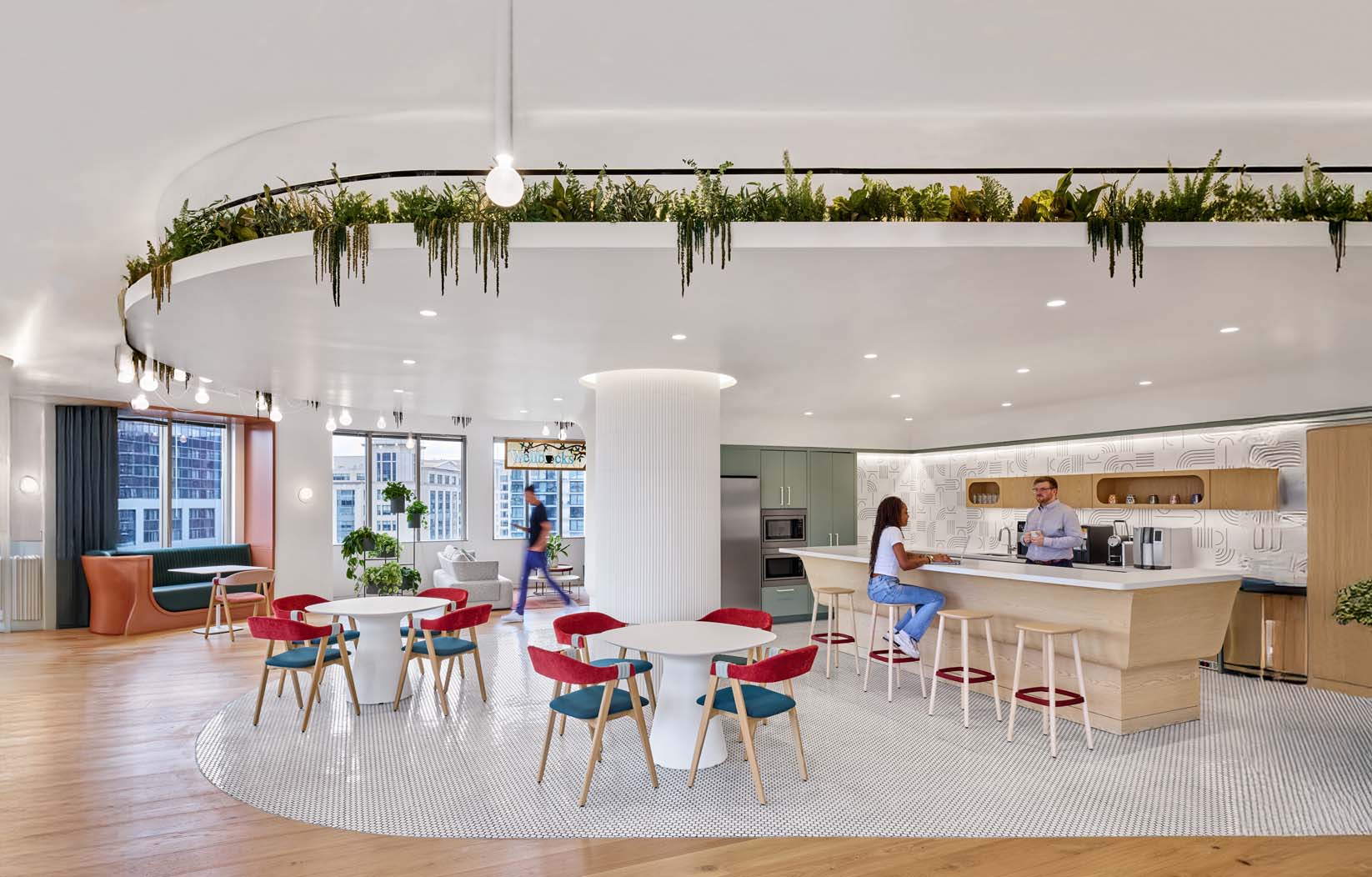
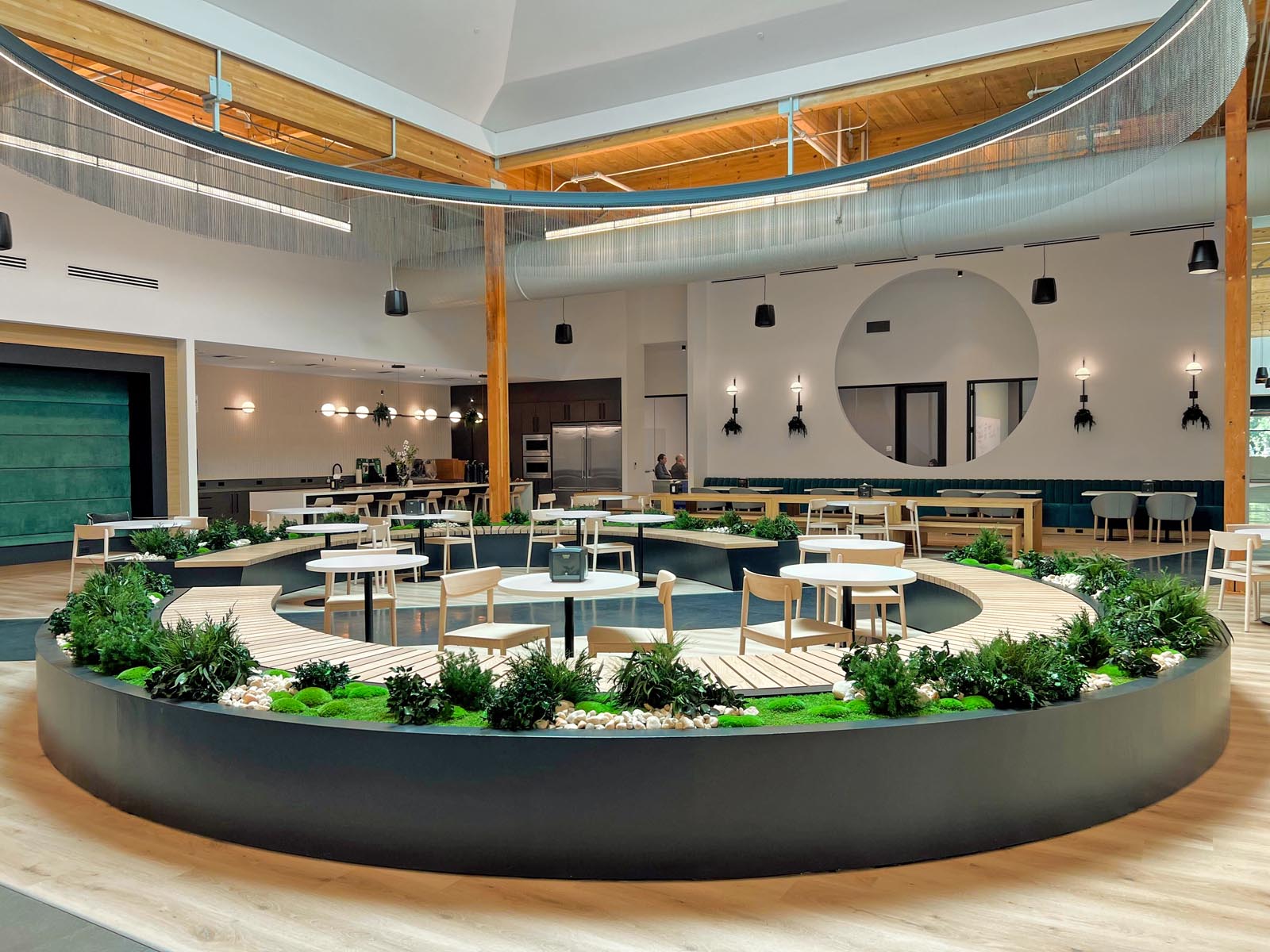
Workplace environments benefit substantially from preserved draping foliage installations that soften hard architectural elements while supporting employee well-being. Open-plan offices utilize cascading greenery to define spatial zones without erecting solid barriers that impede visual connectivity or natural light penetration. Reception areas and collaboration spaces incorporate draping elements that create memorable first impressions and establish nature-connected environments that reinforce organizational values around sustainability and human-centered design.
Healthcare and senior living facilities deploy preserved draping foliage to create healing environments that support patient recovery and resident quality of life. These applications avoid the infection control concerns associated with soil-based living plants while delivering authentic nature connections that reduce stress and promote positive health outcomes. Hospitality venues including hotels, restaurants, and event spaces specify cascading preserved installations that provide Instagram-worthy visual impact without maintenance disruptions during peak operational periods or concerns about water damage affecting guest experiences.
Authentic Biophilic Connection Through Preserved Elements
The human stress response system demonstrates measurable physiological changes when exposed to authentic natural materials versus artificial substitutes. Preserved foliage maintains the complex organic characteristics that trigger beneficial biophilic responses including reduced cortisol levels, lowered blood pressure, and improved attention restoration. The irregular textures, subtle color variations, and natural forms present in preserved materials engage pattern recognition systems that evolved over millennia of human development in natural environments.
Draping preserved foliage installations create multi-dimensional nature experiences that engage peripheral vision throughout daily activities. The cascading forms introduce movement and depth that static wall-mounted installations cannot replicate, while varied plant species selections provide biodiversity representation that enhances biophilic effectiveness. These authentic botanical elements support the documented psychological benefits of nature connection including improved mood, enhanced cognitive function, and reduced mental fatigue that directly impact occupant satisfaction and performance across commercial building types.
Transforming Commercial Interiors with Preserved Draping Solutions
The transition toward preserved draping foliage represents a maturation of biophilic design practice in commercial interiors. Designers now specify botanical installations confident that performance will match design intent throughout extended operational lifecycles. The elimination of maintenance requirements, infrastructure complications, and aesthetic deterioration concerns enables more ambitious nature integration strategies that transform commercial environments into human-centered spaces supporting occupant well-being.
As commercial interior design continues evolving toward evidence-based approaches that prioritize occupant health and environmental responsibility, preserved draping foliage installations emerge as optimal solutions. These elements deliver authentic biophilic benefits while respecting operational realities and sustainability commitments that define contemporary commercial design excellence. The cascading forms and organic textures of preserved greenery create memorable spaces where nature connection enhances daily experiences for employees, patients, residents, guests, and all building occupants.
For more information on this subject, read this article: Preserved Gardens, Moss Walls, Draping Preserved Greenery: The Future of Biophilic Design Implementation and other related information, please visit our website: www.gardenonthewall.com