Beyond the Gate: Human-Centric Biophilia for Aviation & Transportation
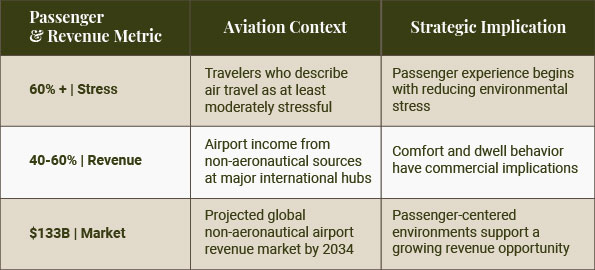
The modern passenger journey has redefined what travelers expect from aviation and transportation environments. Efficiency is no longer the only measure of a successful terminal - passenger experience matters. Airports are no longer simply asking, “how efficiently can we move people through this space?” but “how can this environment make the journey feel better?” For commercial interior designers, architects, airport operators, and aviation professionals serving this market, the specification of the physical environment has become a direct passenger-experience and performance variable.
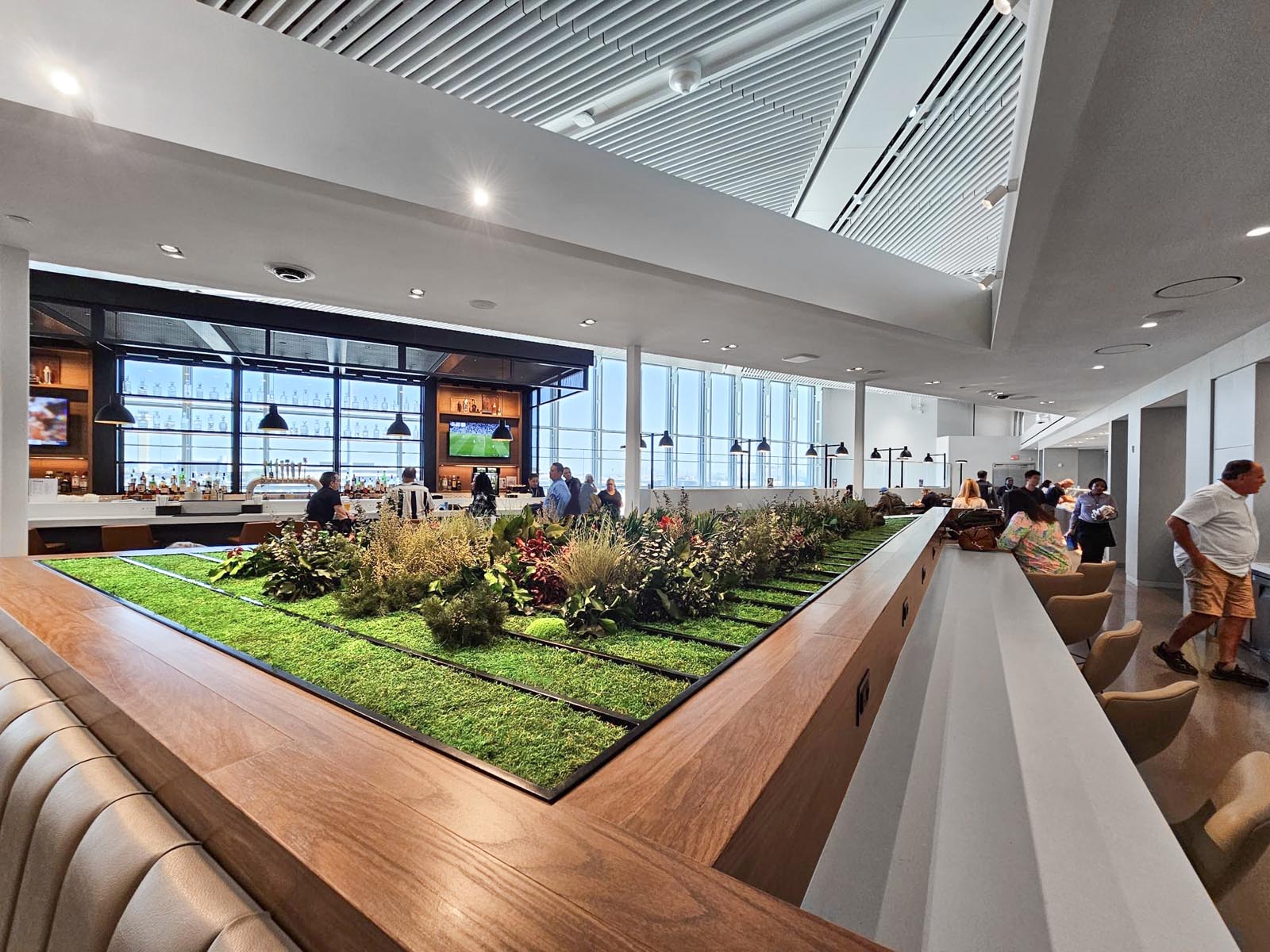
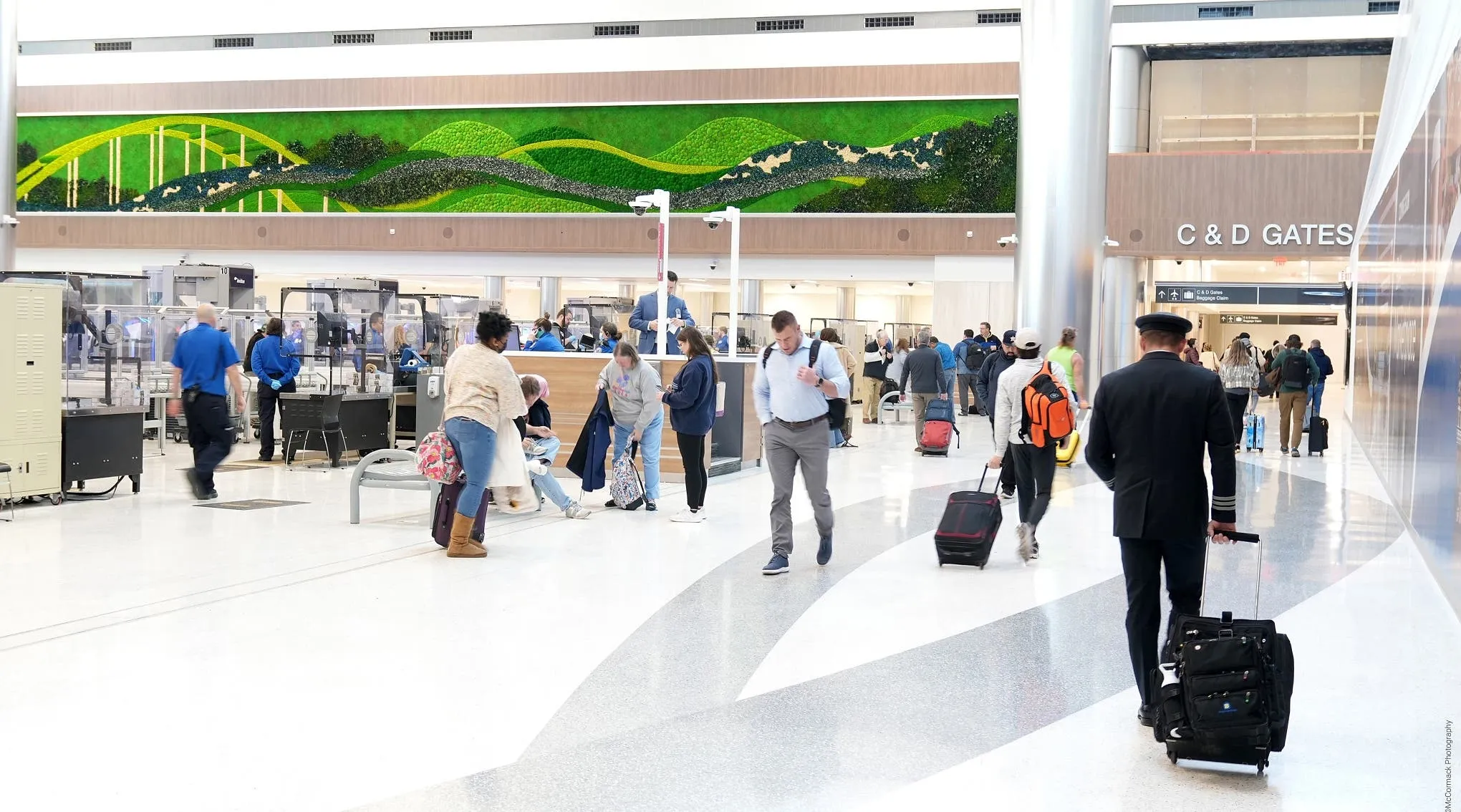
Garden on the Wall® designs, fabricates, and installs preserved gardens, moss walls, and planter inserts for high-performance commercial interiors nationwide - bringing authentic nature into terminals, concourses, gate areas, and airport lounges without the operational complexity of living systems. Trusted by leading organizations, specified by Top 100 Design Giants, and verified by independent third-party testing that no other preserved garden provider in the world can match.
The Only Choice: Why Specification Matters Here
In aviation and transportation environments, the biophilic specification decision must account for passenger experience and operational performance simultaneously. Terminals operate continuously, maintenance access can be constrained, security requirements affect when and how work can occur, and every material must maintain its appearance through years of high-traffic use.
Living plant systems introduce watering, drainage, grow lighting, horticultural maintenance, and supporting infrastructure into environments where operational simplicity is critical. At terminal scale, these requirements can create substantial long-term maintenance demands.
Faux greenery removes many of those operational requirements, but replaces authentic botanical material with synthetic imitation. It may replicate the appearance of greenery without providing the material authenticity, texture, visual complexity, and credible connection to nature central to biophilic design.
Preserved nature - specifically the preserved gardens, moss walls, and botanical installations of Garden on the Wall® - provides a more operationally realistic path: real natural material without irrigation, drainage, grow lighting, or routine horticultural care.

The Specification Moat
Garden on the Wall® preserved botanical systems combine authentic natural material with the third-party verified performance required for demanding commercial interiors:
• Published Environmental Product Declaration (EPD) - ISO 14025
• Health Product Declaration v2.3 at 100 ppm full disclosure
• Declare Label - Red List FreeCDPH Section 01350 VOC Compliance
• ASTM E84 Class 1/A Fire Rating
• 0.45 NRC Acoustic Performance
• 100% BioBased per ASTM D6866
• 7-Year Warranty
• 20+ year product lifecycle with Rejuvenation Program
• Zero water, soil, or irrigation
• No routine horticultural maintenance
For terminals, concourses, gate areas, and lounges, preserved botanical systems provide the combination aviation projects require: authenticity, longevity, operational simplicity, material compliance, and experience.
Transportation Spaces Designed Around the Passenger
Explore aviation and transportation environments designed to support passenger well-being, comfort, and connection through biophilic design.
The Economic Logic: The 100:10:1 Rule
The next generation of aviation environments will be judged not only by how efficiently they move people, but by how well they support them.
Passenger stress accumulates throughout the travel journey - from arrival and check-in through security, wayfinding, waiting, and boarding. Research examined in Beyond the Gate demonstrates that nature exposure can reduce stress and support more positive emotional states, while airport-specific research connects visible natural elements with passenger comfort and well-being.
The implications extend beyond wellness. Dwell time is a significant driver of non-aeronautical commercial performance, and passengers who feel comfortable enough to explore rather than retreat to the gate have greater opportunities to shop, dine, visit lounges, and engage with the terminal environment.
Biophilic design therefore becomes more than an aesthetic intervention. It is a strategy for creating transportation environments that support passenger well-being, restorative experience, place identity, commercial engagement, and long-term operational performance.
Explore the research and learn how authentic biophilic design can reshape the passenger journey in Beyond the Gate: The Case for Biophilic Design in Aviation and Transportation Environments.